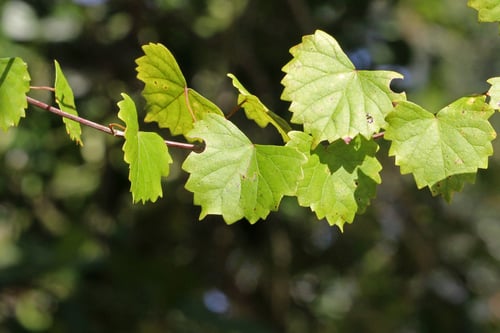
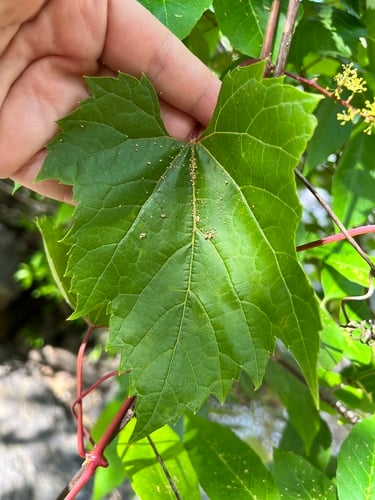
Parthenocissus tricuspidata
(Siebold & Zuccarini) Planchon
Japanese creeper, Boston Ivy, Virginia creeper
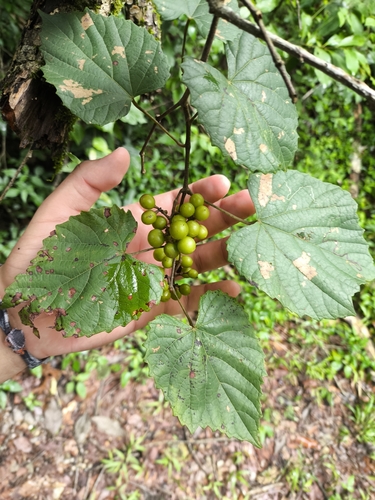
iNaturalist· cc-by-nc
(c) maplerice, some rights reserved (CC BY-NC), uploaded by maplerice
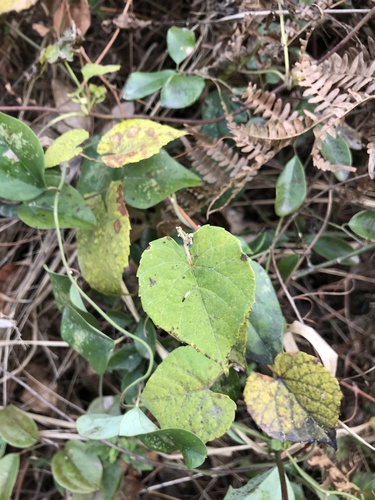
iNaturalist· cc-by-nc
(c) aurelien99, some rights reserved (CC BY-NC)
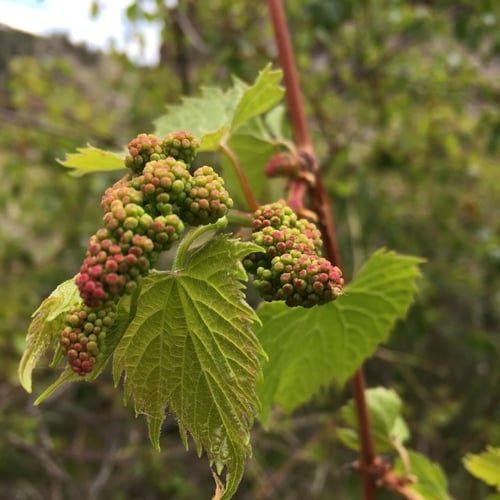
iNaturalist· cc-by-nc
(c) mkkennedy, some rights reserved (CC BY-NC), uploaded by mkkennedy
Summary
Source: WikipediaParthenocissus tricuspidata is a species of flowering plant in the grape family (Vitaceae) native to eastern Asia (Korea, Japan, and northern and eastern China), where it thrives in floodplain bushes, riverside woodland and moist mountain mixed forests. Although unrelated to true ivy, it is commonly known as Boston ivy, grape ivy, Japanese ivy, and also as Japanese creeper, and by the name woodbine (though the latter may refer to a number of different vine species). The specific epithet tricuspidata means three-pointed, referring to the leaf shape. Boston ivy is readily distinguished from the Virginia creeper (Parthenocissus quinquefolia) by its simple leaves with pointed lobes (Virginia creeper leaves are divided into five separate leaflets).
Description
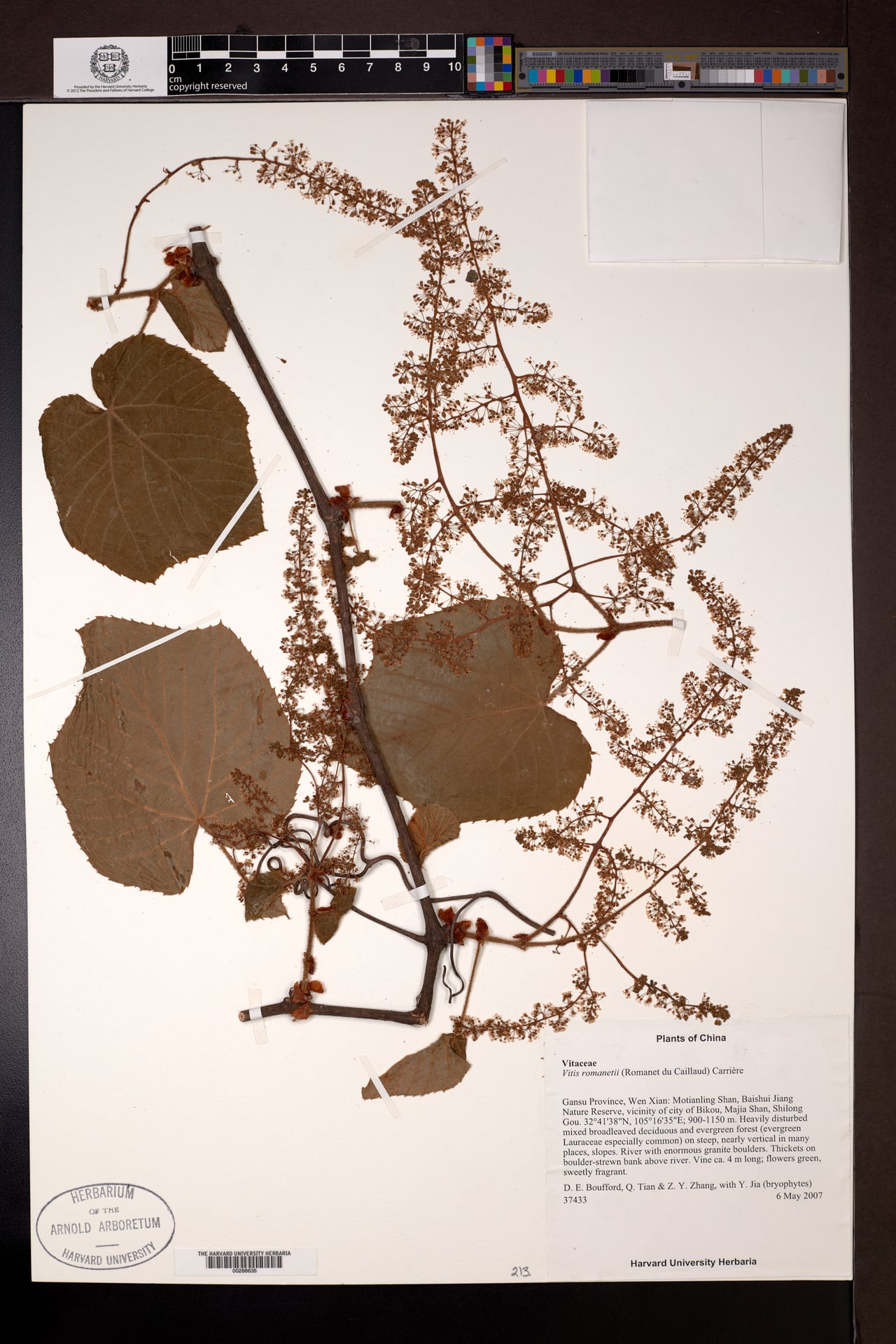
A deciduous shrub. It is creeping and twines on rocks and fences. The tendrils have disks on them that attach to walls. Plants grow 20 m high. The leaves are of 2 types. The leaves on the stem are large and have 3 lobes. The edges have small teeth. The leaves are 5-15 cm wide. They are broadly oval with a heart shaped base. The leaf stalk is 15 cm long. The leaves on the non flowering stems are smaller and have 3 leaflets. The flowers are small and green-yellow. They are in groups 3-6 cm long. The fruit are like small grapes. They are round and dark purple. They are 4-5 mm across.
Edible Uses
The sap is sweet and can be used as a sugar substitute. It flows quite freely when harvested in spring as the plant comes into new growth.
Traditional Uses
The sap from the branches is boiled and used as a sweetener. The stems after the leaves fall is chewed like sugarcane. The shoots are put into pickled cucumbers.
Medicinal Uses
None known
Distribution
It is a cool temperate plant. It grows in shrublands, cliffs and rocky hillsides in north China between 100-1,200 m above sea level. It suits hardiness zone 4.
Where It Grows
Argentina, Asia, Britain, Canada, China, Europe, Hungary, Japan, Korea, North America, South America, Taiwan,
Cultivation
It can be grown by seed, cuttings or layering.
Propagation
Seed - best sown as soon as it is ripe in a cold frame. Stored seed requires stratifying for 6 weeks at 5°c and should be sown as early in the year as possible. Germination is variable. When they are large enough to handle, prick the seedlings out into individual pots and grow them on in the greenhouse for at least their first winter. Plant them out into their permanent positions in late spring or early summer, after the last expected frosts. Cuttings of half-ripe wood, 7 - 10cm taken at a node (ensure that it has at least 2 true buds), July/August in a frame. Easy to root but they do not always survive the first winter. Basal hardwood cuttings of current seasons growth, 10 - 12cm long, autumn in a frame. Layering.
Other Uses
Can be grown as a ground cover in a sunny position, with plants spaced about 2.5 metres apart each way. They are very vigorous and would soon swamp smaller plants.
Production
It can grow 150-200 cm per year.
Also Known As
Natsu zuta, Tsuta, Vadszollo
References (3)
- Denes, A., et al, 2012, Wild plants used for food by Hungarian ethnic groups living in the Carpathian Basin. Acta Societatis Botanicorum Poloniae 81 (4): 381-396
- Hu, Shiu-ying, 2005, Food Plants of China. The Chinese University Press. p 532
- Levy-Yamamori, R., & Taaffe, G., 2004, Garden Plants of Japan. Timber Press. p 281