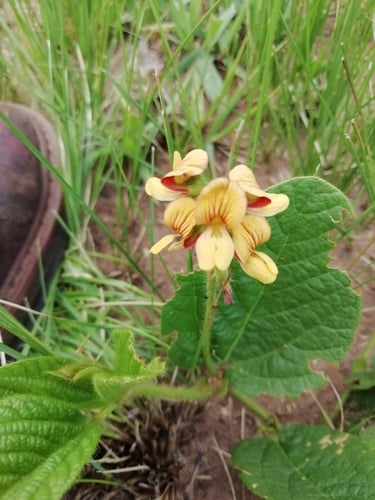
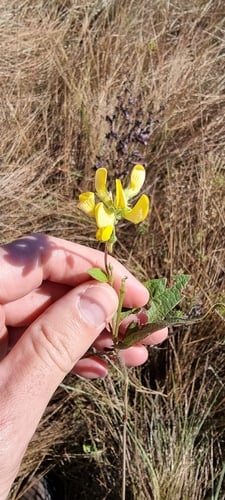
Crotalaria anthyllopsis
Welw. ex Baker
Jandalala
iNaturalist· cc-by
(c) i_c_riddell, some rights reserved (CC BY), uploaded by i_c_riddell
iNaturalist· cc-by-nc
(c) Bart Wursten, some rights reserved (CC BY-NC)
Description
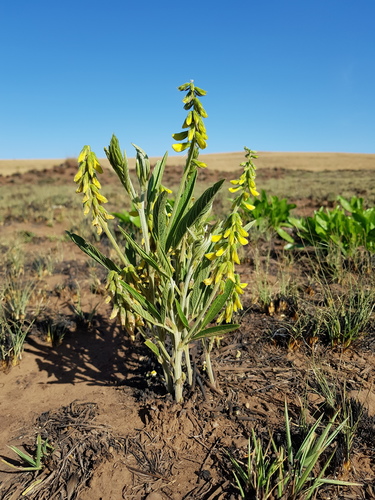
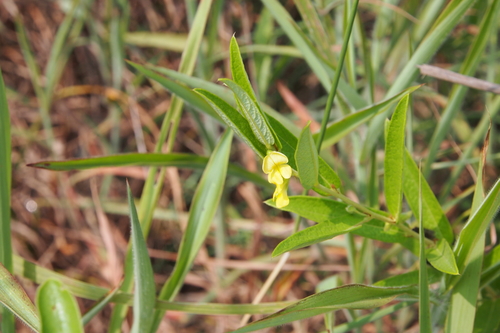
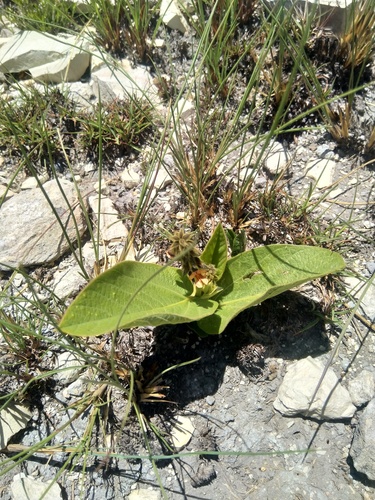
A compact bushy herb. It is an annual plant. It grows 30 cm high. The whole plant is hairy. The leaves are long. The flowers are yellow or purple with dark veins. The fruit are pods less than 1 cm long.
Edible Uses
The leaves are cooked and eaten, traditionally prepared with potash and peanuts to improve flavor.
Traditional Uses
The leaves are cooked and eaten. They are cooked with potash and peanuts added to improve the flavour.
This uses section is brief — help expand it
Distribution
It is a tropical plant. It can grow in arid places. It grows in open woodland and grassland. It grows 700-1,800 m above sea level.
Where It Grows
Africa, Angola, Burundi, Central Africa, Central African Republic, CAR, Congo, East Africa, Ethiopia, Kenya, Malawi, Mali, Mozambique, Nigeria, Rwanda, Tanzania, Uganda, West Africa, Zambia, Zimbabwe,
Other Information
It is occasionally harvested.
Notes
There are about 550 Crotalaria species.
Also Known As
Chitutuzi
References (8)
- Abukutsa-Onyango, M.O., 2004. Crotalaria brevidens Benth. [Internet] Record from Protabase. Grubben, G.J.H. & Denton, O.A. (Editors). PROTA (Plant Resources of Tropical Africa), Wageningen, Netherlands. < http://database.prota.org/search.htm>. Accessed 15 October 2009.
- East African Herbarium records, 1981,
- Fox, F. W. & Young, M. E. N., 1982, Food from the Veld. Delta Books. p 225
- D. Oliver, Fl. trop. Afr. 2:15. 1871
- Peters, C. R., O'Brien, E. M., and Drummond, R.B., 1992, Edible Wild plants of Sub-saharan Africa. Kew. p 131
Show all 8 references Hide references
- Royal Botanic Gardens, Kew (1999). Survey of Economic Plants for Arid and Semi-Arid Lands (SEPASAL) database. Published on the Internet; http://www.rbgkew.org.uk/ceb/sepasal/internet [Accessed 28th April 2011]
- Williamson, J., 2005, Useful Plants of Malawi. 3rd. Edition. Mdadzi Book Trust. p 82
- World Checklist of Useful Plant Species 2020. Royal Botanic Gardens, Kew