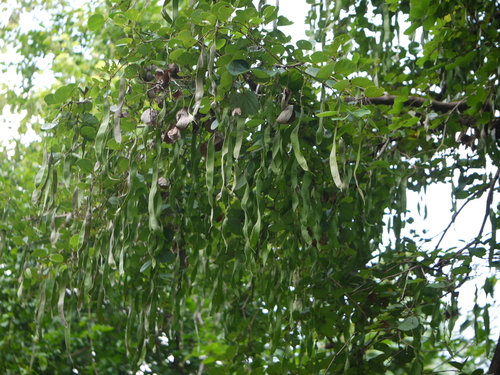
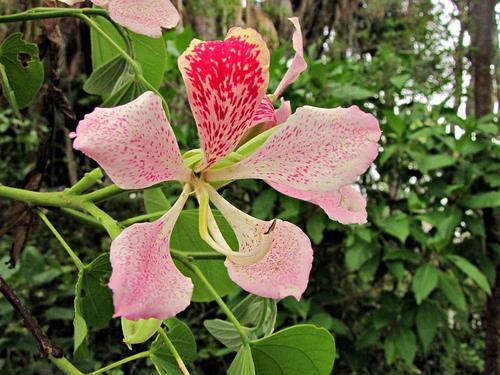
Acacia estrophiolata
F. Muell.
Ironweed tree, Desert Ironwood
iNaturalist· cc-by-sa
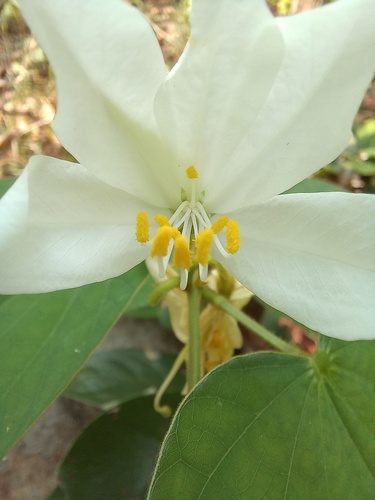
(c) Mark Marathon, some rights reserved (CC BY-SA)
iNaturalist· cc-by-nc-sa
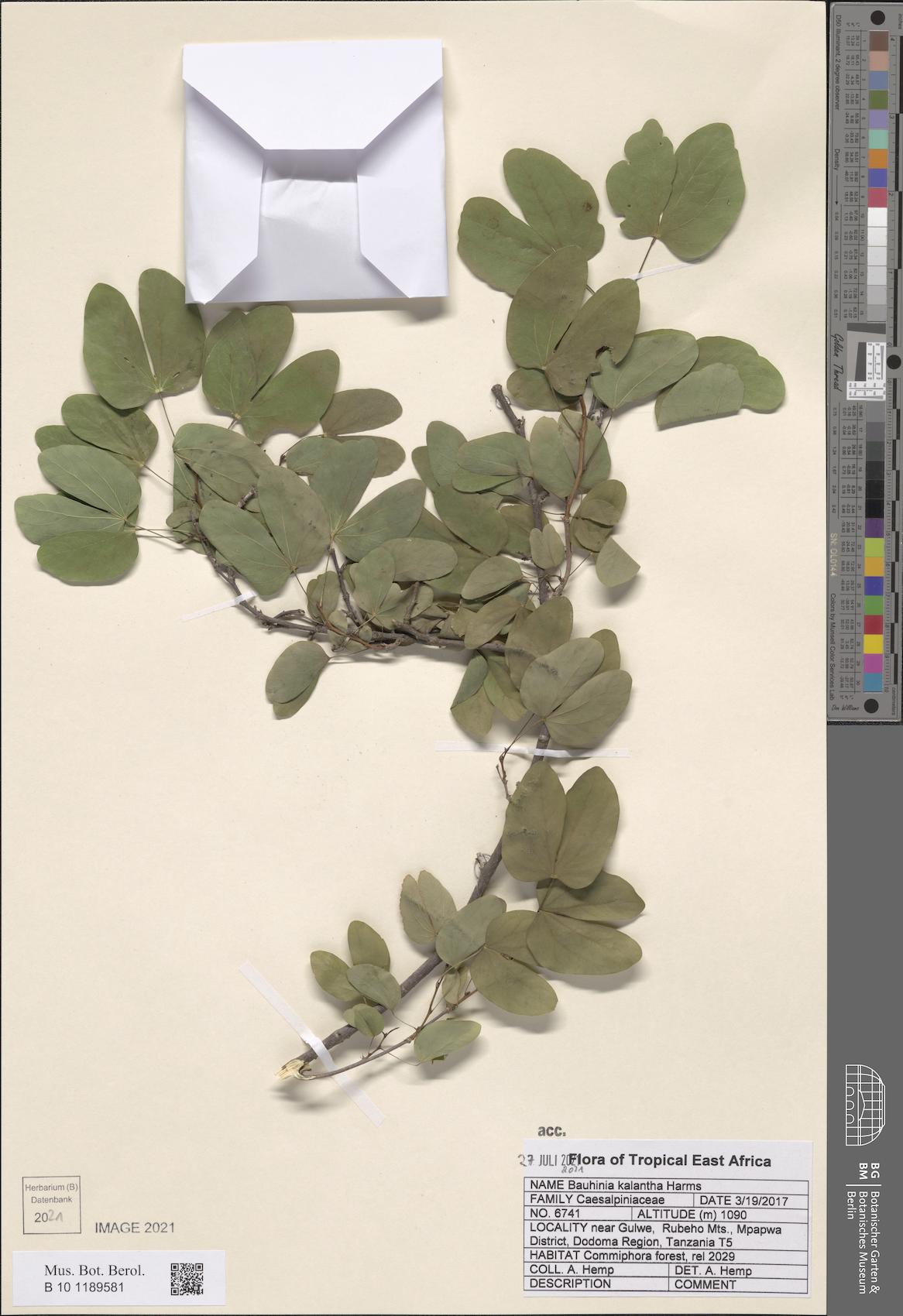
(c) caliologist, some rights reserved (CC BY-NC-SA)
iNaturalist· cc-by
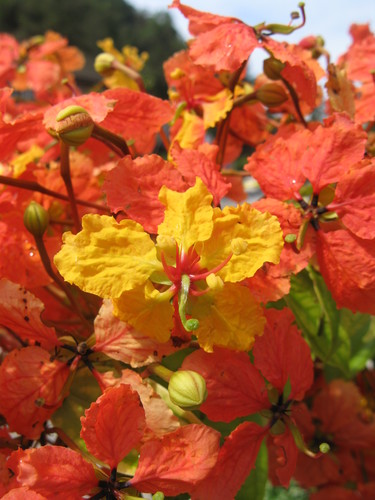
(c) Nina Kerr, some rights reserved (CC BY)
Summary
Source: WikipediaAcacia estrophiolata, commonly known as ironwood, southern ironwood, desert ironwood or utjanypa, is a species of flowering plant in the family Fabaceae and is endemic to Central Australia. It is a graceful, glabrous tree with linear to very narrowly elliptic phyllodes, spherical heads of cream-coloured to pale yellow flowers, and firmly papery, flat pods.
Description
A shrub or small tree. It grows 5 m tall. There are prickles along the stem. The leaves are twice divided and there are 8-18 pairs of pinnae. There are up to 50 pairs of pinnules on each pinnae. The flowers are yellow. They are in large clusters at the ends of branches. The pods are flattened.
Edible Uses
The seeds, gum, and lerp honeydew are all eaten.
Traditional Uses
The seeds are eaten. The gum is eaten. Lerp honeydew is also eaten.
This uses section is brief — help expand it
Medicinal Uses
Parts of the tree are used topically to treat skin problems such as burns, cuts, scabies, sores and it is also used for treating major wounds. It is used as a lotion to treat eye problems.
Distribution
It suits hot dry places. It does well in well drained light to medium soils. It prefers full sun. It occurs in central Australia. It is common near Alice Springs. It is very drought tolerant. It is easily killed by fire. It can grow in arid places. It suits hardiness zones 9-10.
Where It Grows
Australia*,
Cultivation
It is grown from seed.
Production
Young plants grow slowly, but grow rapidly when more established. Pods normally are produced in late autumn, and can remain on the tree for a long time. Because the pod clings to the seed, processing the seed is more difficult. But seed often remain after other acacia seed have gone. The red gum exuding from the tree is not edible but the white gum linked with boring insect damage is eaten.
Notes
There are about 1,350 Acacia species. Over 1,000 occur in Australia. Also as Mimosaceae.
Nutrition
| Part | Moisture | kJ | kcal | Protein | Vit A | Vit C | Iron | Zinc |
|---|---|---|---|---|---|---|---|---|
| Seed | 10.1 | 1493 | 357 | 28.9 | — | — | — | — |
| Gum | — | — | — | — | — | — | — | — |
| Honeydew | — | — | — | — | — | — | — | — |
Also Known As
Athenge Tjau, Athiyimpa, Utjanypa
References (15)
- Boomsma, C.D., 1972, Native Tree of South Australia. Woods & Forests Department South Australia, Bulletin No.19. p 37
- Cherikoff V. & Isaacs, J., The Bush Food Handbook. How to gather, grow, process and cook Australian Wild Foods. Ti Tree Press, Australia p 42, 188
- Cundall, P., (ed.), 2004, Gardening Australia: flora: the gardener's bible. ABC Books. p 75
- Elliot, W.R., & Jones, D.L., 1982, Encyclopedia of Australian Plants suitable for cultivation. Vol 2. Lothian. p 47
- Hall, N. et al, 1972, The Use of Trees and Shrubs in the Dry Country of Australia, AGPS, Canberra. p 345
Show all 15 references Hide references
- Holliday, I., 1989, A Field Guide to Australian Trees. Hamlyn. p 18
- Lang, P. J., et al, 1986, Anangu Pitjantjatjara Lands Biological Survey. p 41, 44
- Latz, P., 1996, Bushfires and Bushtucker. IAD. p 97
- Lazarides, M. & Hince, B., 1993, Handbook of Economic Plants of Australia, CSIRO. p 3
- Lister, P.R., P. Holford, T. Haigh, and D.A. Morrison, 1996, Acacia in Australia: Ethnobotany and potential food crop. p. 228-236. In: J. Janick (ed.), Progress in new crops. ASHS Press, Alexandria, VA.
- Paczkowska, G . & Chapman, A.R., 2000, The Western Australian Flora. A Descriptive Catalogue. Western Australian Herbarium. p 307
- Pennock, A., et al, Australian Dry-zone Acacias for Human Food: Proceedings of a Workshop.
- S. Sci. Rec. 2:150. 1882
- Smith, N. M., 1991, Ethnobotanical Field Notes from the Northern Territory, Australia, J. Adelaide Bot. Gard. 14(1): 1-65
- Urban, A., 1990, Wildflowers of Inland Australia. Portside editions. p 78