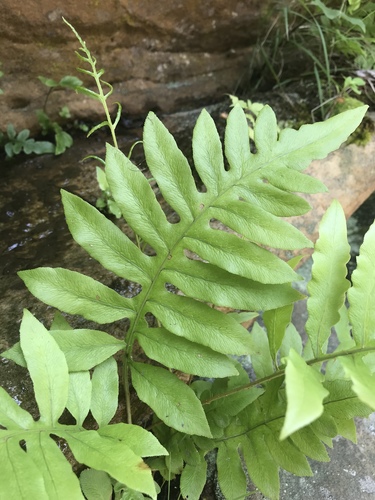
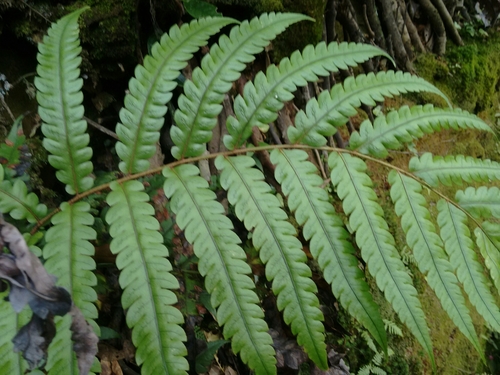
Sadleria cyatheoides
Kaulfuss
'Ama'u, Rasp fern, Amaumau fern
iNaturalist· cc-by-nc
(c) Damon Tighe, some rights reserved (CC BY-NC), uploaded by Damon Tighe
iNaturalist· cc-by-nc-nd
(c) sea-kangaroo, some rights reserved (CC BY-NC-ND), uploaded by sea-kangaroo
iNaturalist· cc0
no rights reserved, uploaded by cwarneke
Summary
Source: WikipediaSadleria cyatheoides, commonly known as ʻamaʻumaʻu fern or ʻamaʻu, is a fern species in the family Blechnaceae.
Description
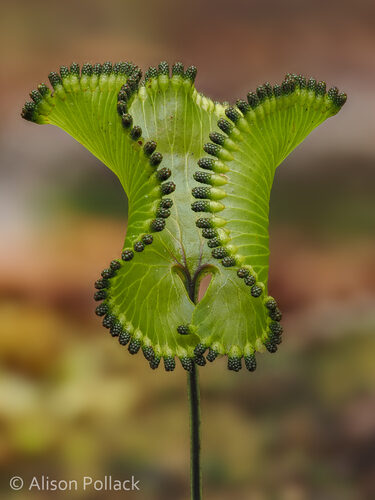
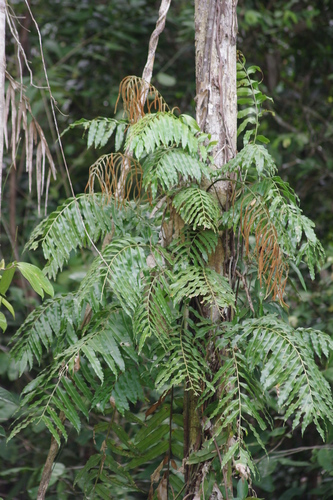
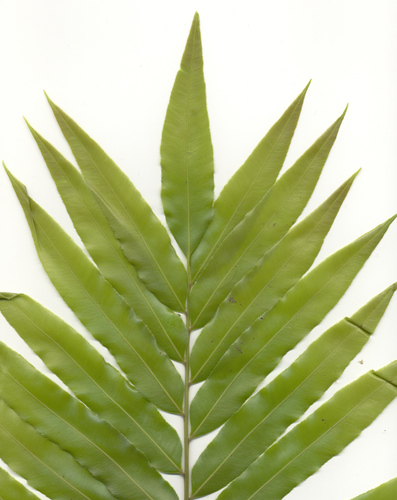
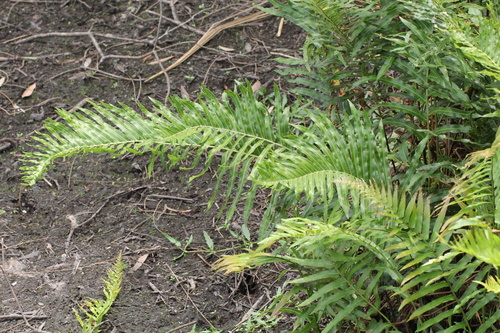
A fern. The trunk is stout. The leaves are twice divided. The rhizome is 1-1.6 m tall. The leaves are smooth and dark green. They are leathery. They are 25-170 cm long and 25-100 cm wide. The leaf stalk has narrow brown scales. The leaf blade is sword shape in outline. The leaves have a red tinge when young
Edible Uses
Its pith and young fronds are edible either roasted or steamed.
Traditional Uses
The young fronds can be cooked and eaten. The starch from the rhizome can be cooked and eaten. The plant is powdered and used to make a tea like drink.
Medicinal Uses
The plant has a range of medicinal uses.
Known Hazards
Although we have found no reports of toxicity for this species, a number of ferns contain carcinogens so some caution is advisable. Many ferns also contain thiaminase, an enzyme that robs the body of its vitamin B complex. In small quantities this enzyme will do no harm to people eating an adequate diet that is rich in vitamin B, though large quantities can cause severe health problems. The enzyme is destroyed by heat or thorough drying, so cooking the plant will remove the thiaminase.
Distribution
It is a tropical plant. It needs well watered, well drained soil and a bright shady location.
Where It Grows
Hawaii, Pacific, USA,
Cultivation
It is grown by spores.
Other Uses
A red dye is obtained from the trunk fibres. It is used for dyeing kapa cloth. The fronds are used for the final thatching of buildings. The leafstalks are beaten and used as sizing (with bark) in making kapa cloth. The fronds are used as a mulch.
Notes
There are 6 Sadleria species. They are in Hawaii.
References (3)
- http://www.ntbg.org/plants/plant details.php
- Moerman, D. F., 2010, Native American Ethnobotany. Timber Press. p 500
- Staples, G.W. and Herbst, D.R., 2005, A tropical Garden Flora. Bishop Museum Press, Honolulu, Hawaii. p 31 (Drawing)