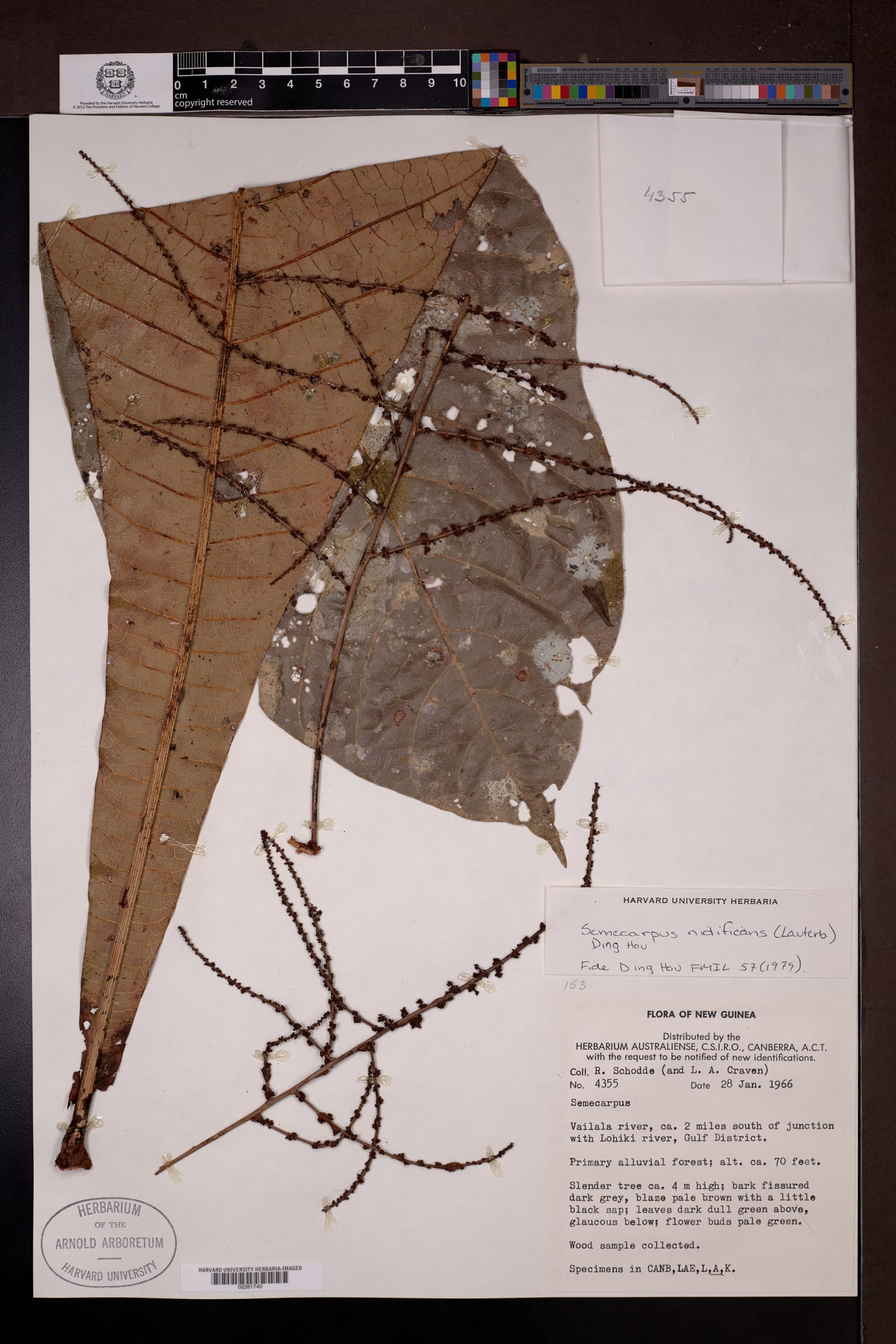
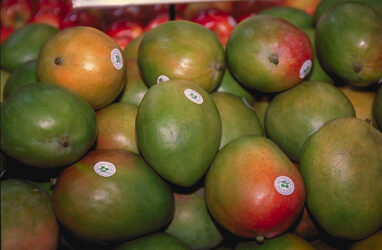
Spondias axillaris
Roxb.
Hog plum, Himalayan ambarell
iNaturalist· cc-by-nc
(c) Alan Kwok (King Lun), Ada Tai (Ah Heung) / 阿達蘭 AdAlan, some rights reserved (CC BY-NC)
iNaturalist· cc-by-nc
(c) Alan Kwok (King Lun), Ada Tai (Ah Heung) / 阿達蘭 AdAlan, some rights reserved (CC BY-NC)
iNaturalist· cc-by-nc
(c) Alan Kwok (King Lun), Ada Tai (Ah Heung) / 阿達蘭 AdAlan, some rights reserved (CC BY-NC)
Description
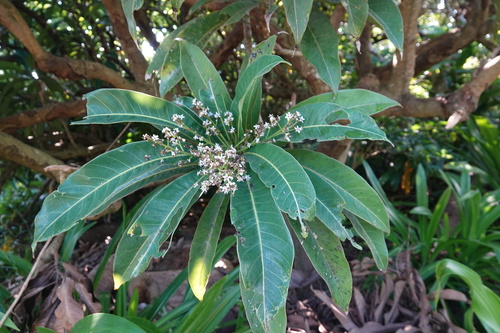
A tree. It loses its leaves during the year. It grows 6-14 m high. The leaves are compound and have leaflets along the stalk with one at the end. There are 9-13 leaflets. The leaves are 7-17 cm long. The flowers are in small groups. They are dark red. The fruit are oval and fleshy with a hard stone. The skin is thin and smooth.
Edible Uses
The ripe fruits are eaten fresh and raw, made into jellies and ice creams, or used for pickles; processed fruit can be stored for 5 years. The inner bark is chewed for its sweet taste and to reduce hunger.
Traditional Uses
The ripe fruit are eaten fresh and raw. They are also made into jellies and ice creams. The ripe fruit are used for pickles. The fruit when processed can be stored for 5 years. The inner bark is chewed for its sweet taste and to reduce hunger.
Medicinal Uses
The inner bark is chewed to reduce hunger.
Distribution
It is a tropical plant. In India it grows between 300-1,500 m altitude.
Where It Grows
Asia, Brazil, China, Himalayas, India, Malaysia, Myanmar, Nepal, Northeastern India, SE Asia, Sikkim, South America, Sri Lanka,
Cultivation
Plants are grown from seed.
Production
The yield can be 6-187 kg per tree.
Other Information
Fruit are sold in markets. They are popular when processed.
Notes
Fruit are rich in Vitamin C. They are high in antioxidant activity.
Nutrition
| Part | Moisture | kJ | kcal | Protein | Vit A | Vit C | Iron | Zinc |
|---|---|---|---|---|---|---|---|---|
| Fruit | — | — | 4.1 | — | — | 0.1 | — | — |
Synonyms
Also Known As
Balam, Ban gulo, Belam, Caja-do-himalaia, Dieng-saliat, Homoi tenga, Khamoli chali, Khula, Lapsi, Lumsee, Lupsi, Mitha amora, Silet-kung, Thei-khuang-chawm, Theseli, Thesili
References (28)
- Angami, A., et al, 2006, Status and potential of wild edible plants of Arunachal Pradesh. Indian Journal of Traditional Knowledge 5(4) October 2006, pp 541-550
- Chase, P. & Singh, O. P., 2016, Bioresources of Nagaland: A Case of Wild 4 Edible Fruits in Khonoma Village Forest. in J. Purkayastha (ed.), Bioprospecting of Indigenous Bioresources of North-East India. p 51
- Chettri, N. & Sharma, E., Non-timber Forest Produce: Utilization, Distribution and Status in the Khangchendzonga Biosphere Reserve, Sikkim, India.
- Ethnobotany of Karbis. Chapter 4 in p 105
- Fl. ind. ed 1832. 2:453. 1832 (Hort. bengal. 34. 1814, nom. nudum)
Show all 28 references Hide references
- Kar, A., et al, 2013, Wild Edible Plant Resources used by the Mizos of Mizoram, India. Kathmandu University Journal of Science, Engineering and Technology. Vol. 9, No. 1, July, 2013, 106-126
- Kumar, A., et al, 2012, Ethnobotanical Edible Plant Biodiversity of Lepcha Tribes. Indian Forester, 138 (9):798-803
- Lorenzi, H., Bacher, L., Lacerda, M. & Sartori, S., 2006, Brazilian Fruits & Cultivated Exotics. Sao Paulo, Instituto Plantarum de Estuados da Flora Ltda. p 354
- Manju Sundriyal, and R. C. Sundriyal, 2003, Underutilized edible plants of the Sikkim Himalaya: Need for domestication. Current Science, Vol. 85, No. 6, p 732
- Manju, S., and Sundriyal, R. C., 2001, Wild Edible Plants of the Sikkim Humalaya: Nutritive Values of Selected Species. Economic Botany 55(3): 377-390
- Mozhui, R., et al, 2011, Wild edible fruits used by the tribals of Dimapur district of Nagaland, India. Pleione 5(1): 56 - 64
- Murtem, G. & Chaudhrey, P., 2016, An ethnobotanical note on wild edible plants of Upper Eastern Himalaya, India. Brazilian Journal of Biological Sciences, 2016, v. 3, no. 5, p. 63-81
- Pandey, Y., Upadhyay, S. & Bhatt, S. S., 2018, Phyto-chemical constituent os some wild edible fruits of Sikkim Himalaya. Journal of Pharmacognosy and Phytochemistry 2018; 7(3): 1045-1047
- Patiri, B. & Borah, A., 2007, Wild Edible Plants of Assam. Geethaki Publishers. p 35
- Reis, S. V. and Lipp, F. L., 1982, New Plant Sources for Drugs and Foods from the New York Botanical Garden herbarium. Harvard. p 165
- Salvi, J. et al, 2016, A review: Underutilized wild edible plants as a potential source of alternative nutrition. International Journal of Botany Studies. Volume 1; Issue 4; May 2016; Page No. 32-36
- Sarma, H., et al, 2010, Updated Estimates of Wild Edible and Threatened Plants of Assam: A Meta-analysis. International Journal of Botany 6(4): 414-423
- Savita, et al, 2006, Studies on wild edible plants of ethnic people in east Sikkim. Asian J. of Bio Sci. (2006) Vol. 1 No. 2 : 117-125
- Sawian, J. T., et al, 2007, Wild edible plants of Meghalaya, North-east India. Natural Product Radiance Vol. 6(5): p 422
- Singh, K.K., Singh, M. & Joshi, S. C., 2014, Phenolic content and Antioxidant Activity of some Underutilized Wild Edible Fruits of the Sikkim Himalaya. SMU Medical Journal. Vol. 1, No. 2 July 2014
- Sundriyal, M., et al, 1998, Wild edibles and other useful plants from the Sikkim Himalaya, India. Oecologia Montana 7:43-54
- Sundriyal, Manju and Sundriyal R. C., 2001, Seed Germination and Response of Stem-cuttings to Hormonal Treatment in Six Priority Wild Edible Fruit Species in Sikkim Himalaya. Indian Forester Vol. 127 No. 6 June 2001. pp 695-717
- Sundriyal, M., et al, 2004, Dietary Use of Wild Plant Resources in the Sikkim Himalaya, India. Economic Botany 58(4) pp 626-638
- Sundriyal, M. & Sundriyal, R. C., 2003, Underutilized edible plants of the Sikkim Himalaya: Need for domestication. Current Science. Vol. 85, No. 6
- Sundriyal, M. & Sundriyal, R. C., 2004, Structure, Phenology, Fruit Yield, and Future Prospects of some Prominent Wild Edible Plant Species of the Sikkim Himalaya, India. Journal of Ethnobiology 24(1): 113-138
- Suresh, C. P. et al, 2014, Wild Edible Tree Fruits of Sikkim Himalayas. Journal of Tree Sciences 33(1)
- Taram, M., et al, 2018, Wild Food Plant Resources of Komkar Adi Tribe of Upper Siang District in Arunachal Pradesh, India. Bulletin of Arunachal Forest Research, Vol. 33(2), 27-35
- Teron, R. & Borthakur, S. K., 2016, Edible Medicines: An Exploration of Medicinal Plants in Dietary Practices of Karbi Tribal Population of Assam, Northeast India. In Mondal, N. & Sen, J.(Ed.) Nutrition and Health among tribal populations of India. p 148