Passiflora gibertii
N. E. Br.
Maracuja-bravo, Maracujo-do-mato
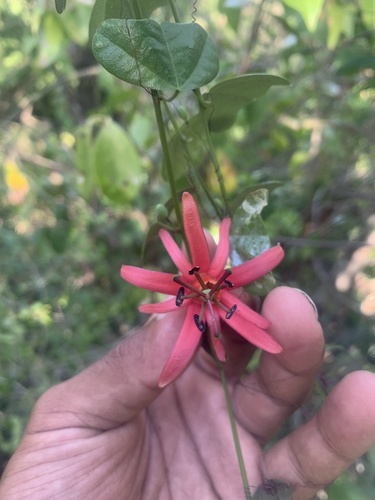
iNaturalist· cc-by-nc
(c) demianlescano, some rights reserved (CC BY-NC)
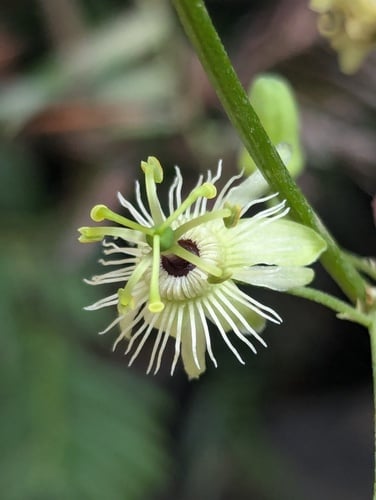
iNaturalist· cc-by-nc
(c) demianlescano, some rights reserved (CC BY-NC)
iNaturalist· cc-by-nc
(c) demianlescano, some rights reserved (CC BY-NC)
Summary
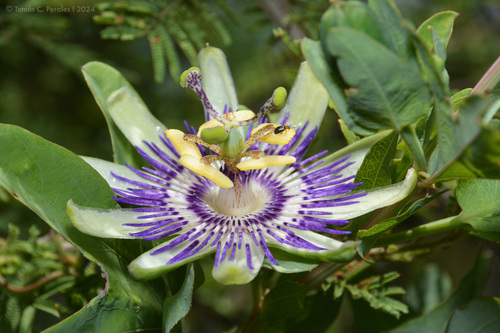
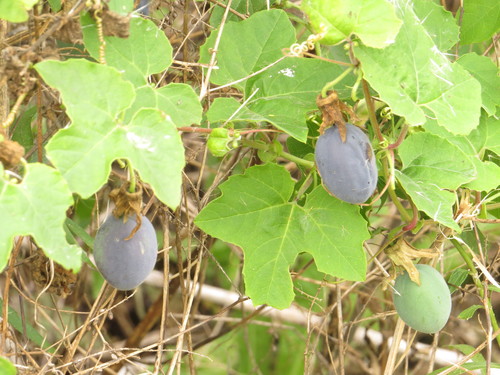
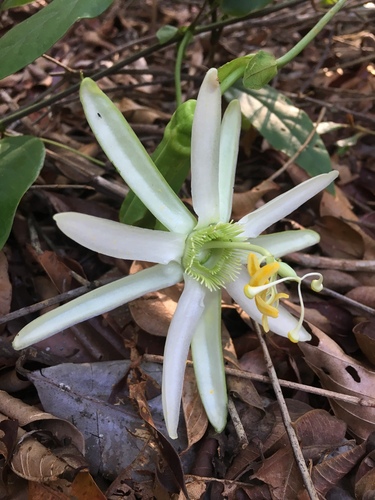
Source: WikipediaPassiflora gibertii is a fast-growing ornamental vine with edible fruits. The flowers are also ornamental. The fast-growing vine can grow up to 8.2 m (27 ft) long. It has three-lobed (occasionally 5-lobed) leaves which can grow to a few inches long. Vines may trail across arbors or climb trees or fences. The plant is easily container-grown and will flower readily. Flowering generally occurs in warm months. Some fruits may follow, and the ripe fruits which are yellow to orange in color are edible, though some reports claim the unripe fruits are poisonous. Its hardiness is to about 0 °C (32 °F). It grows in full sun or in part shade. The vines need regular water, especially during the growing season. Vines can be pruned if needed, as secondary shoots readily sprout. Seeds benefit from presoaking and require warm temperatures of 24–29 °C (75–85 °F) for germination. Germination time is erratic and often takes several weeks to a few months. P. gibertii is not as commonly planted as some of the other Passifloras. It is native to South America, from Argentina through Paraguay and Brazil.
Description
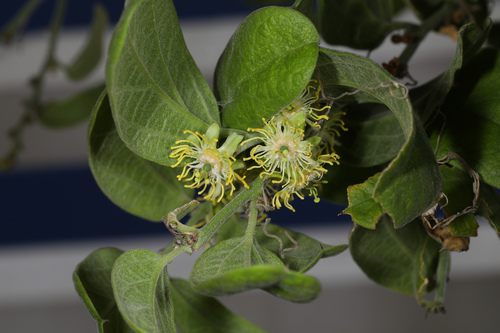
A climbing herb. It has tendrils. It grows for several years. The leaves have 3 lobes and are thin. The leaves are 5-7 cm long. The leaf stalk is 1-3 cm long and has 2-6 glands. The flowers occur singly and have a scent. They are 6-8 cm across. The flower stalk is 4-8 cm long. The fruit are juicy and sweet. They are round or oval and turn yellow when ripe. They are 4-5 cm across and 6-7 cm long. They are juicy and sweet.
Edible Uses
The ripe fruits are eaten fresh, and unripe fruits are boiled and eaten.
Traditional Uses
The ripe fruit are eaten fresh. Unripe fruit are boiled and eaten.
This uses section is brief — help expand it
Medicinal Uses
The leaves and roots of some, if not all, members of this genus contain a substance called 'passiflorina' which has similaritiesr to morphine and is an effective tranquilizer. We have no specific information for this species but many species are used in herbal infusions to calm the nerves and help bring about a restful sleep. The leaves of many species are also considered to be anthelmintic, antihysteric and diaphoretic. They are used in Brazil to combat intermittent fevers, cutaneous inflammations, and erysipelas.
Known Hazards
There are some reports that the unripe fruits can be poisonous.
Distribution
A tropical plant. It grows naturally along the edges of forests in Brazil. In Argentina it grows from sea level to 1,000 m above sea level.
Where It Grows
Argentina, Brazil*, Paraguay, South America,
Cultivation
The plants are grown from seed.
Propagation
Seed - best sown as soon as it is ripe along with the pulp which will help break down the seed coat and speed up germination. Stored seed should be soaked for 24 hours in warm water and germination time can be reduced if the seed is then mixed with the juice of a fresh passion fruit (of any species). Even so, it can take 12 months for stored seed to germinate. Place the seed tray in a shady position, maintaining a temperature around 19 - 24°c. Prick the seedlings out into individual containers as soon as they are large enough to handle and plant out when large enough. Cuttings of young shoots, taken at the nodes. The cuttings root best in a neutral to slightly acid compost, but 100% sharp sand also produces good results. Cuttings of fully mature wood taken at a node. They can take 3 months. Layering. Very easy. Air layering.
Other Information
They are not very popular.
Also Known As
Anseta, Burucuya, Mburukuja'i
References (4)
- Bortolotto, I. M., et al, 2018, Lista preliminar das plantas alimenticias nativas de Mato Grosso do Sul, Brasil. Iheringia, Serie Botanica, Porto Alegre, 73 (supl.):101-116
- Lorenzi, H., Bacher, L., Lacerda, M. & Sartori, S., 2006, Brazilian Fruits & Cultivated Exotics. Sao Paulo, Instituto Plantarum de Estuados da Flora Ltda. p 266
- Polini, G., et al, Useful and edible plants of Paraguay Region of Chaco. p 108
- Trans. & Proc. Bot. Soc. Edinburgh 20:58. 1896 "giberti"