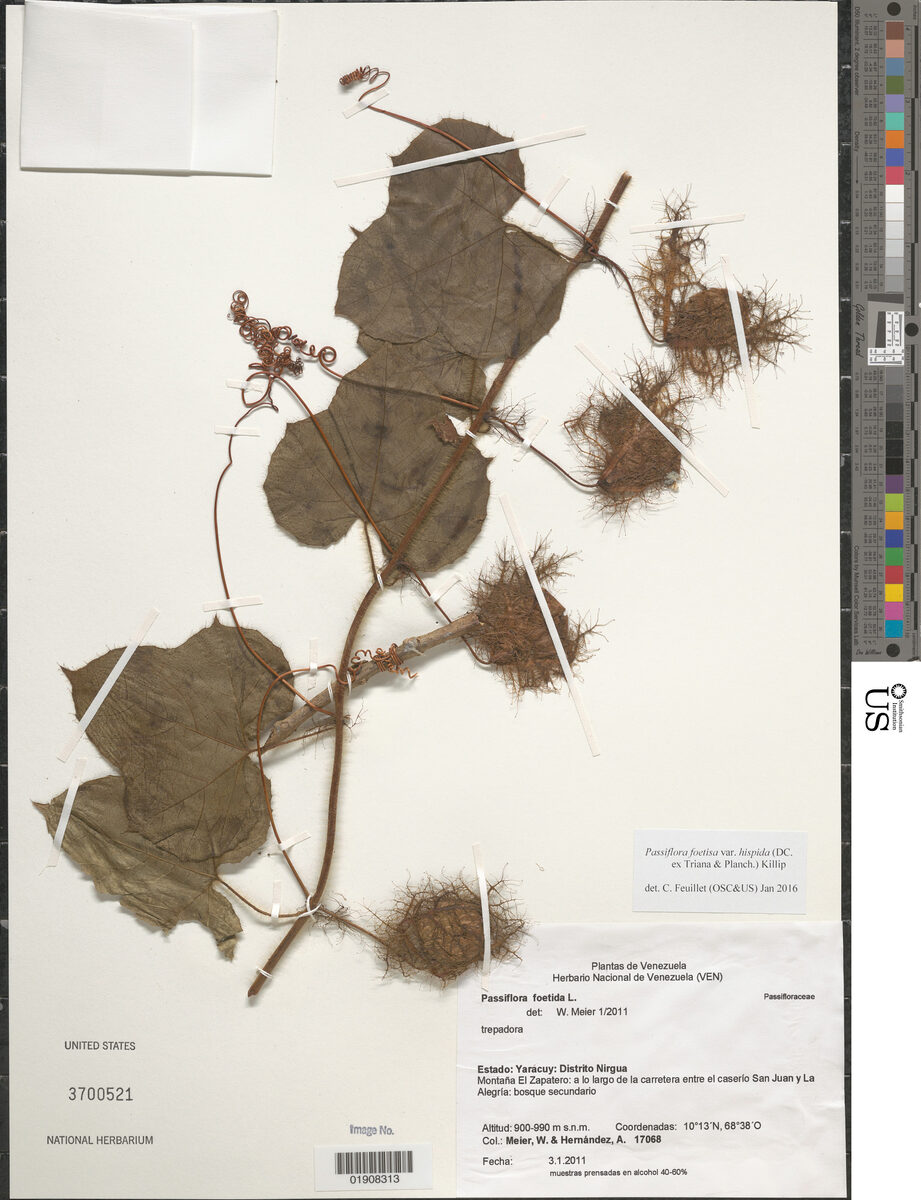
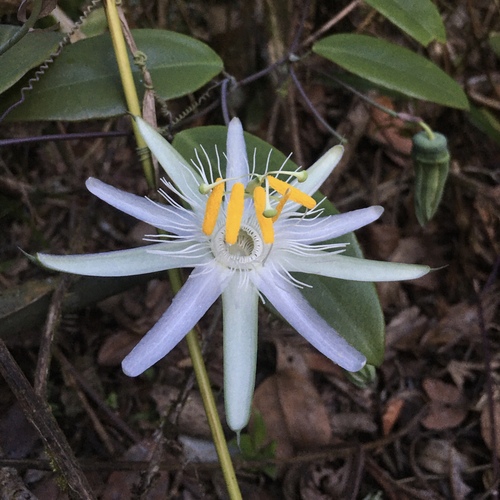
Passiflora tripartita
(Juss.) Poir.
Tasco, Curuba, Tumbo
iNaturalist· cc-by-nc
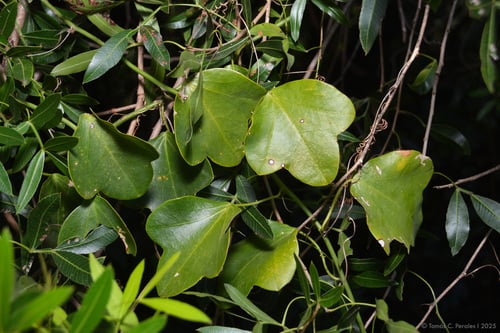
(c) Alice Shanks, some rights reserved (CC BY-NC)
iNaturalist· cc-by-nc
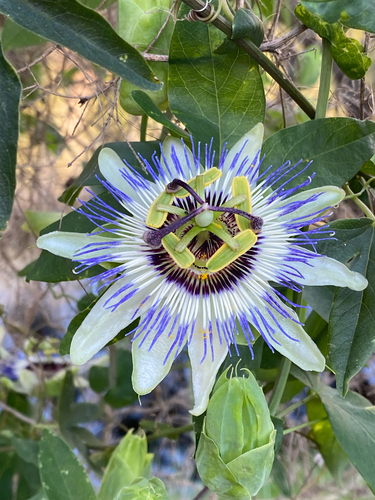
(c) Alice Shanks, some rights reserved (CC BY-NC)
iNaturalist· cc-by-nc
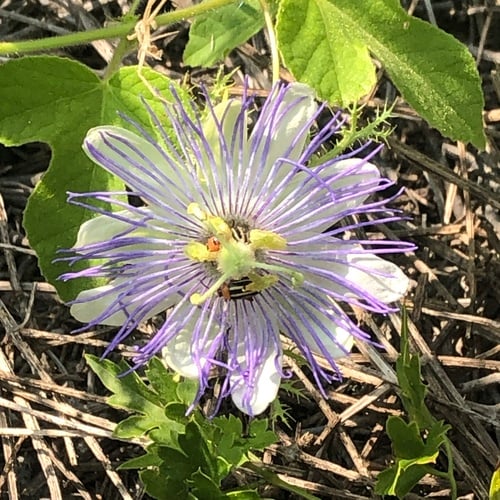
(c) barbarita, some rights reserved (CC BY-NC)
Summary
Source: WikipediaPassiflora tripartita also called curuba, tumbo, curuba de Castilla and tumbo serrano is a species of Passiflora from Peru, Bolivia, Ecuador, Colombia, and Brazil in areas at elevations of 2000 – 3200 meters.
Description
A vine. It grows 3 m high. The flowers are red. The fruit have a yellow skin and red pulp. The fruit are 7.6 cm long.
This description is brief — help expand it
Edible Uses
The fleshy pulp of the fruit is eaten raw or made into juices. Fruits are sold in local markets.
Traditional Uses
The fleshy layer of the fruit is eaten raw. It is also made into juices.
This uses section is brief — help expand it
Medicinal Uses
The leaves and roots of some, if not all, members of this genus contain a substance called 'passiflorina' which has similaritiesr to morphine and is an effective tranquilizer. We have no specific information for this species but many species are used in herbal infusions to calm the nerves and help bring about a restful sleep. The leaves of many species are also considered to be anthelmintic, antihysteric and diaphoretic. They are used in Brazil to combat intermittent fevers, cutaneous inflammations, and erysipelas.
Distribution
A tropical plant. In Chile it grows between 500-2,000 m altitude. It grows in humid areas with constant rain. It grows in full sun. It grows in hardiness zone 9. It can tolerate light frosts but not snow.
Where It Grows
Andes, Bolivia, Chile, Colombia, Ecuador*, Peru, South America,
Cultivation
Plants can be grown from fresh seed. It is best to leaves the pulp attached. Plants can be grown by cuttings, layering and air-layering.
Propagation
Seed - best sown as soon as it is ripe along with the pulp which will help break down the seed coat and speed up germination. Stored seed should be soaked for 24 hours in warm water and germination time can be reduced if the seed is then mixed with the juice of a fresh passion fruit (of any species). Even so, it can take 12 months for stored seed to germinate. Place the seed tray in a shady position, maintaining a temperature around 19 - 24°c. Prick the seedlings out into individual containers as soon as they are large enough to handle and plant out when large enough. Cuttings of young shoots, taken at the nodes. Layering. Very easy. Air layering.
Other Information
Fruit are sold in local markets. It is cultivated
Synonyms
Also Known As
Curuba comun
References (8)
- Encycl. suppl. 2:843. 1812
- Coppens d'Eeckenbrugge, G., S.D. Segura and E. Hodson de Jaramillo, 1997, Les fruits de la passion. Pp. 291-312 In L'amélioration des plantes tropicales. (A. Charrier and M. Jacquot ,eds.). CIRAD
- Fouqué, A., 1972, Espèces fruitières d'Amérique tropicale. Institut français de recherches fruitierès outre-mer
- Gori, B., et al, 2022, Understanding the diversity and biogeography of Colombian edible plants. Scientific Reports 12:7835
- Hedrick, U.P., 1919, (Ed.), Sturtevant's edible plants of the world. p 638
Show all 8 references Hide references
- Kermath, B. M., et al, 2014, Food Plants in the Americas: A survey of the domesticated, cultivated and wild plants used for Human food in North, Central and South America and the Caribbean. On line draft. p 620
- Torre, de la, L., et al, 2008, Enciclopedia de las Plantas Útiles del Ecuador. Herbario QCA. Pontificia Universidad Católica del Ecuador. p 488
- www.chileflora.com