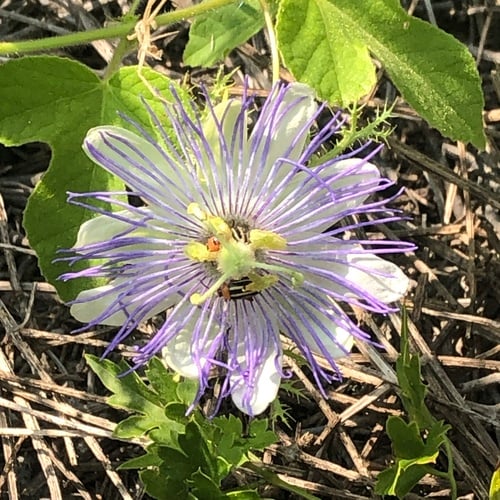
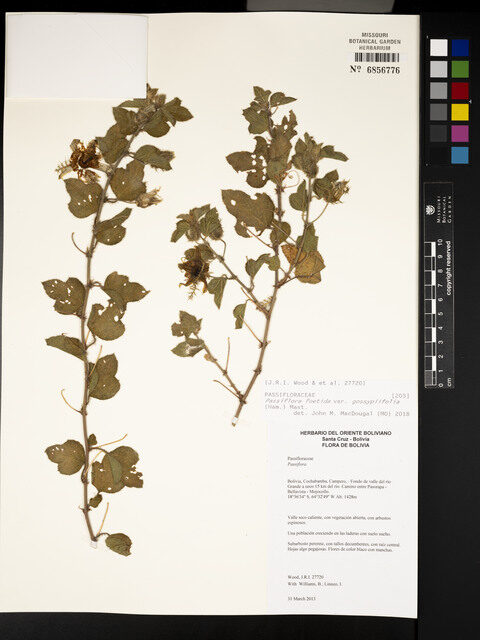
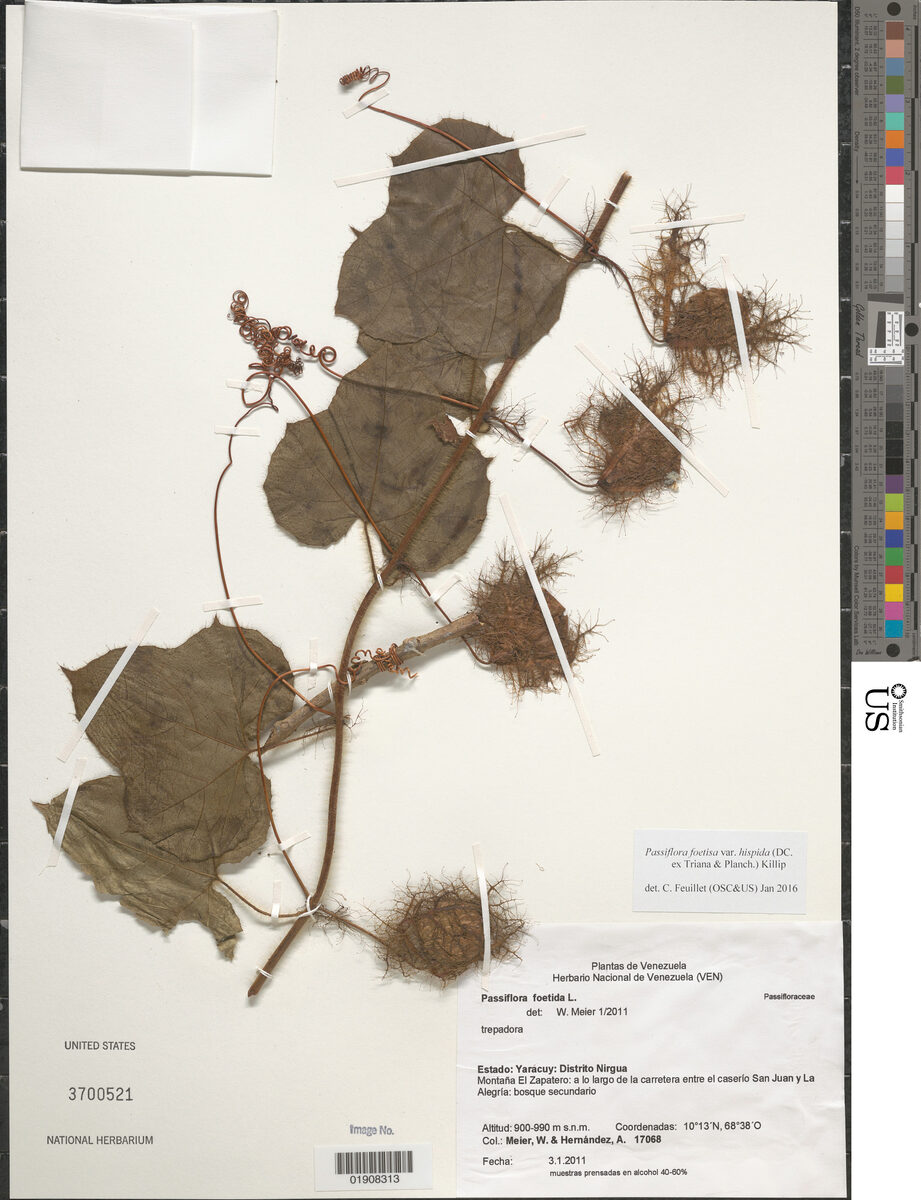
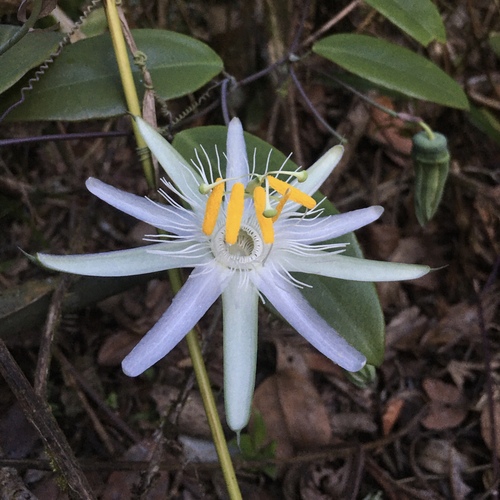
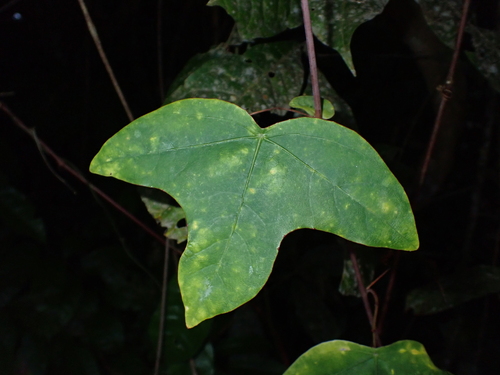
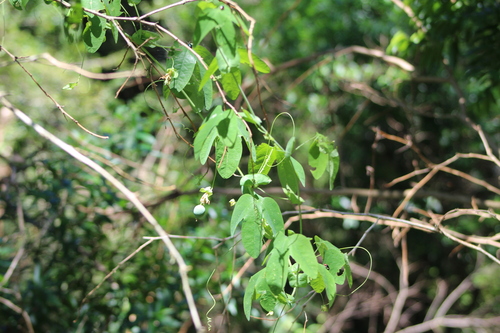
Passiflora umbilicata
(Griseb.) Harms
iNaturalist· cc-by-nc
(c) Martin Lowry, some rights reserved (CC BY-NC), uploaded by Martin Lowry
iNaturalist· cc-by-sa
(c) Hans B., some rights reserved (CC BY-SA)
iNaturalist· cc-by-nc-sa
(c) Smithsonian Institution, National Museum of Natural History, Department of Botany, some rights reserved (CC BY-NC-SA)
Summary
Source: WikipediaPassiflora umbilicata is a fast-growing evergreen climber reaching 5 meters tall with a 5-meter spread. Hardy to UK zone 9 and frost-tender, it flowers June to September with seeds ripening September to November. Hermaphroditic and bee-pollinated, it suits light sandy, medium loamy, and heavy clay soils with well-drained conditions. It tolerates mildly acid, neutral, and mildly alkaline pH, requires full sun, and prefers moist soil.
Description
Passiflora umbilicata is a fast-growing evergreen climber reaching 5 meters tall with a 5-meter spread. Hardy to UK zone 9 and frost-tender, it flowers June to September with seeds ripening September to November. Hermaphroditic and bee-pollinated, it suits light sandy, medium loamy, and heavy clay soils with well-drained conditions. It tolerates mildly acid, neutral, and mildly alkaline pH, requires full sun, and prefers moist soil.
Edible Uses
The fruit can be eaten raw or cooked and grows up to 70mm long and 40mm wide.
Medicinal Uses
None known
Known Hazards
Passion flower is not recommended during pregnancy because it may induce contractions. Consuming passion flower products may cause drowsiness, nausea, dizziness, abnormal heart rhythms, asthma, or rhinitis.
Distribution
A subtropical plant. In Argentina it grows between 1,000 to 4,000 m above sea level.
Where It Grows
Andes, Argentina, Bolivia, South America,
Cultivation
Passiflora umbilicata succeeds in cooler climates than most members of this genus, growing in warm, essentially frost-free temperate areas as well as the subtropics and at moderate elevations in the tropics. Plants require a temperature no lower than around 16°c when they are flowering in order to ensure fruit set. Requires a humus-rich, moist but well-drained soil and a position in dappled shade where it can grow up towards the sun. Prefers a circumneutral soil, disliking very acid or very alkaline conditions. Passiflora species tend to flower and fruit more freely when grown in soils of only moderate fertility. Plants are very tolerant of pruning and can be cut back to ground level if required to rejuvenate the plant. Plants in this genus are notably resistant to honey fungus. Very fast growing.
Propagation
Pre-soak seed for 12 hours in warm water, then sow in late winter or early spring in a warm greenhouse. Seed sown in January and grown on quickly can flower and fruit in its first year. Germination takes 1–12 months at 20°C. Prick seedlings out into individual pots when large enough to handle. If growing outdoors, keep plants in the greenhouse for their first winter and plant out in late spring or early summer after the last expected frosts. Mulch roots well in late autumn for cold protection. Take cuttings of young shoots (15cm with a heel) in spring, or try leaf bud cuttings in spring. Cuttings of fully mature wood taken in early summer take about 3 months and root at a high percentage.
Other Uses
None known
Notes
There are about 400 Passiflora species.
Synonyms
Also Known As
Enredadera del cerro, Lockosti
References (4)
- H. G. A. Engler & K. A. E. Prantl, Pflanzenfam. III, 6a:91. 1893
- Kermath, B. M., et al, 2014, Food Plants in the Americas: A survey of the domesticated, cultivated and wild plants used for Human food in North, Central and South America and the Caribbean. On line draft. p 620
- Plants for a Future database, The Field, Penpol, Lostwithiel, Cornwall, PL22 0NG, UK. http://www.scs.leeds.ac.uk/pfaf/
- Thomas, E., et al, 2008, The Relationship Between Plant Use and Plant Diversity in the Bolivian Andes, with Special Reference to Medicinal Plant Use. Hum Ecol (2008) 36:861–879