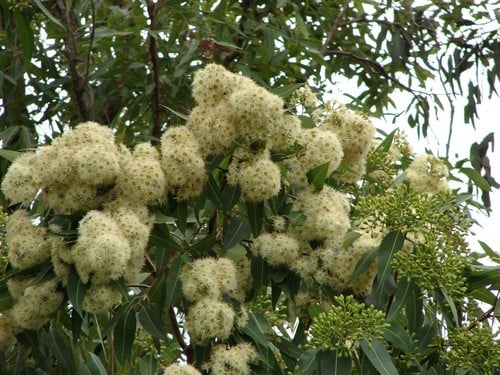
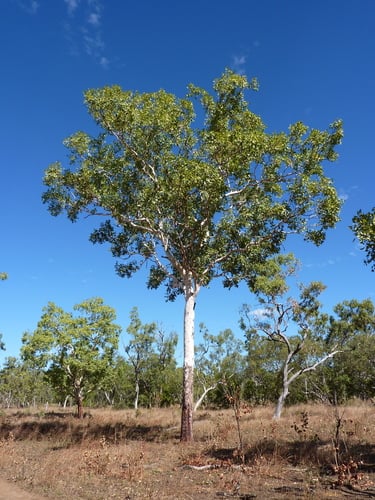
Leptospermum lanigerum - (Sol. ex Aiton.)Sm.
(Sol. ex Aiton.)Sm.
woolly tea-tree
gbif· cc-by-nc
dipsymum
gbif· cc-by-nc
dipsymum
gbif· cc-by-nc
dipsymum
Description
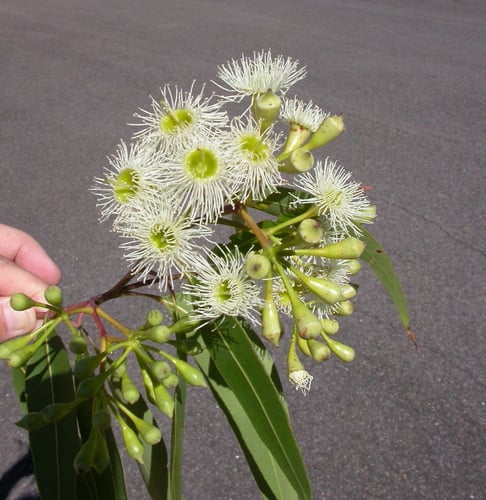
Leptospermum lanigerum is an evergreen Shrub growing to 5 m (16ft 5in) at a medium rate. See above for USDA hardiness. It is hardy to UK zone 8. It is in leaf all year, in flower from June to August. The species is hermaphrodite (has both male and female organs) and is pollinated by Insects. Suitable for: light (sandy) and medium (loamy) soils and prefers well-drained soil. Suitable pH: mildly acid and neutral soils. It cannot grow in the shade. It prefers moist soil. The plant can tolerates strong winds but not maritime exposure.
Edible Uses
Tea. The leaves are used as a tea substitute.
Distribution
Australia - New South Wales, Queensland, South Australia, Tasmania, Victoria.
Where It Grows
AUSTRALASIA: Australia (Tasmania, New South Wales (southeast), South Australia (southeast), Victoria)
Cultivation
Succeed in almost any neutral or acid soil of good or reasonable quality, preferring a light sandy loam and full sun. Grows best in an acid sandy soil. Prefers a position sheltered from hot or cold drying winds. Another report says that it tolerates fairly exposed positions and that has been our experience with it. Hardy to at least -7°c in Australian gardens, where it succeeds in sun or shade, it only succeeds outdoors in mild areas of Britain, requiring the protection of a wall in colder parts. Plants are hardy to about -15°c in Britain. Polymorphic. There are two distinct forms grown in Britain, one with smallish greyish leaves is sometimes known as L. cunninghamii, the second form has larger narrow glossy green leaves. Plants seldom grow taller than about 2 metres in Britain. Resents root disturbance. Does not regenerate from old wood. Plants in this genus are notably resistant to honey fungus.
Propagation
Seed - sow spring in a greenhouse and only just cover the seed. Prick out the seedlings into individual pots when they are large enough to handle and grow them on in the greenhouse for at least their first winter. Plant out in late spring or early summer, after the last expected frosts, and give some protection from the cold for their first winter or two outdoors. The seed remains viable for many years. Cuttings of half-ripe wood, 5 - 8 cm with a heel, early August in a frame. Over-winter in the greenhouse for its first year. Good percentage. Cuttings of almost mature wood, 4 - 5 cm with a heel, October/November in a frame. Good percentage.
Other Uses
Hedge Hedge Wood. This species can be grown as a hedge in positions that are not too exposed. When trimming, however, the plants should not be cut back into old wood because they will not grow back. Other Uses The wood is tough, hard, heavy and close grained. Durable when used internally. It is used for poles, stakes, tool handles etc. The wood makes a good fuel.