Eugenia pitanga
(O. Berg) Nied.
Pitanga
iNaturalist· cc-by-nc
(c) Patricio Cattay, some rights reserved (CC BY-NC), uploaded by Patricio Cattay
iNaturalist· cc-by-nc
(c) Puesto Yohazá, some rights reserved (CC BY-NC)
Summary
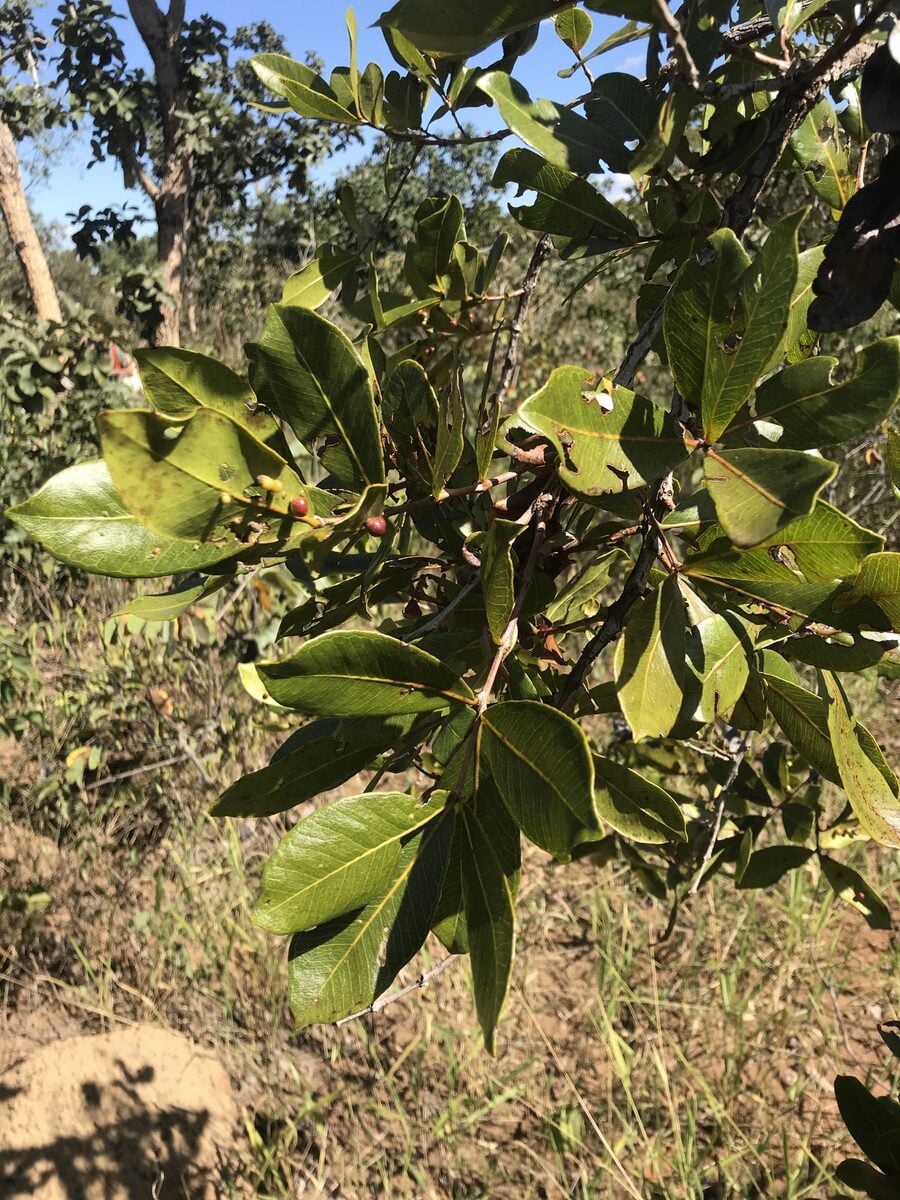
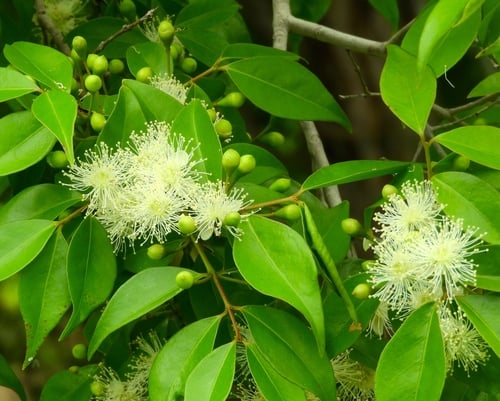
Source: WikipediaEugenia pitanga, commonly known as pitanga do cerrado or savanna pitanga, is a species of plant in the family Myrtaceae. It is found in the savannahs and grasslands of Argentina, Paraguay, and Brazil. It is a deciduous shrub that grows up to 2 metres tall, has rhizomatous rootstock allowing it to form dense thickets, and produces red, edible fruit, 15-25mm in diameter.
Description
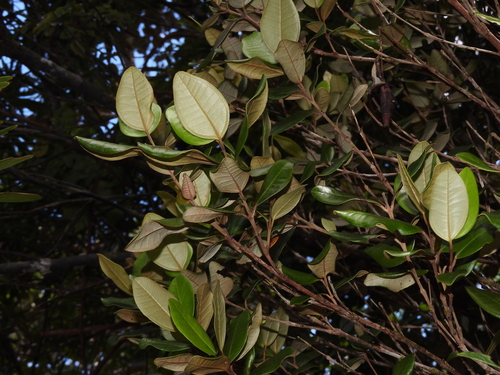
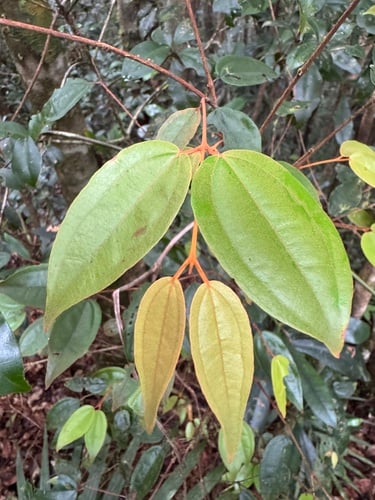
A shrub. It loses its leaves during the year. It develops underground stems or rhizomes. It grows 2 m tall. It forms dense thickets. The leaves are alternate. They can be papery or leathery and are shiny. They are 4-5 cm long. The flowers are white and occur singly or in groups of 2-5 in the axils of leaves. The flower stalks are 1-3 cm long. The fruit are round berries with ridges. They have a thick pulp.
Edible Uses
The red fruit can be eaten raw and cooked in jellies etc. It is excellent for jams, jellies, syrups and ice cream. A thick, very succulent pulp with a pleasant, sweet-acidic flavour. The globose fruit is 15 - 25mm in diameter.
Traditional Uses
The fruit are eaten fresh. They are also cooked and used for jellies.
This uses section is brief — help expand it
Medicinal Uses
The leaves are aromatic and balsamic, antirheumatic and useful in the treatment of gout; they contain the alkaloid 'pitanguina', which is a substitute for 'quinine' in the treatment of fevers, especially telluric ones.
Distribution
A subtropical plant. It grows naturally in savannas and grasslands in Brazil. In Argentina it grows from sea level to 1,100 m above sea level.
Where It Grows
Argentina, Asia, Brazil*, Pacific, Paraguay, Philippines, SE Asia, South America*,
Cultivation
Plants are grown from seed.
Other Uses
The wood is used for fuel. The plant has a rhizomatous rotstock and is used for making living hedges.
Notes
There are about 550 Eugenia species. They are mostly in tropical and subtropical South America.
Nutrition
| Part | Moisture | kJ | kcal | Protein | Vit A | Vit C | Iron | Zinc |
|---|---|---|---|---|---|---|---|---|
| Fruit | 85.8 | 213 | 51 | 0.8 | 635 | 14 | 0.2 | — |
Synonyms
Also Known As
Pitanga-peba
References (9)
- Bortolotto, I. M., et al, 2018, Lista preliminar das plantas alimenticias nativas de Mato Grosso do Sul, Brasil. Iheringia, Serie Botanica, Porto Alegre, 73 (supl.):101-116 (As Stenocalyx pitanga O. Berg)
- Brack, P., et al, 2020, Frutas nativas do Rio Grande do Sul, Brasil: riqueza e potencial alimentício. Native fruits of Rio Grande do Sul, Brazil: richness and potential as food. Rodriguésia 71: e03102018.
- Coronel, R.E., 1982, Fruit Collections in the Philippines. IBPGR Newsletter p 9
- Enum. Myrt. Bras. 155. 1893
- Fouqué, A., 1972, Espèces fruitières d'Amérique tropicale. Institut français de recherches fruitierès outre-mer
Show all 9 references Hide references
- Hedrick, U.P., 1919, (Ed.), Sturtevant's edible plants of the world. p 300
- Kermath, B. M., et al, 2014, Food Plants in the Americas: A survey of the domesticated, cultivated and wild plants used for Human food in North, Central and South America and the Caribbean. On line draft. p 357
- Lorenzi, H., Bacher, L., Lacerda, M. & Sartori, S., 2006, Brazilian Fruits & Cultivated Exotics. Sao Paulo, Instituto Plantarum de Estuados da Flora Ltda. p 209
- www.colecionandofrutas.org