Boscia angustifolia
A. Rich.
Rough-leaved shepherd's tree, Rough-leaved boscia
iNaturalist· cc-by-nc
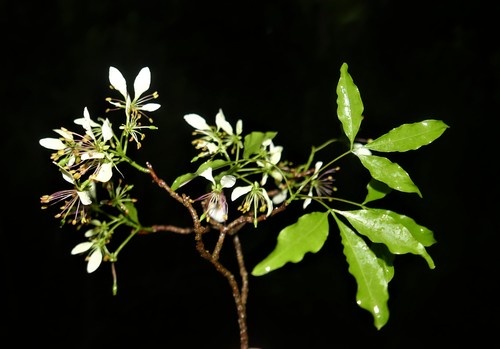
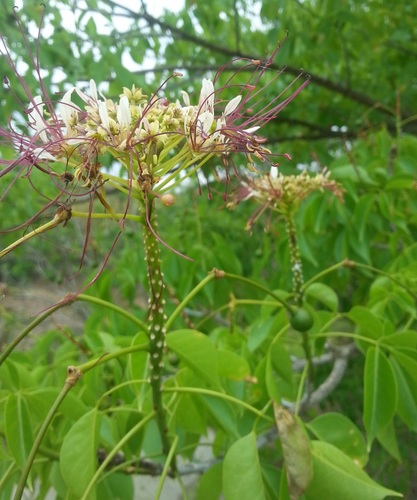
(c) Mark Hyde, Bart Wursten and Petra Ballings, some rights reserved (CC BY-NC)
iNaturalist· cc-by-nc
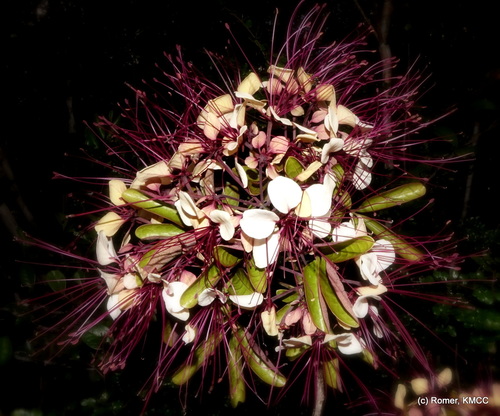
(c) Mark Hyde, Bart Wursten and Petra Ballings, some rights reserved (CC BY-NC)
iNaturalist· cc-by-nc-nd
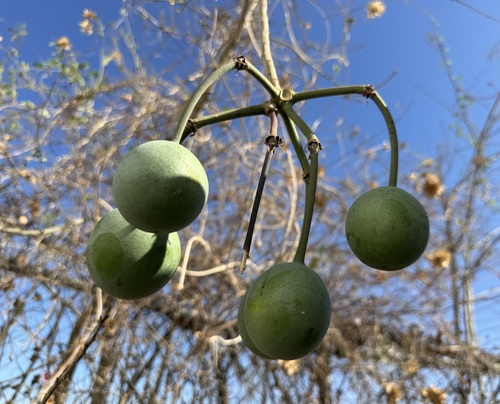
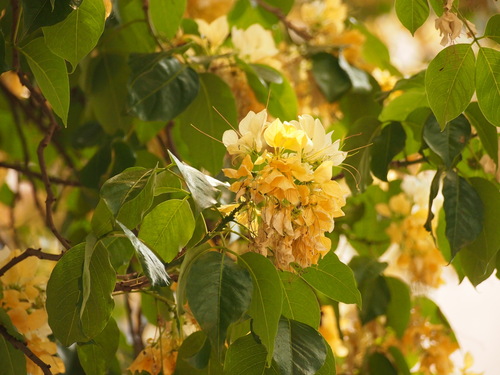
(c) Joachim Louis, some rights reserved (CC BY-NC-ND), uploaded by Joachim Louis
Summary
Source: WikipediaBoscia angustifolia is a shrub or small tree with lanceolate leaves commonly found in the savannah zones of Africa, from Senegal moving eastwards to Sudan. It is part of the Capparaceae family. The plant is also known as the rough-leaved shepherds tree.
Description
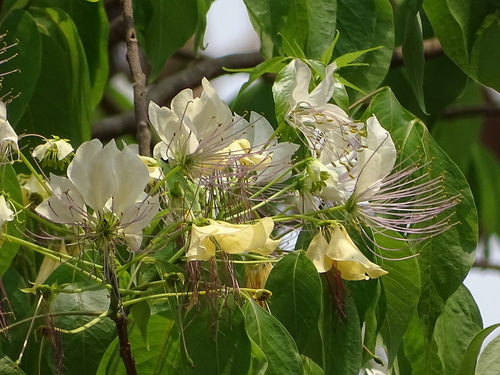
A small evergreen tree. It grows to 8-12 m tall. The dark is pale grey. The trunk is fluted. The leaves are alternate or in groups of 2-4. They are oblong and 2-7 cm long by 0.7-2 cm wide. They are leathery. They are dark green above and much paler underneath. The flowers are small and sweet-smelling. They occur in crowded heads near the ends of branches. The fruit is round and 10 mm across. It is yellow and almost black. The seeds are in a sticky pulp. This may now be a synonym of Bosica integrifolia J, St-Hil.
Edible Uses
The leaves, seeds, and bitter fruit are cooked and eaten. The sweet stems provide sugar. The inner bark is used for tea and added to soups or to sweeten milk. The flowers are used as flavorings and in relishes, and the flower buds are pickled in vinegar for use as capers. The roots can be made into tea.
Traditional Uses
The leaves are cooked and eaten. The seeds are cooked and eaten. The fruit is bitter but eaten. The stems are sweet and provide sugar. The roots can also be used to make tea. The inner bark is used for tea and added to soups. It is also used to sweeten milk. The flowers are used as flavourings and in relishes. The flower buds are pickled in vinegar and used as capers.
Medicinal Uses
The roots are used in decoctions to treat a variety of bacteria infection and other health issues including diarrhea, pneumonia, urinary tract infection, chest pain and boil. Its leaves and fruit are used to induce purging and to act as a cholagogue.
Distribution
A tropical plant. It grows in dry type of woodland. It grows in dry sites with rainfall between 200-400 mm per year. It grows in the Sahel. It grows from sea level to 2,100 m above sea level. It can grow in arid places. It is often on termite mounds.
Where It Grows
Africa, Arabia, Botswana, Burkina Faso, Cameroon, Central Africa, Central African Republic, CAR, East Africa, Ethiopia, Gambia, Guinea, Guinée, Kenya, Malawi, Mali, Middle East, Mozambique, Namibia, Niger, Nigeria, Sahel, Saudi Arabia, Senegal, Somalia, South Africa, Southern Africa, Sudan, Tanzania, Uganda, West Africa, Zambia, Zimbabwe,
Cultivation
A plant of the drier tropical and subtropical areas of Africa, it succeeds at elevations up to 2,100 metres. It prefers a mean annual rainfall in the range 200 - 800mm. Tolerates a wide variety of soils, growing on free draining red soils, laterites, or on rocky screes. In Zambia it is a good source of bee forage.
Propagation
Seed. This species is difficult to raise, but direct seeding is recommended for its propagation.
Other Uses
The wood is hard. It is used in carpentry and for making water storage vessels. The wood was formerly converted into charcoal for making gunpowder. Readily establishing itself in adverse conditions, this species has potential for reclaiming degraded sites.
Notes
There are 37 Boscia species.
Nutrition
| Part | Moisture | kJ | kcal | Protein | Vit A | Vit C | Iron | Zinc |
|---|---|---|---|---|---|---|---|---|
| Fruit | 81.5 | 345 | 83 | 7 | — | — | — | — |
| Seeds | — | — | — | — | — | — | — | — |
| Leaves | — | — | — | — | — | — | — | — |
| Bark | — | — | — | — | — | — | — | — |
Synonyms
Also Known As
Emejen, Farin-moro, Fula-fulfulde, Inkinza, Kursan, Mpetu, Mudhlakono, Mupama, Musaza, Pulupumpi, Umbalabala, Umgugudu
References (26)
- Assefa, A. & Abebe, T., 2010, Wild Edible Trees and Shrubs in the Semi-arid Lowlands of Southern Ethiopia. Journal of Science and Development 1 (1) 2010
- Belem, M., et al, 2017, Strategy of Conservation and Protection of Wild Edible Plants Diversity in Burkina Faso. ANADOLU 27 (2) 2017, 82- 90
- Bircher, A. G. & Bircher, W. H., 2000, Encyclopedia of Fruit Trees and Edible Flowering Plants in Egypt and the Subtropics. AUC Press. p 62
- Burkill, H. M., 1985, The useful plants of west tropical Africa, Vol. 1. Kew.
- Busson, 1965,
Show all 26 references Hide references
- Fowler, D. G., 2007, Zambian Plants: Their Vernacular Names and Uses. Kew. p 16
- Fox, F. W. & Young, M. E. N., 1982, Food from the Veld. Delta Books. p 145
- Gallagher, D. E., 2010, Farming beyond the escarpment: Society, Environment, and Mobility in Precolonial Southeastern Burkina Faso. PhD University of Michigan
- Grivetti, L. E., 1980, Agricultural development: present and potential role of edible wild plants. Part 2: Sub-Saharan Africa, Report to the Department of State Agency for International Development. p 24
- Hahn, K., et al, 2018, The Use of Wild Plants for Food: a National Scale Analysis for Burkina Faso (West Africa) Flora et Vegetatio Sudano-Sambesica 21, 25-33
- Jardin, C., 1970, List of Foods Used In Africa, FAO Nutrition Information Document Series No 2.p 39, 60
- Le Houerou, H. N., (Ed.), 1980, Browse in Africa. The current state of knowledge. International Livestock Centre for Africa, Ethiopia. p 162
- Malaisse, F., 1997, Se nourrir en floret claire africaine. Approche ecologique et nutritionnelle. CTA., p 59
- Martin, F.W. & Ruberte, R.M., 1979, Edible Leaves of the Tropics. Antillian College Press, Mayaguez, Puerto Rico. p 180
- Maydell, H. von, 1990, Trees and shrubs of the Sahel: their characteristics and uses. Margraf. p 197
- Menninger, E.A., 1977, Edible Nuts of the World. Horticultural Books. Florida p 10
- Morgan, W. T. W., 1981, Ethnobotany of the Turkana: Use of plants by a Pastoral People and Their Livestock in Kenya. Economic Botany 35(1):96-130
- Palgrave, K.C., 1996, Trees of Southern Africa. Struik Publishers. p 187
- Peters, C. R., O'Brien, E. M., and Drummond, R.B., 1992, Edible Wild plants of Sub-saharan Africa. Kew. p 75
- Royal Botanic Gardens, Kew (1999). Survey of Economic Plants for Arid and Semi-Arid Lands (SEPASAL) database. Published on the Internet; http://www.rbgkew.org.uk/ceb/sepasal/internet [Accessed 5th April 2011]
- Vivien, J., & Faure, J.J., 1996, Fruitiers Sauvages d'Afrique. Especes du Cameroun. CTA p 97
- Wickens, G.E., 1995, Edible Nuts. FAO Non-wood forest products. FAO, Rome. p 112
- Williamson, J., 2005, Useful Plants of Malawi. 3rd. Edition. Mdadzi Book Trust. p 40
- Boscia integrifolia
- www.zimbabweflora.co.zw 2011
- www.worldagroforestrycentre.org/sea/products/afdbases/af/asp/SpeciesInfo.asp?SpID=17984