Cordia boissieri
A. DC.
Wild olive, Mexican olive
iNaturalist· cc-by-nc
(c) Jessica Wilson, some rights reserved (CC BY-NC), uploaded by Jessica Wilson
iNaturalist· cc-by-nc
(c) Independencia, some rights reserved (CC BY-NC)
iNaturalist· cc-by
(c) David Anderson, some rights reserved (CC BY), uploaded by David Anderson
Summary
Source: WikipediaCordia boissieri is a white-flowered, evergreen shrub or small tree in the family Cordiaceae. Its native range extends from southern Texas in the United States south to central Mexico. Common names include anacahuita, Mexican olive, white cordia, and Texas wild olive.
Description
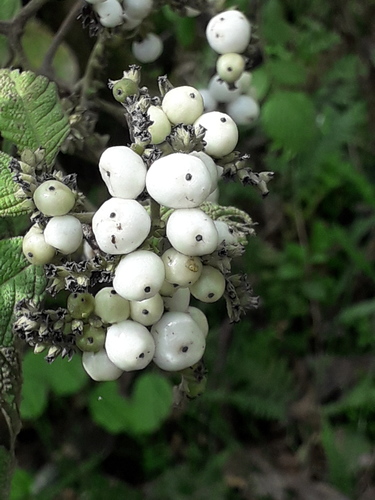
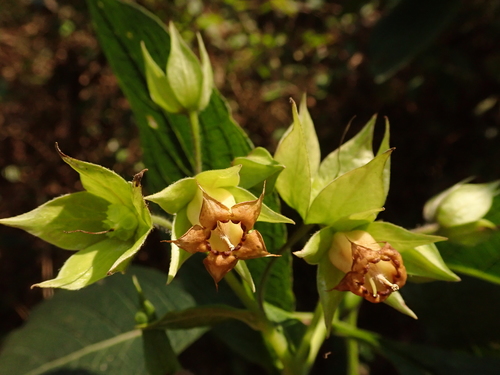
A small tree. It grows 5-7 m high. It spreads 3-5 m across. The leaves are yellow-green above and silvery underneath. The leaves are 5-10 cm long and 5-8 cm wide. They are oval and velvety. It keeps its leaves in warm climates and loses its leaves in colder places. The flowers are trumpet shaped and 7 cm wide. The flowers have yellow throats. There is a flower at the tip and others clustered below it. The fruit are like olives. They are 1.5-2.5 cm long and white or yellow-green. There is a single hard stone with 2 seeds.
Edible Uses
The fruit is eaten by local people, but if eaten raw it said to cause dizziness as if one were intoxicated. It is also used to make a syrup.The reddish-brown ovoid fruit is about 2.5 - 3 cm long with a sweet flesh.
Traditional Uses
The fruit are used for jelly, jams or desserts. Caution: Some reports say the fruit should not be eaten in large amounts as they can cause dizziness.
Medicinal Uses
Jellies made from the fruits are reportedly safe to eat. A syrup made from the fruits is used to dye cloth and treat coughs. The leaves are used to alleviate rheumatism and pulmonary illness. The wood is used as firewood and for carpentry. Anacahuita is cultivated as an ornamental for its compact size and showy flowers. It is hardy to USDA Zone 9a.
Known Hazards
Some reports indicate the fruit should not be eaten in large amounts as they can cause dizziness.
Distribution
It is a subtropical plant. It can grow in full sun or light shade.
Where It Grows
Asia, India, Mexico, North America*, USA,
Cultivation
Plants can be grown from seed. They are best sown fresh. They possibly grow better with some warm treatment of 20°C for 30 days and cold treatment at 4°C for another 30 days. The seeds can be sown in the stone and germinate in 3-6 weeks. Softwood cuttings can be used and is best is rooting hormone is used. Air layering is possible.
Propagation
Seed - very slow to germinate, the process can be sped up if the seed is scarified by lightly abrading the seedcoat to allow easier ingress of water. Cuttings. Air layering.
Other Uses
A dye is obtained from the plant. No more details. The heartwood is dark brown, the sapwood light brown. The wood is light in weight, rather soft and close-grained. Of little value, but yokes and other articles are made from it.
Production
It has a moderate growth rate.
Synonyms
Also Known As
Anacahuita, Nacahua, Texas olive
References (5)
- Kermath, B. M., et al, 2014, Food Plants in the Americas: A survey of the domesticated, cultivated and wild plants used for Human food in North, Central and South America and the Caribbean. On line draft. p 260
- Lyle, S., 2006, Discovering fruit and nuts. Land Links. p 152
- Piedra-Malagón, E. M. et al, 2022, Edible native plants of the Gulf of Mexico Province. Biodiversity Data Journal 10: e80565 p 14
- Prodr. 9:478. 1845
- Segura, S. et al, 2018, The edible fruit species in Mexico. Genet Resour Crop Evol (2018) 65:1767–1793