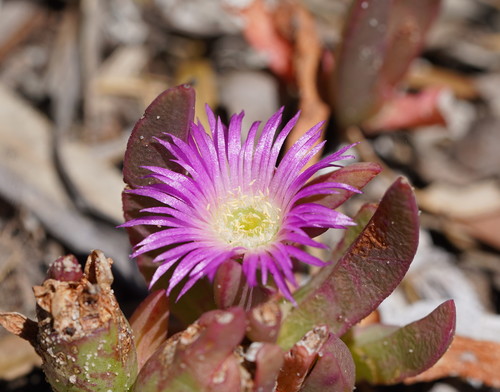
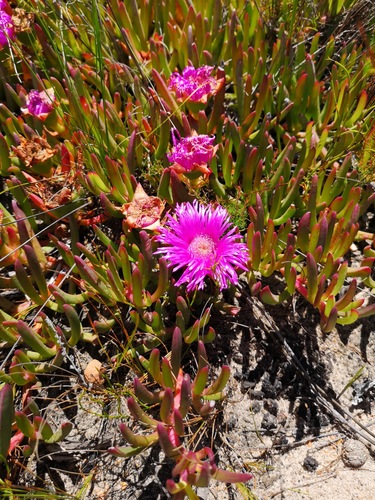
Carpobrotus chilensis
(Molina) N. E. Br.
Sea fig
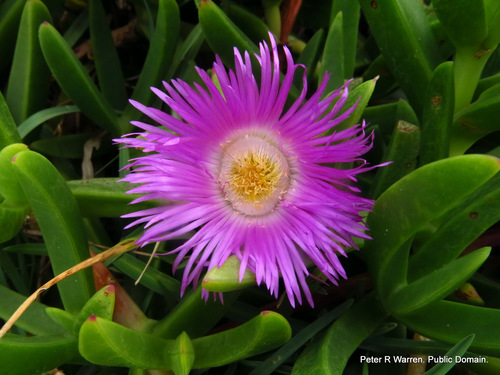
iNaturalist· cc-by-nc
(c) Peter Zika, some rights reserved (CC BY-NC), uploaded by Peter Zika
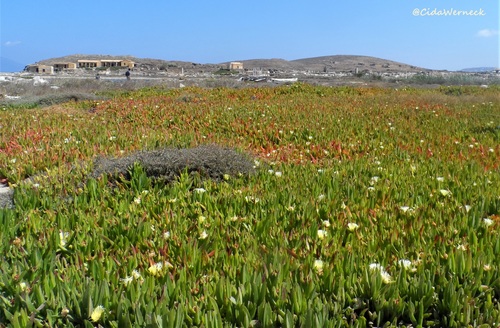
iNaturalist· cc-by-nc
(c) Jose Marfori, some rights reserved (CC BY-NC)
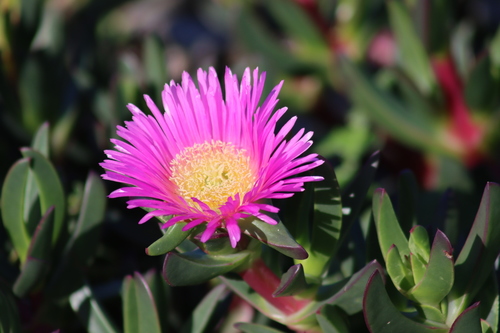
iNaturalist· cc-by-nc
(c) fouquieria, some rights reserved (CC BY-NC)
Summary
Source: WikipediaCarpobrotus chilensis is a species of edible succulent plant known by the common name sea fig. It grows on coastal sand dunes and bluffs and is used as an ornamental plant. However, along with its relative C. edulis, it has invaded sections of the California coast at the expense of native vegetation, and is subject to control efforts.
Description
A succulent herb. The stems can be 2 m long. The blades are triangle shaped. It is very similar to Carpobrotus edulis. The flowers open in the morning and close at night.
Edible Uses
The plant has a pleasant flavour, although it can be laxative if eaten in high quantity, especially its fruit. The plant can be consumed raw or cooked (especially its leaves), or dried for future use or made into pickles and chutney. There is only a tiny amount of flesh in the fruit, and it must be fully ripe otherwise it is very sour. The leaves can be used in salads and can also be used as a replacement for pickled cucumber.
Traditional Uses
The fruit are eaten when very ripe.
This uses section is brief — help expand it
Medicinal Uses
The leaf juice is acerbic and slightly antiseptic. It can be mixed with water and used to treat diarrhoea, dysentery and stomach cramps, and can also be gargled to alleviate laryngitis, sore throat and mouth infections. Masticating its leaf tip and ingesting the juice may relieve a sore throat. The leaf juice is also used externally as a calming curative for burns, bruises, scrapes, cuts, grazes and sunburn, ringworm, eczema, dermatitis, sunburn, herpes, nappy rash, cold sores, cracked lips, chafing, skin conditions and allergies and curative for insect stings.
Distribution
It is a warm temperate plant.
Where It Grows
America, Argentina, Chile, Mexico, North America, South Africa, South America, USA,
Cultivation
It can be grown by cuttings,
Propagation
Seed - surface sow in containers. Lower night-time temperatures are beneficial. The seed usually germinates in 7 - 10 days at 23°c. When they are large enough to handle, prick the seedlings out into individual pots and grow them on until large enough to plant out. Cuttings at any time during the growing season. Allow the cutting to dry in the sun for a day or two then pot up in a very sandy mix. Very easy.
Other Uses
Species in this genus have a vigorous, prostrate growth habit, producing a dense carpet of foliage and making a very effective ground cover. They can be planted in maritime areas, especially in Mediterranean climates, in order to prevent soil erosion in sandy soils, dunes and on banks. The plant has very fleshy leaves and is moderately fire-resistant. It can be used in barrier plantings to prevent the spread of forest fires.
Notes
There are about 25 Carpobrotus species. Also put in the family Mesembryanthemaceae. It forms hybrids.
Synonyms
References (6)
- Bircher, A. G. & Bircher, W. H., 2000, Encyclopedia of Fruit Trees and Edible Flowering Plants in Egypt and the Subtropics. AUC Press. p 85
- J. Bot. 66:324. 1928
- Kermath, B. M., et al, 2014, Food Plants in the Americas: A survey of the domesticated, cultivated and wild plants used for Human food in North, Central and South America and the Caribbean. On line draft. p 186
- Leon-Lobos, P., et al, 2022, Patterns of Traditional and Modern Uses of Wild Edible Native Plants of Chile: Challenges and Future Perspectives. Plants (Basel) v 11 (6)
- Lyle, S., 2006, Discovering fruit and nuts. Land Links. p 108
Show all 6 references Hide references
- Wikipedia