Carpobrotus virescens
(Haw.) Schwantes
Western pigface, Stout pigface, Bain, Coastal pigface
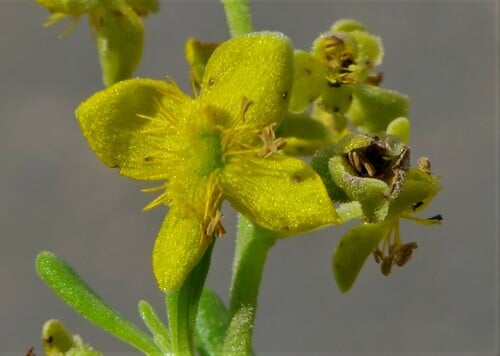
iNaturalist· cc-by-nc
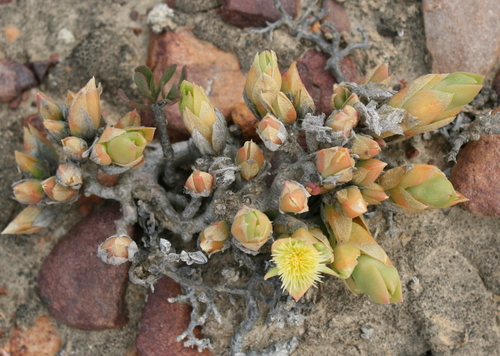
(c) David McCorquodale, some rights reserved (CC BY-NC), uploaded by David McCorquodale
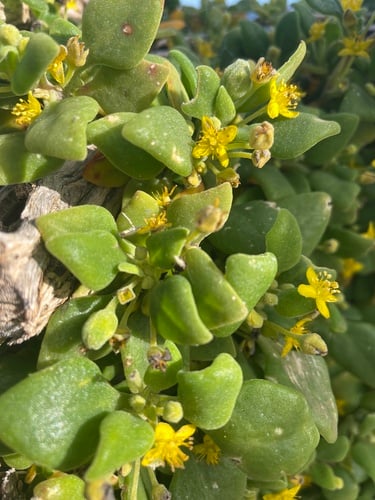
iNaturalist· cc-by-nc
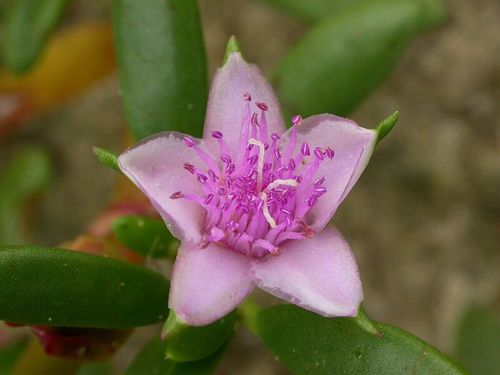
(c) Melinda Thompson, some rights reserved (CC BY-NC), uploaded by Melinda Thompson
iNaturalist· cc-by
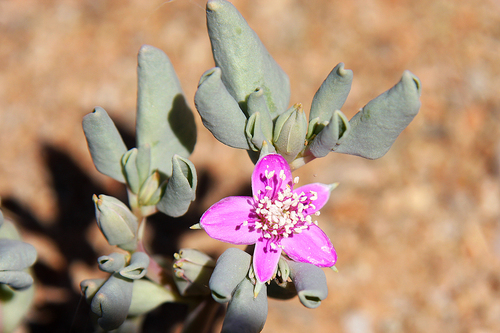
(c) Thomas Mesaglio, some rights reserved (CC BY), uploaded by Thomas Mesaglio
Summary
Source: WikipediaCarpobrotus virescens, commonly known as coastal pigface, is a prostrate coastal succulent shrub of the family Aizoaceae native to Western Australia. The Noongar peoples know the plant as Kolbogo or Metjarak.
Description
A herb. It is succulent and crawls over the ground. The branches can be 2 m long. The leaves are green or red. They are in opposite pairs and have 3 sides. The leaves are fleshy and up to 6.5 cm long. The flowers are attractive pink. They are 4-6 cm across. They have a white centre. When the petals drop off the fruiting base of the flower swells up. This turns purplish-red. The centre is juicy. It contains seeds in a white pulp.
Edible Uses
None known.
Traditional Uses
The sweet succulent fruit are eaten fresh or dried.
This uses section is brief — help expand it
Medicinal Uses
None known.
Distribution
Temperate. They grow in a coastal or salty environment. It can grow on beaches and sand dunes. It is best in light to medium well-drained soils in an open sunny position. It is resistant to drought and frost.
Where It Grows
Australia*,
Cultivation
Plants can be grown from seed, cuttings or division of the stems which have rooted.
Other Uses
None known.
Notes
There are about 25 Carpobrotus species. Also put in the family Mesembryanthemaceae.
Synonyms
References (12)
- Bindon, P., 1996, Useful Bush Plants. Western Australian Museum. p 76
- Bodkin, F., 1991, Encyclopedia Botanica. Cornstalk publishing, p 217
- Bonney, N., 2012, Edible Wild Native Plants for Southern Australia. p 28
- Daw, B., Walley, T. & Keighery, G., 2001, Bush Tucker. Plants of the South-West. Department of Conservation and Land Management. Western Australia. p 4
- Elliot, W.R., & Jones, D.L., 1982, Encyclopedia of Australian Plants suitable for cultivation. Vol 2. Lothian. p 467
Show all 12 references Hide references
- Flora of Australia, Volume 4, Phytolaccaceae to Chenopodiaceae, Australian Government Publishing Service, Canberra (1984) p 27
- Hussey, B.M.J., Keighery, G.J., Cousens, R.D., Dodd, J., Lloyd, S.G., 1997, Western Weeds. A guide to the weeds of Western Australia. Plant Protection Society of Western Australia. p 76
- Lazarides, M. & Hince, B., 1993, Handbook of Economic Plants of Australia, CSIRO. p 49
- Low, T., 1991, Wild Food Plants of Australia. Australian Nature FieldGuide, Angus & Robertson. p 30
- Low, T., 1992, Bush Tucker. Australia’s Wild Food Harvest. Angus & Robertson. p 58
- Paczkowska, G. & Chapman, A.R., 2000, The Western Australian Flora. A Descriptive Catalogue. Western Australian Herbarium. p 134
- Smith, K & I., 1999, Grow your own bushfoods. New Holland. Australia. p 70