Porphyra yezoensis
Ueda
Susabi-nori
Bangiaceae Edible: Algae, Fronds, Seaweed
wikimedia· cc-by-sa
Wikimedia Commons - Anonymous Powered
wikimedia· cc-by-sa
Wikimedia Commons - Gabriele Kothe-Heinrich
Description
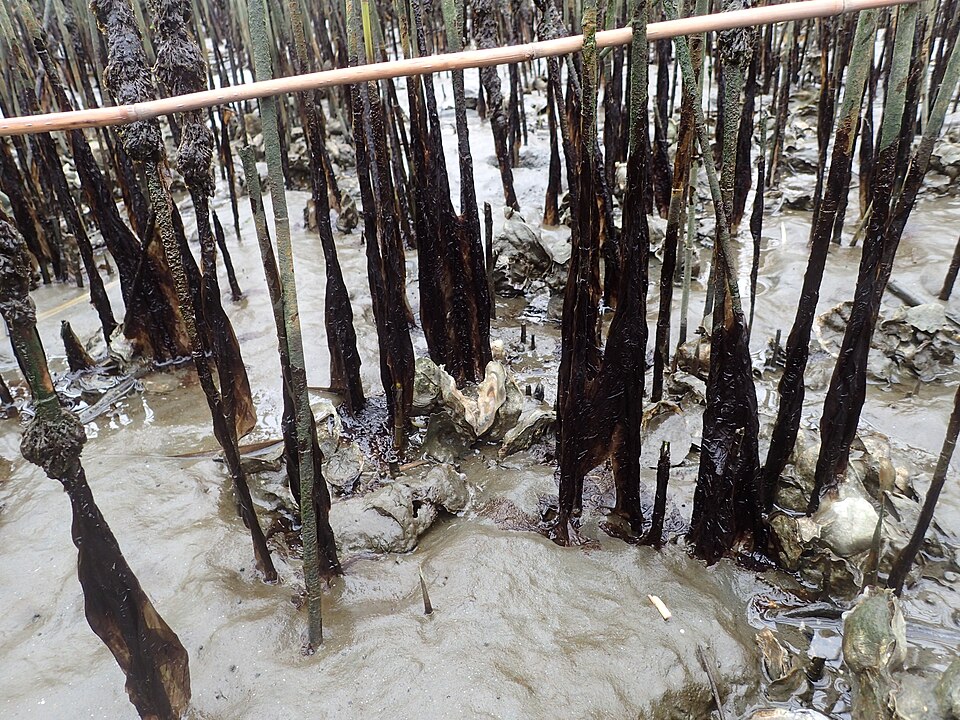
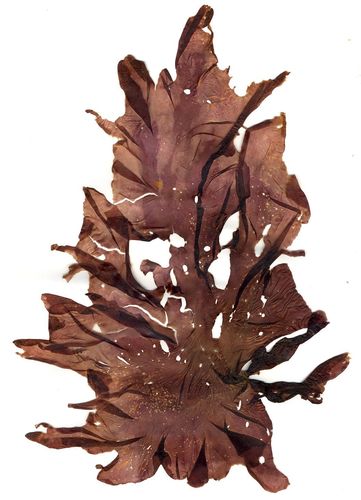
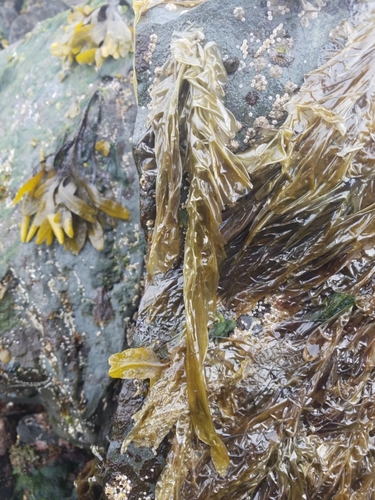
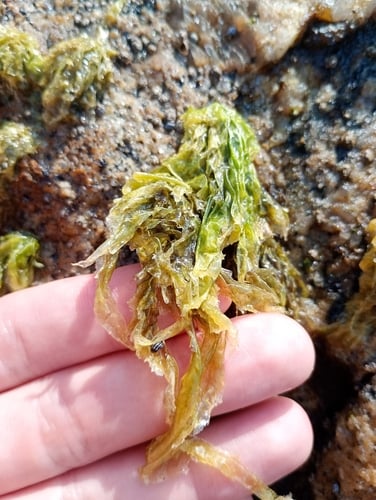
A seaweed. It is like a thin membrane and purple or red. It is 20-30 cm long and 10-18 cm wide. The edges are wavy.
This description is brief — help expand it
Edible Uses
The ruffled fronds are dried and processed into nori sheets, which are used to wrap rice and other snack foods.
Traditional Uses
The ruffled fronds are used for making dried nori sheets. These are used to wrap rice and other snack foods.
This uses section is brief — help expand it
Distribution
It is a temperate plant. It grows on inter-tidal rocks.
Where It Grows
Asia, China, Japan, Korea, SE Asia, Singapore,
Notes
It is an important source of Vitamin B12.
Nutrition
| Part | Moisture | kJ | kcal | Protein | Vit A | Vit C | Iron | Zinc |
|---|---|---|---|---|---|---|---|---|
| Fronds | 8.4 | 632 | 151 | 34.8 | — | 3 | 2.3 | 0.4 |
References (9)
- Facciola, S., 1998, Cornucopia 2: a Source Book of Edible Plants. Kampong Publications, p 258
- http://www.seavegetables.com
- Hu, Shiu-ying, 2005, Food Plants of China. The Chinese University Press. p 261
- Lee, B., 2008, Seaweed Potential as a marine vegetable. RIRDC Publication No. 08/009
- Pereira, L., 2011, A Review of the Nutrient Composition of Selected Edible Seaweeds. In Seaweed. Pomin V. H., (Ed.) Nova Science Publishers, Inc
Show all 9 references Hide references
- Pillay, T. V. R. & Kutty, M. N., 2005, Aquaculture Principles and Practices. 2nd edition. Blackwell. p. 580
- Small, E., 2009, Top 100 Food Plants. The world's most important culinary crops. NRC Research Press. p 482
- Tanaka,
- Zemke-White, W. L. & Ohno, M., 1999, World seaweed utilisation: An end-of-century summary. Journal of Applied Phycology 11: 369-376