Bombax costatum
Pellgr. & Vuillet
Red-flowered silk cotton tree
iNaturalist· cc-by-sa
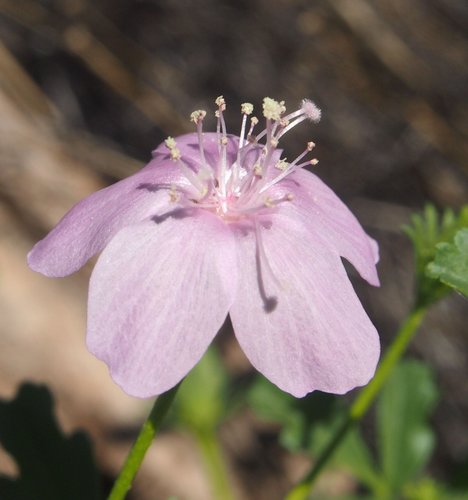
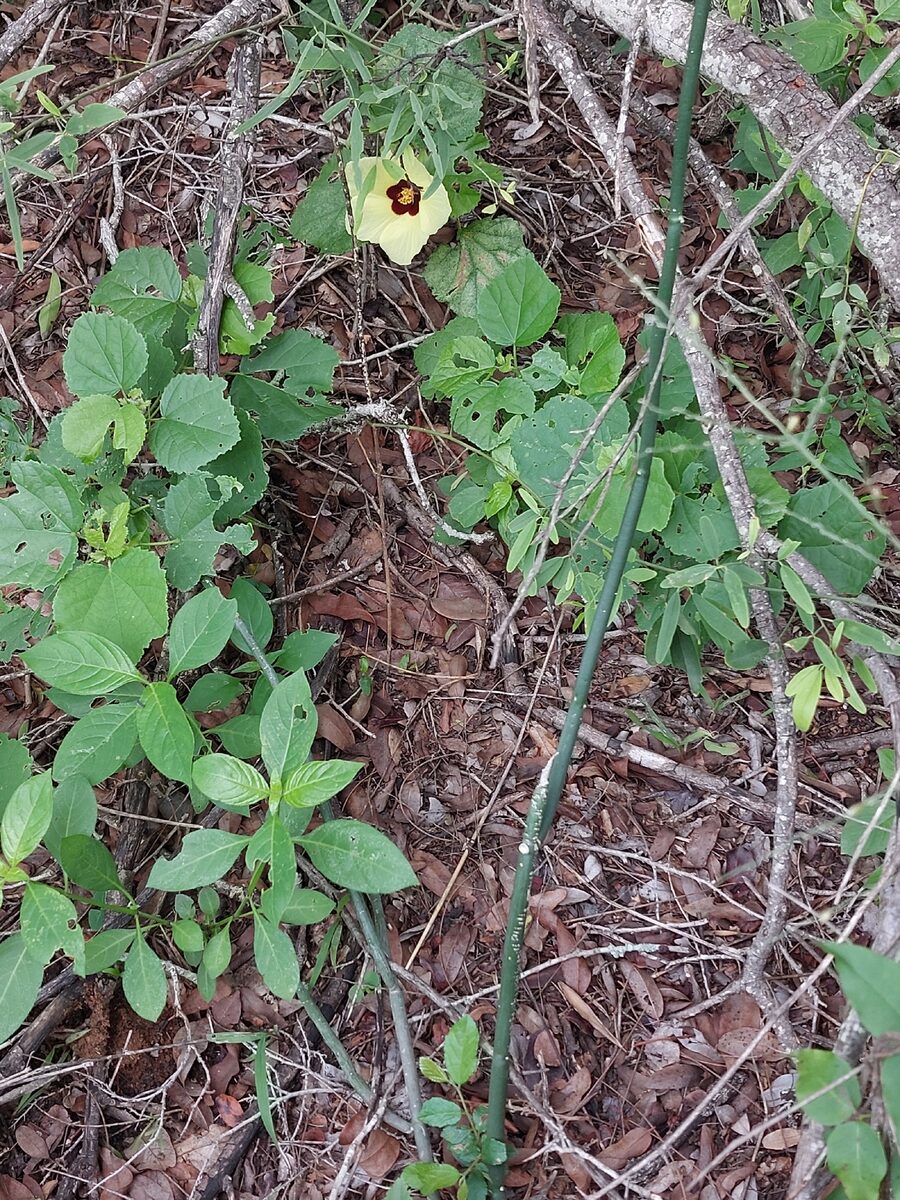
(c) Marco Schmidt, some rights reserved (CC BY-SA)
iNaturalist· cc-by-nc
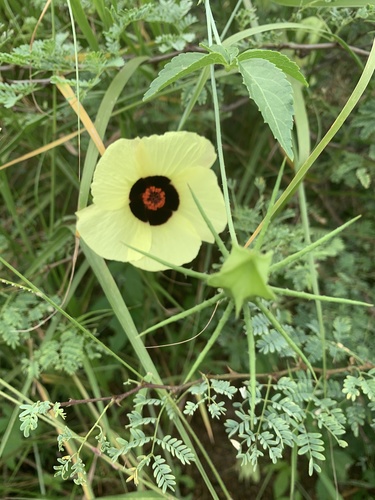
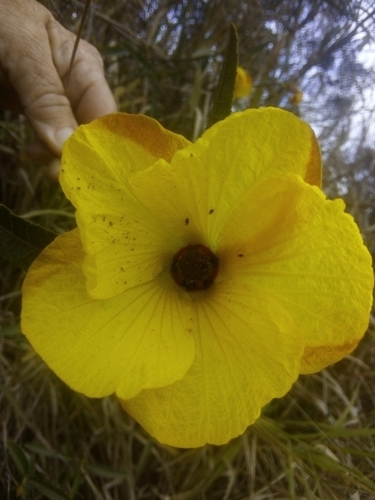
(c) Umar Musa, some rights reserved (CC BY-NC), uploaded by Umar Musa
iNaturalist· cc-by-nc
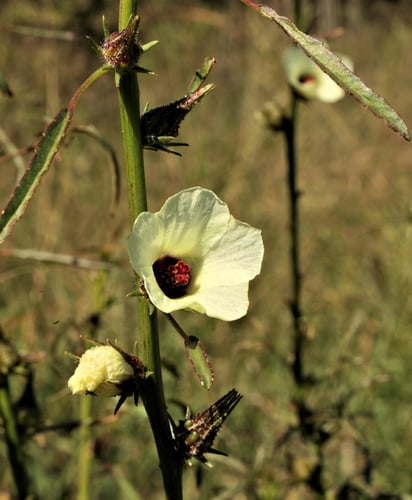
(c) Umar Musa, some rights reserved (CC BY-NC), uploaded by Umar Musa
Summary
Source: WikipediaBombax costatum is a tree usually reaching a height of 5 – 15 m. It flowers in the dry season before the leaves appear.
Description
A tree. It grows 3-15 m high. The trunk can be 1 m around. It loses its leaves during the year. The bark is grey and deeply cracked. The bark has triangular ridges with thorns. The small branches are densely hairy when young. The leaves are compound and have leaflets like fingers. They are densely hairy when young. There are 5-7 leaflets. They are 6-13 cm long by 3-6 cm wide. They are oval but rounded and taper to a short tip. The stalk is 7-20 cm long. The flowers are produced when the tree is leafless. The flowers are single and erect on the branches. They are orange to red. They are 4-7 cm long. The fruit are long or rounded and black or dark brown. They are 6-16 cm long by 4-6 cm wide. They break into 5 pieces. The seeds are black. They are in white kapok.
Edible Uses
The flowers are dried and used in sauces. Young fruit are cut, dried, and used in dishes. Young leaves are cooked as a vegetable or dried and pounded for use in cooking.
Traditional Uses
The flowers are dried and used in sauces. The young fruit are cut and dried and then used in dishes. The young leaves are cooked and used as a vegetable. They are dried and pounded.
Medicinal Uses
The bark of both the stem and the roots is diuretic and emmenagogue. A decoction is used for the treatment of skin diseases, yellow fever, headaches, and 'to make a woman’s breasts fine'. When treating headaches, a compress is also tied on the head. The leaves and immature fruit are an emollient. The leaves are haemostatic. They are used in the treatment of haemorrhages. The leaves are prescribed, with other plants, for the treatment of blennorrhoea and diarrhoea. A warm bath of the decoction is given to feverish patients, especially children. Various parts of the plant are used in the treatment of fevers or to promote lactation and as tonic for fatigue.
Distribution
It is a tropical plant. A savannah tree. It grows in the Sahel. It grows in open savannah woodland especially in rocky places. It can grow in arid places. In Brisbane Botanical Gardens.
Where It Grows
Africa, Australia, Benin, Burkina Faso, Cameroon, Central Africa, Central African Republic, CAR, Chad, Gambia, Ghana, Guinea, Guinée, Guinea-Bissau, Mali, Niger, Nigeria, Sahel, Senegal, Sierra Leone, Togo, West Africa*,
Cultivation
Plants are grown from seed. Seed need treatment before planting. They can also be grown from suckers.
Propagation
Direct seeding is a preferred propagation mode, however wildlings may also be used. The seedlings are difficult to plant in spite of their vigorous rooting ability. Natural regeneration is easy and abundant when the plants are sufficiently protected against fire and livestock. Cuttings root easily.
Other Uses
Kapok fibre is obtained from the fruit. The fibres are mainly used as filling, especially for pillows. The fruit contains a large amount of white floss, known as Kapok fibre. It is used for stuffing mattresses, pillows, cushions, etc. The bark has tannins and yields a brown dye. The seeds have a high oil content of up to 19.8%. They are a possible oil source. Extracts from the plant exhibit molluscicidal activity. An extract of a culture of the leaf cells is used as an ingredient in commercial cosmetic preparations as an antioxidant. The wood is pale yellow to whitish with an orange lustre when newly felled, it soon turns grey when exposed to sunlight. There are no visible differences between the heartwood and the sapwood. The wood is very soft and weighs 350-450 kg/m³ when air-dried. It is moderately solid, easy to season and not liable to major warping or shrinkage. Untreated, the wood is soon attacked and destroyed by fungi and insects. Wood is easy to work, though tools need to be kept sharp to avoid a woolly surface; nails and screws can be used, but glueing is preferable in order to obtain stable joints. The wood is used particularly in sound insulation, for radio cabinets, drums, crates, kitchen utensils, match-stick manufacture etc. Traditionally, larger logs are used in constructing dug-out canoes. Being a fire resistant species the tree can serve well as a boundary mark. Stakes are sometimes planted in order to make a live fence. The leaf litter from the tree has been shown to enhance soil fertility. When growing wild, the tree is seen as an indicator plant of stony soils.
Notes
There are about 8-20 Bombax species. Also put in the family Bombacaceae. In the subfamily Bombacoideae.
Synonyms
Also Known As
Agougou, Belofa, Boumboum, Bregue, Bumbum, Bunabu, Bunkungo, Buufore, Djoe, Djohi, Djoia, Fula, Garablaobe, Genger, Jomi, Kapokier rouge, Karayah, Kattupa, Kuriga, Kuruhi, Kurya, Luncum, Mikikireck, Mufo, Polom-fidalgo, Polom-foro, Sumauma, Tikonfaati, Ulofo, Veekou, Velta, Voaka
References (31)
- Achigan-Dako, E, et al (Eds), 2009, Catalogue of Traditional Vegetables in Benin. International Foundation for Science.
- Alyegba, S. S. et al, 2013, Ethnobotanical Survey of Edible Wild Plants in Tiv Communities of Benue State, Nigeria. Journal of Natural Sciences Research. Vol.3, No.7
- Assogbadjo, A. E. et al, 2013, Specific Richness and Cultural Importance of Wild Edible Trees in Benin. Acta Hort. 979, ISHS 2013
- Batawila, K., et al, 2007, Diversite et gestion des legumes de cueillete au Togo. African Journal of Food, Agriculture, Nutrition and Development 7( 3& 4): 64
- Belem, B., et al, 2007, Use of Non Wood Forest Products by local people bordering the “Parc National Kaboré Tambi”, Burkina Faso. The Journal of Transdisciplinary Environmental Studies vol. 6, no. 1 p 9
Show all 31 references Hide references
- Belem, M., et al, 2017, Strategy of Conservation and Protection of Wild Edible Plants Diversity in Burkina Faso. ANADOLU 27 (2) 2017, 82- 90
- Bodkin, F., 1991, Encyclopedia Botanica. Cornstalk publishing, p 154
- Bojang, L. 1999, Non-wood Forest Products in the Gambia. EC-FAO Partnership Progrmme (1998-2000) p 8
- Bonou, A., et al, 2013, Valeur economique des Produits Forestiers Non Ligneux (PFNL) au Benin. Editions Universitaires Europeennes p 92
- Catarino, L. et al, 2019, Edible Leafy Vegetables from West Africa (Guinea-Bissau): Consumption, Trade and Food Potential. Foods 2019, 8, 493
- Codjia, J. T. C., et al, 2003, Diversity and local valorisation of vegetal edible products in Benin. Cahiers Agricultures 12:1-12
- Dansi, A., et al, 2008, Traditional leafy vegetables and their use in the Benin Republic. Genet Resour Crop Evol (2008) 55:1239–1256
- Diarra, N. et al, 2016, Etude ethnobotanique des plantes alimentaires utilisées en période de soudure dans les régions Sud du Mali. Int. J. Biol. Chem. Sci. 10(1): 184-197
- Gaisberger, H., et al, 2017, Spatially explicit multi-threat assessment of food tree species in Burkina Faso: A fine-scale approach. PLoS ONE 12 (9): e0184457
- Gallagher, D. E., 2010, Farming beyond the escarpment: Society, Environment, and Mobility in Precolonial Southeastern Burkina Faso. PhD University of Michigan.
- Gilbert, T., et al, 2017, Diversity and local transformation of indigenous edible fruits in sahelian domain of Cameroon. Journal of Animal & Plant Sciences Vol. 26 (2): 5289-5300
- Glew, R. H., et al, 1997, Amino Acid, Fatty Avid and Mineral Composition of 24 Indigenous Plants of Burkina Faso. Journal of Food Composition and Analysis 10, 205-217
- Guinko, S. & Pasgo, L. J., Harvesting and marketing of edible products from local woody species in Zitenga, Burkina Faso. Unasylva - No. 168
- Hanawa, Y., 2013, Wild edible plants used by Guiziga people of far northregion of Cameroon. Int. J. Med. Arom. Plants. Vol 3 (2) : 136-143
- Keay, R.W.J., 1989, Trees of Nigeria. Clarendon Press, Oxford. p 138
- Kristensen, M and Lykke, A. M., 2003, Informant-Based Valuation of Use and Conservation Preferences of Savanna Trees in Burkina Faso. Economic Botany, Vol 57, No. 2, pp. 203-271
- Lykke, A. M., Mertz, O, and Ganaba, S., 2002, Food Consumption in Rural Burkina Faso, Ecology of Food and Nutrition, 41:119-152
- Maiga, A., et al, 2005, Determination of Some Toxic and Essential Metal Ions in Medicinal and Edible Plants from Mali. Journal of Agricultural and Food Chemistry 53: 2316-2321
- Maydell, H. von, 1990, Trees and shrubs of the Sahel: their characteristics and uses. Margraf. p 189
- Mertz, O., Lykke, A. M., and Reenberg, A., 2001, Importance and Seasonality of Vegetable Consumption and Marketing in Burkina Faso. Economic Botany, 55(2):276-289
- Moksia, F., et al, 2019, Diversity and Socio-Economic Value of Wild Edible Plants in the Mounts Mandara Region, Cameroon. International Journal of Sciences. Vol. 8:10
- Morley, B. & Everard, B., 1970, Wild Flowers of the World. Ebury press. Plate 57
- Segnon, A. C. & Achigan-Dako, E. G., 2014, Comparative analysis of diversity and utilization of edible plants in arid and semi-arid areas in Benin. Journal of Ethnobiology and Ethnomedicine 2014, 10:80
- Vanderjagt, F. J., et al, 2000, The trypsin inhibitor content of 61 wild edible plant foods of Niger. Plant Foods for Human Nutrition 55: 335–346, 2000.
- World Checklist of Useful Plant Species 2020. Royal Botanic Gardens, Kew
- www.worldagroforestrycentre.org/treedb/