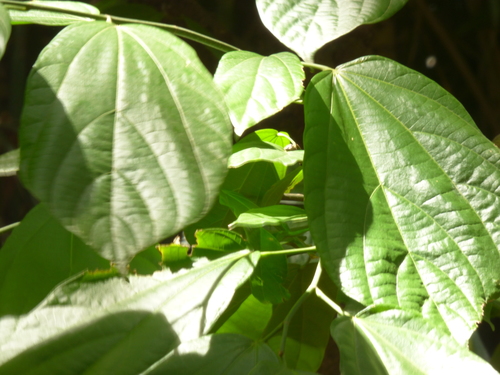
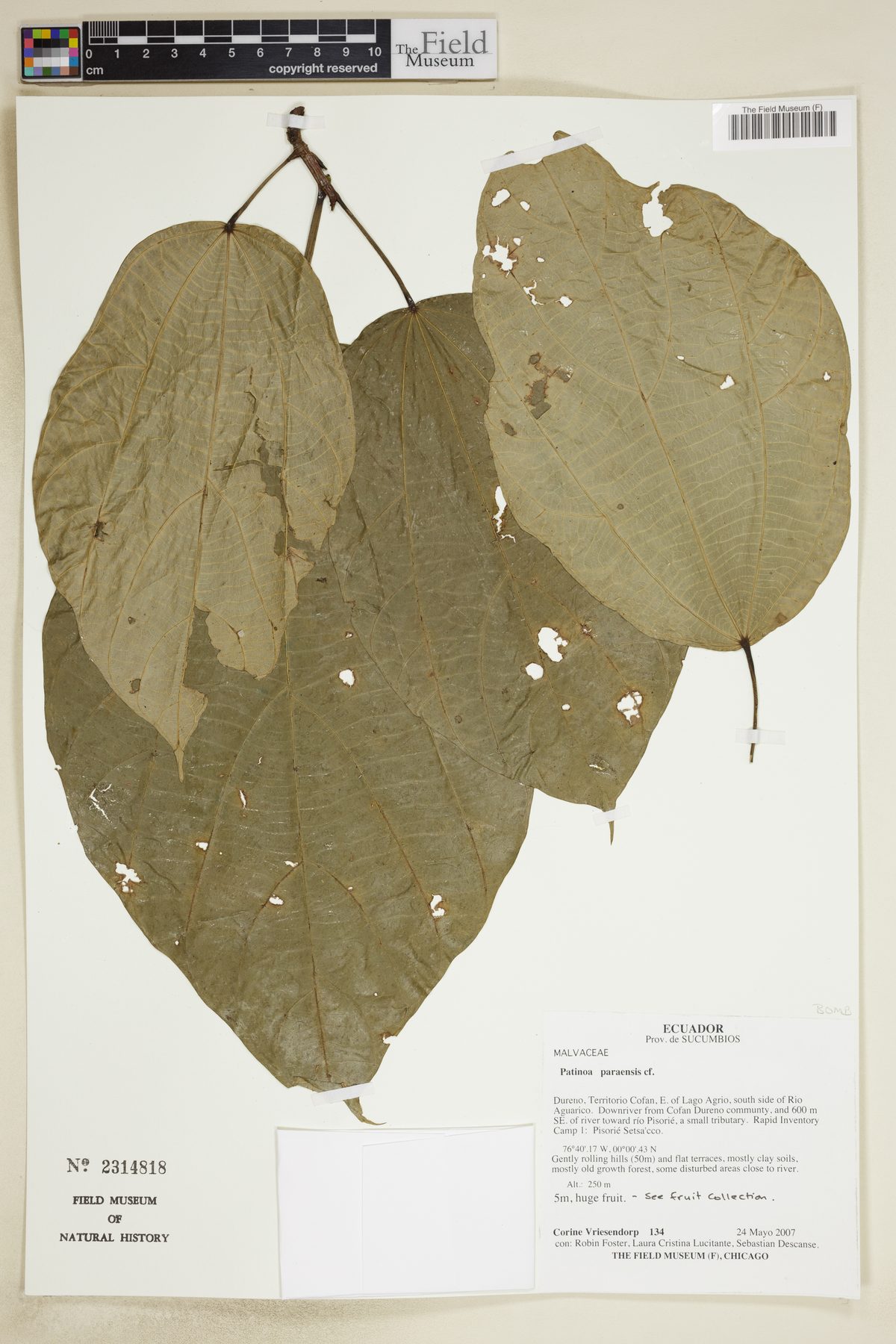
Theobroma grandiflorum
(Willd. ex Spreng.) K. Schum.
Cupuacu, Big flower chocolate tree
iNaturalist· cc-by-nc
(c) Sergio Mendez-Cardona, some rights reserved (CC BY-NC), uploaded by Sergio Mendez-Cardona
iNaturalist· cc-by-nc
(c) hannagbriele, some rights reserved (CC BY-NC)
Summary
Source: WikipediaTheobroma grandiflorum, commonly known as cupuaçu, also spelled cupuassu, cupuazú, cupu assu, or copoazu, is a tropical rainforest tree related to cacao. Native and common throughout the Amazon basin, it is naturally cultivated in the jungles of northern Brazil, with the largest production in Pará, Amazonas and Amapá, Colombia, Bolivia and Peru. The pulp of the cupuaçu fruit is consumed throughout Central and South America, especially in the northern states of Brazil, and is used to make ice creams, snack bars, and other products.
Description
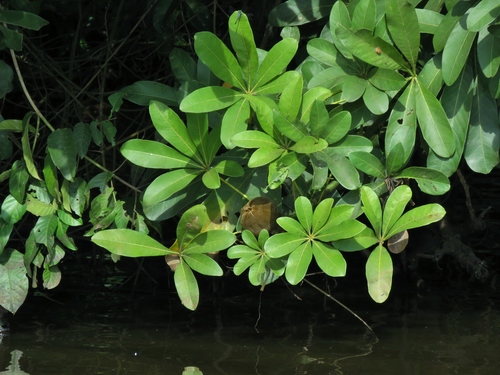
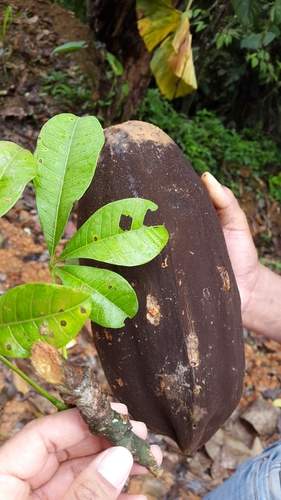
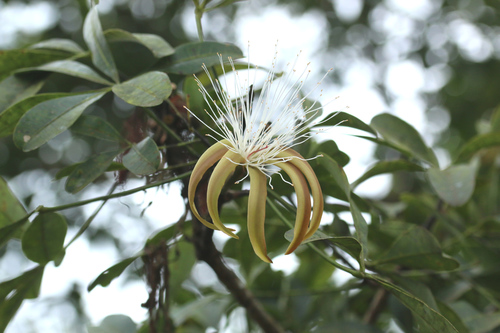
A medium sized rainforest tree 5-20 m high. The leaves are large and much like cacao. They are simple and 25-35 cm long by 6-10 cm wide. The fruit are borne on the trunk and main branches. The fruit is about the size of a cantaloupe. They are 12-25 cm long by 8-12 cm wide. The fruit has a large centre seed pod filled with seeds. There are 20-50 seeds. The pulp is white and has a characteristic odour. The pulp is edible.
Edible Uses
The fruit contains several large seeds surrounded by a highly aromatic, succulent pulp with a slightly acidic flavour. The pulp is eaten raw and is said to be delicious — creamy, exotic, sweetish and agreeably scented. It is also made into fresh juice, ice cream, jam and tarts. The brown fruit measures 12–25cm long and 10–12cm in diameter, with pulp occupying about a third of the interior. The seeds are used as a chocolate substitute; they contain a high proportion of fat and yield a good cocoa butter. As with others in the genus, the seeds are generally rich in oil (around 50%), starch (around 15%) and protein (around 15%), and also contain a volatile oil and the stimulating alkaloids caffeine and theobromine.
Traditional Uses
The pulp or flesh of the fruit is eaten. It is used for drinks, ice cream and jams. It is used for tarts, marmalades and sherberts. Cocoa butter can be made from the seeds.
Medicinal Uses
The plant — almost certainly the fruit or seed — is nutritive, stimulant and tonic. Seeds are used to treat abdominal pains. Juiced fruit is drunk to facilitate difficult births. The seeds also yield cacao powder and butter, which have the following properties: both are nutritive; the butter is applied externally as an emollient to soothe and soften skin, and is traditionally used for chapped skin, burns and bruises. Cacao powder is taken internally for angina and high blood pressure. Research has shown cacao butter can help counter bacteria responsible for boils and septicaemia.
Distribution
It is a tropical plant. It suits the hot, wet tropical lowlands. It is found throughout the rainforest in Brazil. It grows best in a hot, humid climate. It is best where there is little temperature variation and temperatures of about 24°C. The natural temperature range is 21.6°-27.5°C. Trees need plenty of water. The relative humidity is 64-93%. The annual rainfall is 1,900-3,100 mm.
Where It Grows
Amazon, Australia, Bolivia, Brazil, Central America, Colombia, Costa Rica, Ecuador, Ghana, Guyana, Honduras, Martinique, Panama, Peru, Sao Tome and Principe, South America, Tobago, Trinidad-Tobago, Venezuela, West Africa, Winward Is.,
Cultivation
Plants are usually grow from seed. The seeds are often spread naturally by birds and monkeys. The ripe fruit are harvested and the seeds removed. The fresh seed still covered with pulp can be planted. They germinate in 20-40 days. Seedlings can be transplanted into the field in 5-6 months.
Propagation
Seed has very short viability and requires high humidity and optimum temperatures to remain viable. There is no dormancy period, and the seed often begins germinating while still inside the pod. Sow as soon as ripe in individual containers in a semi-shaded position, covering with about 15mm of soil. Germination rates from fresh seed are usually high, with sprouting occurring in 20–40 days. Young plants are generally ready for planting out 5–6 months after sowing.
Other Uses
The seeds yield cacao butter, a fat solid at room temperature, which is important in the cosmetics and pharmaceutical industries in addition to its local food and medicinal uses. The wood is medium-textured, straight-grained, moderately heavy and of moderate natural durability. Though little used, it is suitable for cabinet making and internal cladding of buildings.
Production
Plants grow at a moderate rate. The pulp makes up about 1/3 of the pod. It produces about 16 fruit on each plant. A fruit can weigh 0.5-4 kg.
Other Information
The fruit are popular. It is a cultivated food plant.
Notes
Also put in the family Byttneriaceae and the Sterculiaceae.
Nutrition
| Part | Moisture | kJ | kcal | Protein | Vit A | Vit C | Iron | Zinc |
|---|---|---|---|---|---|---|---|---|
| Fruit | 81.9 | 292 | 69 | 1.1 | — | 25 | 0.5 | 0.4 |
Synonyms
Also Known As
Cacao blanco, Cocohuasu, Copoasu, Copoazu, Cupu-Assu, Cupuassu, Pupu
References (29)
- Barwick, M., 2004, Tropical and Subtropical Trees. A Worldwide Encyclopedic Guide. Thames and Hudson p 413
- Brazil: Biodiversity for Food and Nutrition. http://www.b4fn.org/countries/brazil/
- Etkin, N. L. (Ed.), 1994, Eating on the Wild Side, Univ. of Arizona. p 141
- Facciola, S., 1998, Cornucopia 2: a Source Book of Edible Plants. Kampong Publications, p 239
- Gori, B., et al, 2022, Understanding the diversity and biogeography of Colombian edible plants. Scientific Reports 12:7835
Show all 29 references Hide references
- Grandtner, M. M., 2008, World Dictionary of Trees. Wood and Forest Science Department. Laval University, Quebec, Qc Canada. (Internet database http://www.wdt.qc.ca)
- Grandtner, M. M. & Chevrette, J., 2013, Dictionary of Trees, Volume 2: South America: Nomenclature, Taxonomy and Ecology. Academic Press p 662
- Hermandez Bermejo, J.E., and Leon, J. (Eds.), 1994, Neglected Crops. 1492 from a different perspective. FAO Plant Production and Protection Series No 26. FAO, Rome. p15, 205
- Hunter, D., et al, 2019, The potential of neglected and underutilized species for improving diets and nutrition. Planta (2019) 250:709-729
- INFOODS:FAO/INFOODS Databases
- Kermath, B. M., et al, 2014, Food Plants in the Americas: A survey of the domesticated, cultivated and wild plants used for Human food in North, Central and South America and the Caribbean. On line draft. p 863
- Kew Plants of the World Online
- Kiple, K.F. & Ornelas, K.C., (eds), 2000, The Cambridge World History of Food. CUP p 1766
- Lamont, S.R., et al, 1999, Species composition, and use of Homegardens among three Amazonian Villages. Economic Botany 53(3) pp 312-326
- Lorenzi, H., 2002, Brazilian Trees. A Guide to the Identification and Cultivation of Brazilian Native Trees. Vol. 02 Nova Odessa, SP, Instituto Plantarum p 346
- Lorenzi, H., Bacher, L., Lacerda, M. & Sartori, S., 2006, Brazilian Fruits & Cultivated Exotics. Sao Paulo, Instituto Plantarum de Estuados da Flora Ltda. p 167
- Martin, F. W., et al, 1987, Perennial Edible Fruits of the Tropics. USDA Handbook 642 p 63
- C. F. P. Martius, Fl. bras. 12:76, t. 8. 1886
- Paz, F. S., et al, 2021, Edible Fruit Plant Species in the Amazon Forest Rely Mostly on Bees and Beetles as Pollinators. Journal of Economic Entomology, XX(XX), 2021, 1–13
- Purseglove, J.W., 1968, Tropical Crops Dicotyledons, Longmans. p 571
- Roa, J. A. G. & Boada, D. S. G., 2018, Fundación para el Fortalecimiento de la Fruticultura y Plantas Alimenticias no Convencionales en Colombia.
- Tomchinsky, B., et al, 2021, Food Composition Data: Edible Plants from the Amazon. in M. C. M. Jacob, U. P. Albuquerque (eds.), Local Food Plants of Brazil, Ethnobiology, Springer p 276
- Torre, de la, L., et al, 2008, Enciclopedia de las Plantas Útiles del Ecuador. Herbario QCA. Pontificia Universidad Católica del Ecuador. p 600
- Van Looy, T., et al, 2008, Underutilized agroforestry food products in Amazonas (Venezuela): a market chain anlysis. Agroforestry Systems 74:127-141
- Vasquez, R. and Gentry, A. H., 1989, Use and Misuse of Forest-harvested Fruits in the Iquitos Area. Conservation Biology 3(4): 350f
- Villachica, H., (Ed.), 1996, Frutales Y hortalizas promisorios de la Amazonia. FAO, Lima. p 115
- Wiersema, J. H. & Leon, B., 2013, World Economic Plants. A Standard Reference CRC Press. 2nd Ed. p 683
- World Checklist of Useful Plant Species 2020. Royal Botanic Gardens, Kew
- Zambrana, P, et al, 2017, Traditional knowledge hiding in plain sight – twenty-first century ethnobotany of the Chácobo in Beni, Bolivia. Journal of Ethnobiology and Ethnomedicine (2017) 13:57