Tectona grandis
L. f.
Teak
iNaturalist· cc-by-nc-nd
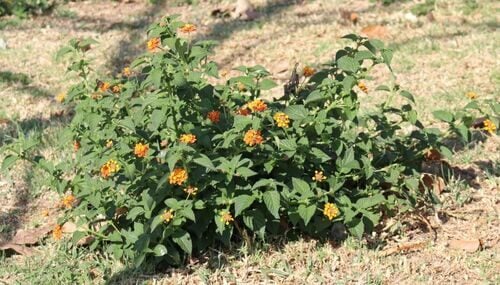
(c) QuestaGame, some rights reserved (CC BY-NC-ND), uploaded by QuestaGame
iNaturalist· cc-by-nc
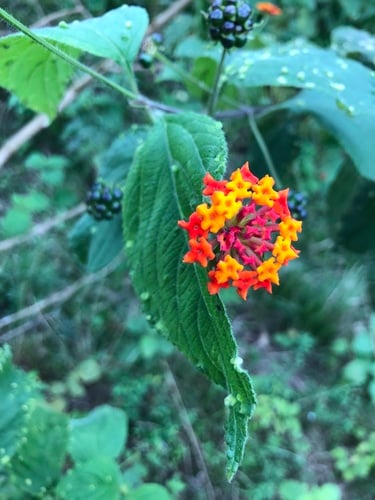
(c) Thanyarat Sukruan, some rights reserved (CC BY-NC), uploaded by Thanyarat Sukruan
iNaturalist· cc-by-nc
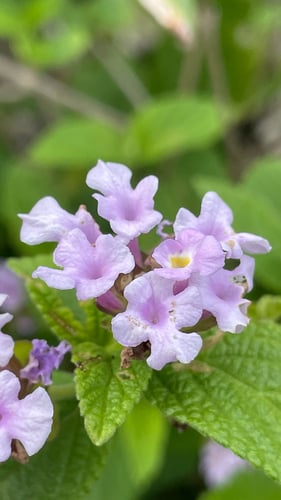
(c) Mark Hyde, Bart Wursten and Petra Ballings, some rights reserved (CC BY-NC)
Summary
Source: WikipediaTeak is a fast-growing deciduous tree reaching 30m tall by 20m wide, hardy to UK zone 10 and frost tender. Flowers are pollinated by bees, flies, and ants. It requires full sun and well-drained light to heavy soil with mildly acid to very alkaline pH. Prefers moist soil but tolerates drought. The heartwood turns golden-brown or dark greyish-brown after exposure, distinctly separated from pale sapwood; grain is straight to interlocked with coarse texture. Freshly cut wood has a leather-like smell and oily feel. It is a durable medium-weight timber, somewhat soft when fresh, that dries slowly with low shrinkage and excellent stability once dry.
Description
A large tree. It grows 25-50 m tall. The trunk is 1 m across. It can have slight buttresses. It is open with many branches. It loses some leaves during the year. The leaves are oval and have a rough surface. They can be 60 cm long. The flowers are in large panicles. They are white or pink. The fruit is round and can have 4 seeds. These are oval and white.
Edible Uses
The leaves are added to the water used for boiling unripe jackfruit when making the Javanese dish 'Gudeg', imparting a fresh, reddish colour to the fruit. A red dye obtained from boiling the tree's wood shavings has been used to colour Easter eggs. The leaves also serve as a host for Rhizopus spores in the manufacture of Tempeh.
Traditional Uses
The leaves are added to the water in which unripe jackfruit are boiled to give them a red flavour. The leaves are used for fermenting soybean. They are also used in curries. They are also used to wrap food. The boiled teakwood shavings are used to colour Easter eggs. Arack is matured in teak wood to give a distinctive flavour.
Medicinal Uses
A paste made from powdered wood mixed with hot water acts as a vermifuge, promotes digestion, relieves bilious headaches and toothache, and reduces skin inflammation and eruptions. Charred wood soaked in poppy juice and formed into a paste has been used to relieve swollen eyelids. The wood has been used as a hair tonic. An oil extracted from the roots treats eczema, ringworms, and inflammation. The bark is astringent and has been used for bronchitis. The flowers are diuretic and used to treat biliousness, bronchitis, and urinary disorders. The seeds are also diuretic, and an oil extracted from them promotes hair growth. The leaves are considered diuretic, depurative, purgative, stimulant, antidysenteric, and vermifuge. They are used in traditional medicine for anaemia, asthenia, fever, malaria, amoebiasis, schistosomiasis, and tuberculosis. Leaf extracts are reported to be effective against Mycobacterium tuberculosis, to treat bleeding of the larynx, trachea, bronchi, or lungs, and to soothe sore throats. An oil from the tender shoots is used to treat scabies in children.
Known Hazards
The fine dust produced in machining operations may cause irritation of the skin or bronchial asthma and rhinitis after inhalation; a well-functioning dust extractor fan is recommended. The substance responsible for the allergic reaction is probably the naphthoquinone desoxylapachol.
Distribution
It is a tropical plant. It grows in tropical deciduous forests. In XTBG Yunnan.
Where It Grows
Africa, Andamans, Angola, Asia, Australia, Bangladesh, Belize, Benin, Cambodia, Caribbean, Central America, China, Comoros, Costa Rica, Dominican Republic, East Africa, East Timor, El Salvador, Fiji, Gambia, Guam, Haiti, Hawaii, Honduras, India*, Indochina, Indonesia, Laos, Malaysia, Maldives, Marianas, Marquesas, Mexico, Mozambique, Myanmar, Nepal, Nicaragua, Nigeria, Niue, Northeastern India, Pacific, Panama, Philippines, Rotuma, Samoa, Sao Tome and Principe, SE Asia, Sikkim, Sri Lanka, Sudan, Taiwan, Thailand, Timor-Leste, Trinidad-Tobago, USA, Venezuela, Vietnam, West Africa, West Indies, West Timor,
Cultivation
A plant of the tropics, where it is found at elevations from sea level to 1,200 metres. It is able to survive and grow under a wide range of climatic and edaphic conditions, but grows best in a warm, moist, tropical climate with a significant difference between dry and wet seasons. It is found in areas where the mean annual temperature is in the range 14 - 36°c. The tree can be killed by temperatures falling down to 3°c. It prefers a mean annual rainfall: of 1,200 - 2,500mm, but is able to succeed with as little as 600mm, or as much as 4,000mm. Requires a sunny position. The most suitable soil is deep, well-drained, fertile alluvial-colluvial soil with a pH of 6.5 - 8 and a relatively high calcium and phosphorous content. Prefers a pH in the range 6 - 7.5, tolerating 4.5 - 8.5. The quality of growth, however, depends on the depth, drainage, moisture status and the fertility of the soil. Teak does not tolerate waterlogging or infertile lateritic soils. Initial growth of the tree is rapid. At an age of 5 years, an average height of 13 metres with a bole diameter of 10cm is not unusual; after 10 years, 16.5 metres and 15 cm; after 20 years, 21.5 metres and 23.5 cm. After 15 or 20 years, growth slows down. In stands of 80-year-old trees, maximum height is about 45 metres, with a maximum diameter of 75 cm. The rotation period is approximately 80 years. The height of the tree at the moment of first flowering is important in silviculture. When it is long (it may reach up to 10 metres), the final bole form is positively affected, but early-flowering trees may develop extremely wide crowns and short boles. This characteristic is clearly undesirable in timber-crop species and warrants strong selection against flowering in conjunction with increased effort to develop commercial methods of vegetative propagation. The time of the 1st inflorescence is determined by both genetic and environmental factors. In Thailand, flowering normally starts at the age of 8 to 10 years. However, trees have been observed to flower at the age of 3 months, while a few specimens of superior phenotype did not flower until the age of 27 years. Flowers usually appear during the rainy season, and trees tend to flower synchronously. For plantations, stumps are planted at a spacing of 2 x 2 metres. As the tree is deciduous, raising pure plantations is discouraged; rather, it is recommended to raise 80% of mixed indigenous species and the remaining 20% teak. The average plantation yield in Java is 60 - 100 cubic metres/ha, including thinning. Occasionally the final harvest may yield as much as 390 cubic metres/ha in stands 80 years old. The mean annual volume increment is (min. 1) 3-6 (max. 15) cubic metres/ha. The root system is superficial, often no deeper than 50 cm, but the roots may extend laterally up to 15 metres from the stem. Young plants show a remarkable capability to recover after fire. Flowering Time: Late Summer/Early Fall Mid Fall Late Fall/Early Winter. Bloom Color: White/Near White. Spacing: 15-20 ft. (4.7-6 m) 20-30 ft. (6-9 m) 30-40 ft. (9-12 m).
Propagation
Fresh seed is more difficult to germinate than seed stored for 12 months. If freshly collected fruit must be used, it should be subjected to alternating 24-hour wetting and drying cycles for 14 days before sowing. Stored seed germinates best after soaking in warm water for 24–48 hours, changing the water frequently. An alternative method is to half-burn the fruits by covering them with a thin layer of grass and setting it alight. Germination rates are generally below 50%, though occasionally up to 80%. Germination typically begins after 10 days but can take 2–3 months. Seedlings benefit from light shade in their first year before being moved to their permanent positions. Natural regeneration is especially abundant in fire-exposed forests and often occurs in patches. Seeds collected from the forest floor are commonly used to establish plantations, and it is recommended to collect seed from trees over 20 years old, preferably from selected stands. Fruit lying dormant in the ground for 30–40 years has been known to germinate abundantly. Grafting and budding methods have shown better results than branch cuttings. Cutting rooting time is 8–15 days, and the survival rate of rooted stock is 90–100%.
Other Uses
Both the root bark and young leaves yield a yellowish-brown or reddish dye used for paper, clothing, and matting, requiring a mordant. The dye from the leaves prevents blackening of yams after cooking. The leaves are used for wrapping and packing food products in markets. Sawdust from teakwood is used as incense in Java, though it may irritate the skin. The sawdust is also used to produce activated carbon. The heartwood is dull yellowish when freshly cut, turning golden brown or sometimes dark greyish-brown with streaks of grey or black on exposure; it is clearly demarcated from the sapwood, which forms a band up to 50mm thick. The grain is straight, wavy, or slightly interlocked with a coarse and uneven texture; growth rings are distinct. The wood is oily to the touch and smells of leather when freshly cut. It is a medium-weight timber that is moderately soft yet durable to very durable, with an average service life in ground contact of more than 10 years in tropical conditions and more than 25 years in temperate conditions. It dries well but slowly, with low shrinkage rates and excellent stability once dry. Working the wood requires some effort due to the presence of silica (up to 1.5%); stellite-tipped or tungsten carbide-tipped tools are essential for sawing and planing; it is difficult to chisel with a hollow square mortiser but turns well; pre-boring is recommended before nailing or screwing to avoid splitting; gluing requires freshly machined or newly sanded surfaces. Wood bending properties are moderate with a tendency to buckle, suitable only for moderate curvature bends. Painting, staining, and polishing require freshly machined surfaces or pretreatment with thinner, though varnishing and polishing results can be beautiful. The wood is highly resistant to teredo activity and is excellent for construction in contact with water — bridges, docks, quays, piers, and freshwater floodgates. In house building, it is suited to interior and exterior joinery such as windows, doors, and framing, and for floors under light to moderate foot traffic. It is also used extensively for garden furniture, building poles, transmission line poles, fence posts, wallboards, beams, boxes, musical instruments, toys, railway sleepers, and railcar construction. Its brittleness makes it less suitable for tool handles and sporting goods. Its high resistance to a wide variety of chemicals makes it valuable for laboratory and kitchen tables and for industrial fittings such as scrubbing towers, vats, pipes, and fume ducts. The wood produces an attractive veneer widely used in furniture and interior fittings, and is suitable for decorative plywood. Larger logs are used for beams and sleepers; smaller ones for scantlings and battens; thinner ends and poles serve as round posts. For export, teak is recommended for ship decking and boat-building construction. Though suitable for charcoal and fuel, the wood is now generally considered too valuable for these purposes except for pruning remnants and offcuts.
Notes
It is also used in medicine. It is an important timber tree.
Synonyms
Also Known As
Ai-teca, Djati, Haivakaru, Klor, Kpagh, Kyun, Mai-sak, Mai-san-lan, May sac, Pahi, Pohon jati, Tekka, Tlawr
References (17)
- Burkill, H. M., 1985, The useful plants of west tropical Africa, Vol. 5. Kew.
- Cowie, I, 2006, A Survey of Flora and vegetation of the proposed Jaco-Tutuala-Lore National Park. Timor-Lests (East Timor) www.territorystories.nt/gov.au p 55
- Facciola, S., 1998, Cornucopia 2: a Source Book of Edible Plants. Kampong Publications, p 244
- Kar, A., et al, 2013, Wild Edible Plant Resources used by the Mizos of Mizoram, India. Kathmandu University Journal of Science, Engineering and Technology. Vol. 9, No. 1, July, 2013, 106-126
- Kew Plants of the World Online
Show all 17 references Hide references
- Kuhnlein, H. V., et al, 2009, Indigenous Peoples' food systems. FAO Rome p 213
- Parham, B. E. V., 1972, Plants of Samoa. New Zealand Department of Scientific and Industrial Research. Information Series. No. 85 p 128
- Plants of Haiti Smithsonian Institute http://botany.si.edu/antilles/West Indies
- Selvam, V., 2007, Trees and shrubs of the Maldives. RAP Publication No. 2007/12 p 162
- Suppl. pl. 151. 1782 ("1781")
- Sujanapal, P., & Sankaran, K. V., 2016, Common Plants of Maldives. FAO & Kerala FRI, p 268
- Sukarya, D. G., (Ed.) 2013, 3,500 Plant Species of the Botanic Gardens of Indonesia. LIPI p 543
- Staples, G.W. and Herbst, D.R., 2005, A tropical Garden Flora. Bishop Museum Press, Honolulu, Hawaii. p 569
- Sundriyal, M. & Sundriyal, R. C., 2004, Structure, Phenology, Fruit Yield, and Future Prospects of some Prominent Wild Edible Plant Species of the Sikkim Himalaya, India. Journal of Ethnobiology 24(1): 113-138
- Van Sam, H. et al, 2004, Trees of Laos and Vietnam: A Field Guide to 100 Economically or Ecologically Important Species. Blumea 29 (2004) 201-349
- World Checklist of Useful Plant Species 2020. Royal Botanic Gardens, Kew
- Zuchowski W., 2007, Tropical Plants of Costa Rica. A Zona Tropical Publication, Comstock Publishing. p 231