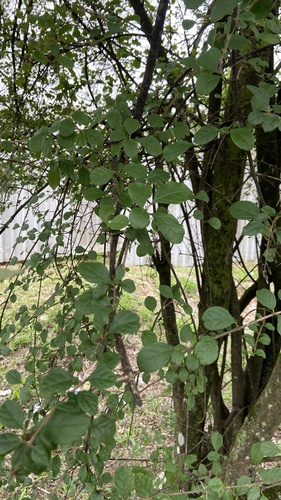
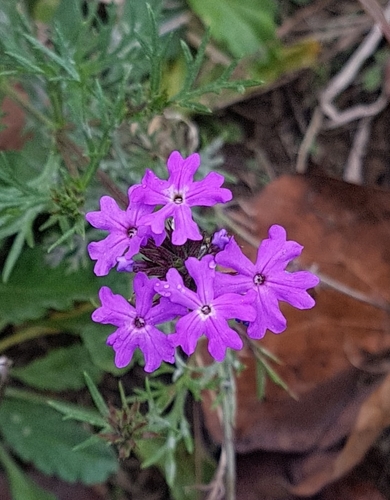
Nyctanthes arbor-tristis
L.
Tree of sadness, Night jasmine tree
iNaturalist· cc-by-nc
(c) tangming, some rights reserved (CC BY-NC), uploaded by tangming
iNaturalist· cc-by-nc-nd
(c) Chief RedEarth, some rights reserved (CC BY-NC-ND), uploaded by Chief RedEarth
iNaturalist· cc-by-nc-nd
(c) Chief RedEarth, some rights reserved (CC BY-NC-ND), uploaded by Chief RedEarth
Summary
Source: WikipediaNyctanthes arbor-tristis is a species of Nyctanthes native to South Asia and Southeast Asia. It is commonly known as night-blooming jasmine, tree of sadness, tree of sorrow, hengra bubar, coral jasmine, as seri gading in Singapore and as shiuli in the Bengal region. Despite its common name, the species is not a "true jasmine" and not of the genus Jasminum.
Description
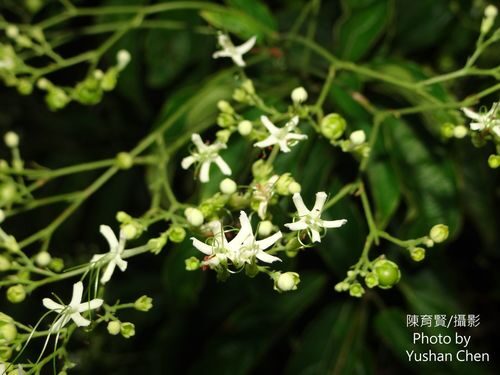
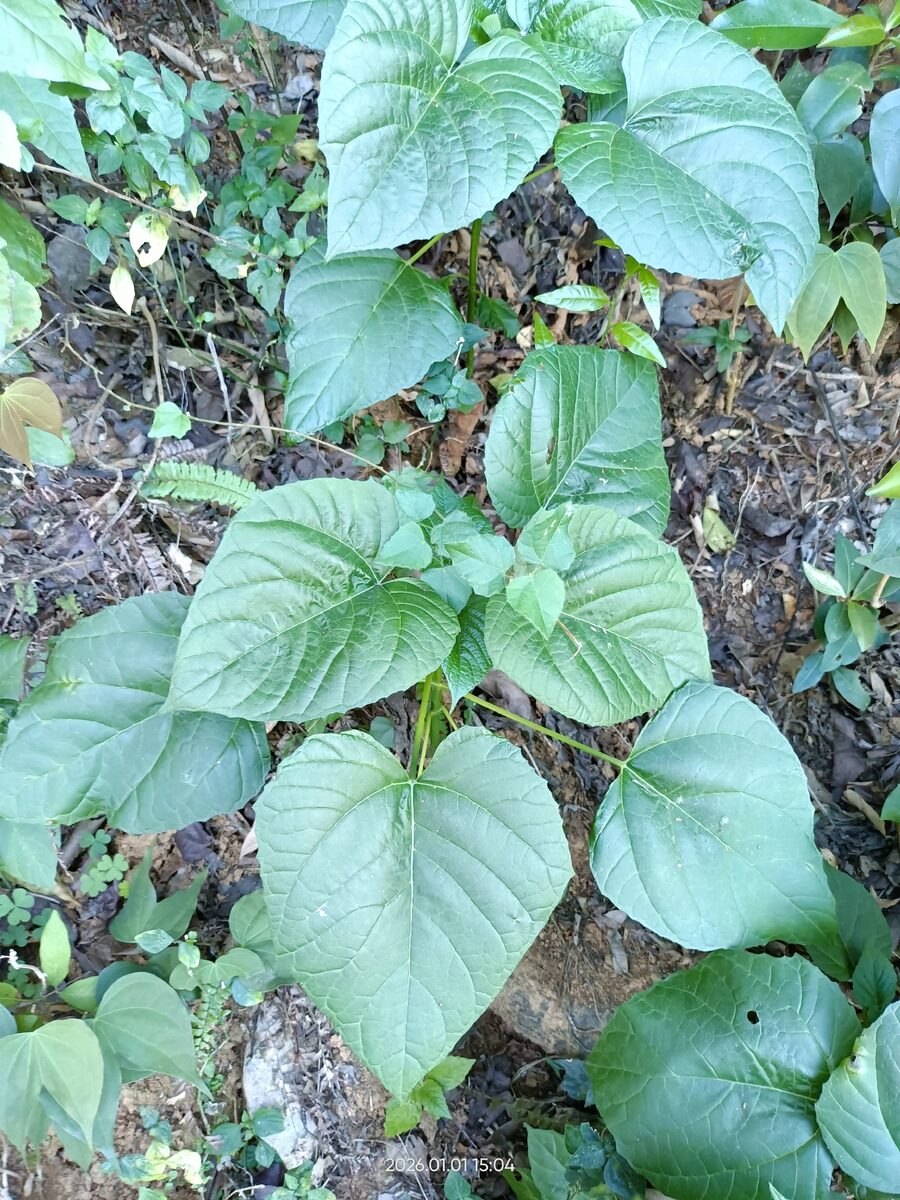
A small tree. It grows 10 m high. The branches are square in cross section. The bark is grey or greyish-green. The leaves are 10 cm long and 5 cm wide. They are rough and covered with stiff white hairs. The leaf stalk is 1 cm long. The flowers are fragrant. They are in heads or 3-7 flowers. They are orange-red.
Edible Uses
The leaves have been used in Ayurvedic medicine and Homoeopathy for sciatica, arthritis, and fevers, and as a laxative. An orange dye from the corolla, nyctanthin, is used to dye silk. In India, flowers are used to make garlands and used for worship.
Traditional Uses
The flowers are the source of a saffron-yellow dye used to colour food. The flowers are eaten as a vegetable either fresh or dried. They have a pleasant bitter taste. The leaves are cooked and used to make curry.
Medicinal Uses
The flowers contain an abundance of mannitol and are emmenagogue. They are used medicinally to provoke menstruation. The bitter leaves are useful as a cholagogue, laxative, diaphoretic and diuretic. An extract is given to children for the expulsion of roundworms and threadworms. An anti-inflammatory activity of the leaves has been recorded recently. Substances found in the leaves include mannitol, ß-amyrin, ß-sitosterol, benzoic acid and derivates of kaempferol. Powdered seeds ameliorate scalp scurf.
Known Hazards
The bark contains a glycoside and alkaloids, suspected of being poisonous to animals and humans.
Distribution
It is a tropical plant. In Pakistan it grows in the sub-himalayan tract between 300-1,000 m altitude. It grows in dry deciduous forests and on rocky ground between sea level and 1,500 m above sea level. In XTBG Yunnan.
Where It Grows
Andamans, Asia, Bangladesh, China, India*, Indochina, Indonesia, Laos, Nepal, Northeastern India, Pakistan, SE Asia, Thailand,
Cultivation
Plants can be grown from seeds or cuttings.
Propagation
Coral jasmine is easily propagated by seeds or cuttings.
Other Uses
The bright orange corolla tubes of the flowers contain a saffron-yellow colouring matter, which was formerly used for dyeing silk, sometimes in conjunction with safflower (Carthamus tinctorius), turmeric (Curcuma longa), and indigo (Indigofera spp.). Locally the dye is also used for dyeing cotton cloth and as a cheap substitute for saffron in colouring the robes of Buddhist priests. For dyeing, fabrics are immersed in a decoction of the corolla tubes. They impart a beautiful orange, yellow or golden colour like saffron, but the colour is easily washed out, and will fade rapidly in the sun. To make the colour more permanent, lime juice or alum is added to the dye bath, then the colour is moderately resistant to light, soap, alkali and acid. The dye is nyctanthin, which is allied to crocetin as found in saffron (Crocus sativus L.). An insecticidal effect of an extract of the shade-dried leaves has been reported. The bark may be used as a tanning material. The leaves are sometimes used for polishing wood and ivory. The essential oil in the fragrant flowers, which is similar to the oil in jasmine, is used as perfume. The brown wood is moderately hard, fairly heavy and close-grained. It is sometimes used for boarding. The wood is sometimes used as firewood. Coral jasmine is sometimes planted in hedges.
Other Information
It is cultivated.
Notes
It has also been put in the family Oleaceae.
Also Known As
Harsinghar, Hewali, Khirsari, Kulamarshal, Parijat, Pohon srigading, Sefali, Sephali, Seuli, Sewali, Siharu
References (19)
- Bandyopadhyay, S., et al, 2012, A Census of Wild Edible Plants from Howrah District, West Bengal, India. Proceedings of UGC sponsored National Seminar 2012
- Banerjee, A., et al, 2013, Ethnobotanical Documentation of Some Wild Edible Plants in Bankura District, West Bengal, India. The Journal of Ethnobiology and Traditional Medicine. Photon 120 (2013) 585-590
- Baro, D., Baruah, S. and Borthukar, S. K. 2015, Documentation on wild vegetables of Baksa district, BTAD (Assam). Scholars Research Library. Archives of Applied Science Research, 2015, 7 (9):19-2
- Biswas, K. & Das, A. P., 2011, Documentation of wild leafy vegetables from the tribal dominated parts of Malda District of Paschimbanga, India. Recent Studies in Biodiversity and Traditional Knowledge in India 301 - 306. 2011.
- Chowdery, T., et al, 2014, Wild edible plants of Uttar Dinajpur District, West Bengal. Life Science Leaflets. 47:pp 20-36 http://lifesciencesleaflets.ning.com
Show all 19 references Hide references
- Chowdhury, M. & Mukherjee, R., 2012, Wild Edible Plants Consumed by Local Communities of Maldah of West Bengal, India. Indian J.Sci.Res.3(2) : 163-170
- Dey, A. & Mukhererjee, A., 2015, Living and Survival Amidst Hunger: Wild Edible Botanicals as a Prime Forest Productivity in the Rural Purulia District, West Bengal, India from Colonial to Present. Research Journal of Forestry 9(3): 71-86
- Dobriyal, M. J. R. & Dobriyal, R., 2014, Non Wood Forest Produce an Option for Ethnic Food and Nutritional Security in India. Int. J. of Usuf. Mngt. 15(1):17-37
- Facciola, S., 1998, Cornucopia 2: a Source Book of Edible Plants. Kampong Publications, p 244
- Flora of Pakistan. www.eFloras.org
- Kar, A., & Borthakur, S. K., 2008, Wild vegetables of Karbi - Anglong district, Assam, Natural Product Radiance, Vol. 7(5), pp 448-460
- Pandy, R. K. & Saini, S. K., 2007, Edible plants of tropical forests among tribal communities of Madhya Pradesh. Indian Journal of Traditional Knowledge. 6(1), pp 185-190
- Patiri, B. & Borah, A., 2007, Wild Edible Plants of Assam. Geethaki Publishers. p 81
- Saikia, M., 2015, Wild edible vegetables consumed by Assamese people of Dhemaji District of Assam, NE India and their medicinal values. Archives of Applied Science Research, 2015, 7 (5):102-109
- Sarma, H., et al, 2010, Updated Estimates of Wild Edible and Threatened Plants of Assam: A Meta-analysis. International Journal of Botany 6(4): 414-423
- Sp. pl. 1:6. 1753
- Sukarya, D. G., (Ed.) 2013, 3,500 Plant Species of the Botanic Gardens of Indonesia. LIPI p 420
- Uphof,
- Zeven, A. C. & de West, J. M. J., 1982, Dictionary of cultivated plants and their regions of diversity. Wageningen. p 79