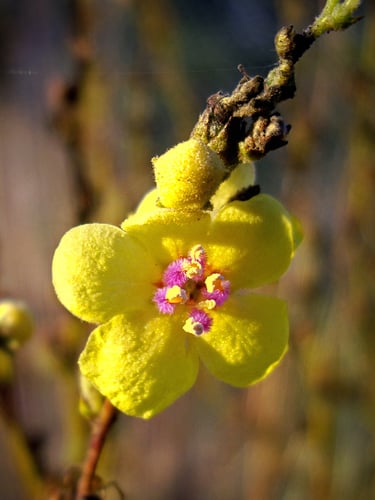
Antirrhinum majus
L.
Snapdragon
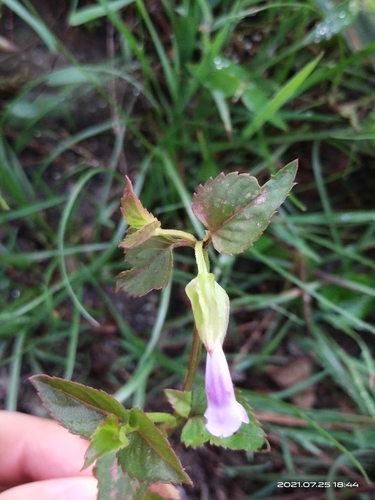
iNaturalist· cc-by
(c) Denis Bastianelli, some rights reserved (CC BY), uploaded by Denis Bastianelli
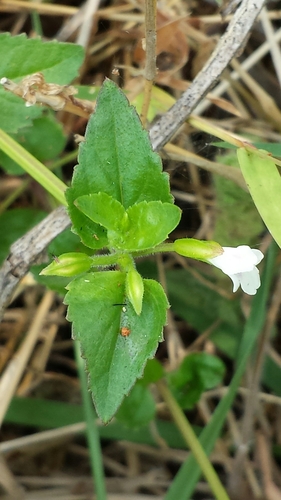
iNaturalist· cc-by
(c) Jon Sullivan, some rights reserved (CC BY)
iNaturalist· cc-by
(c) Aidan, some rights reserved (CC BY), uploaded by Aidan
Summary
Source: WikipediaAntirrhinum majus, the common snapdragon (often – especially in horticulture – simply "snapdragon"), is a species of flowering plant belonging to the genus Antirrhinum. The plant was placed in the family Plantaginaceae following a revision of its prior classical family, Scrophulariaceae. The common name "snapdragon", originates from the flowers' reaction to having their throats squeezed, which causes the "mouth" of the flower to snap open like a dragon's mouth. It is widely used as an ornamental plant in borders and as a cut flower. It is perennial but usually cultivated as an annual plant. The species has been in culture since the 15th century.
Description
An annual plant. It grows 1 m high and spreads 50 cm wide. The stem can be erect or lie over. The leaves are green, soft and sword shaped. The flowers can be red, orange, yellow or white. The are tube shaped and have 2 lips.
Edible Uses
Edible Parts: Oil Edible Uses: Oil An oil that is little inferior to olive oil is said to be obtained from the seeds. The report also says that the plant has been cultivated in Russia for this purpose. The seeds are very small and I wonder about the authenticity of this report.
Traditional Uses
The flowers are eaten more as a garnish than food.
This uses section is brief — help expand it
Medicinal Uses
Antiphlogistic Bitter Resolvent Stimulant The leaves and flowers are antiphlogistic, bitter, resolvent and stimulant. They have been employed in poultices on tumours and ulcers. It is effective in the treatment of all kinds of inflammation and is also used on haemorrhoids. The plant is harvested in the summer when in flower and is dried for later use.
Distribution
It grows in temperate and tropical places. It is best in well-drained soil. It needs an open sunny position. It is resistant to drought and frost. In Argentina it grows from sea level to 500 m above sea level.
Where It Grows
Algeria, Argentina, Australia, Austria, Bangladesh, Belgium, Britain, Central Asia, Cuba, Czech Republic, Dominican Republic, Easter Island, Europe*, France, Germany, Greece, Guatemala, Haiti, Ireland, Jamaica, Kazakhstan, Korea, Lebanon, Mediterranean, Mexico, Morocco, Myanmar, Netherlands, New Zealand, North America, Northeastern India, Palestine, Peru, Portugal, Puerto Rico, Romania, Russia, SE Asia, Slovenia, South America, Spain*, Switzerland, Syria, Tajikistan, Tasmania, Trinidad-Tobago, Tunisia, Turkey, Türkiye, Uruguay, USA, Uzbekistan, Venezuela, Vietnam, Virgin Islands, West Indies,
Cultivation
Prefers a light well drained loam and a sunny position. Plants are tolerant of clay and lime soils, and also grow well on old walls. Plants are often grown as an annual since they usually degenerate in their second year. They often self sow when well-sited. There are many named forms, selected for their ornamental value.
Propagation
Seed - surface sow March in a greenhouse. The seed usually germinates in 10 - 21 days at 18°c. Cool nights assist germination. When large enough to handle, prick the seedlings out into individual pots and plant them out in the summer. The seed can also be sown in situ in July/August and will produce larger and more floriferous plants the following summer. Cuttings of half-ripe wood in September in a cold frame.
Other Uses
Dye Oil A green dye is obtained from the flowers, it does not require a mordant. Dark green and gold can also be obtained if a mordant is used. Special Uses Food Forest
Synonyms
Also Known As
Veliki odolin, Zajčki
References (7)
- Benvenuti, S. & Mazzoncini, M., 2021, The Biodiversity of Edible Flowers: Discovering New Tastes and New Health Benefits. Frontiers in Plant Science Article 569499.
- Bodkin, F., 1991, Encyclopedia Botanica. Cornstalk publishing, p 90
- Facciola, S., 1998, Cornucopia 2: a Source Book of Edible Plants. Kampong Publications, p 229
- Kew Plants of the World Online
- Plants of Haiti Smithsonian Institute http://botany.si.edu/antilles/West Indies
Show all 7 references Hide references
- Rop, O., et al, 2012, Edible Flowers - A New Promising Source of Mineral Elements in Human Nutrition. Molecules 2012, 17, 6672-6683
- Sp. pl. 2:617. 1753