Anticharis senegalensis
(Walp.) Bhandari
iNaturalist· cc-by-nc
(c) Lisa Schwarz, some rights reserved (CC BY-NC), uploaded by Lisa Schwarz
iNaturalist· cc-by-nc
(c) Marion Maclean, some rights reserved (CC BY-NC), uploaded by Marion Maclean
iNaturalist· cc-by-nc
(c) Alex Dreyer, some rights reserved (CC BY-NC), uploaded by Alex Dreyer
Description
A herb. It grows 30 cm high and has many branches. The leaves are narrow and 1-4 cm long by 2 mm wide. They do not have stalks. The flowers are pink or purple with a white throat. They occur singly. The fruit is an oval capsule 7-8 mm long. It has a sharp beak and splits into 4 segments. The seeds are oblong and 1 mm long. They have ridges along them.
Edible Uses
The leaves are eaten.
Distribution
It is a tropical plant. It grows in semi-desert in the Sahel. It can grow in arid places. In southern Africa it grows between 365-915 m above sea level.
Where It Grows
Africa, Arabia, Asia, Botswana, Burkina Faso, Chad, East Africa, Egypt, Ethiopia, Kenya, India, Mauritania, Middle East, Namibia, Niger, Sahara, Sahel, Senegal, Somalia, South Africa, West Africa, Yemen, Zimbabwe,
Synonyms
References (2)
- Burkill, H. M., 1985, The useful plants of west tropical Africa, Vol. 5. Kew.
- World Checklist of Useful Plant Species 2020. Royal Botanic Gardens, Kew
More from Scrophulariaceae
Pedicularis sceptrum carolinum
Lousewort
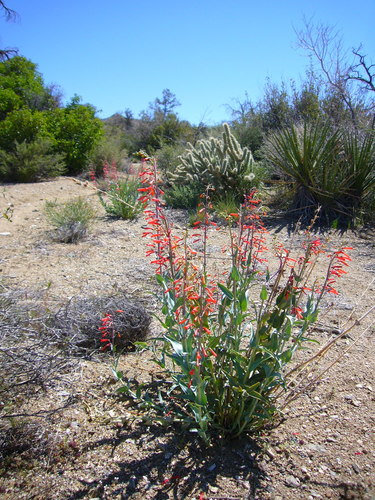
Penstemon centranthifolius
Scarlet bugler
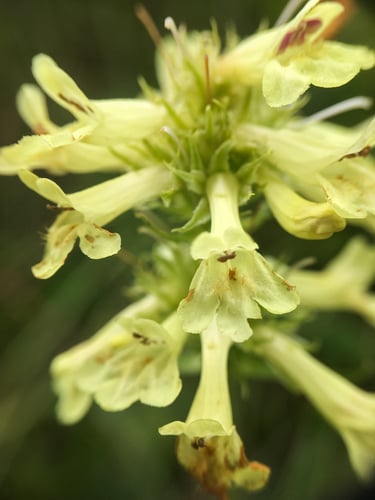
Penstemon confertus
Yellow beard tongue, Small-flowered penstemon
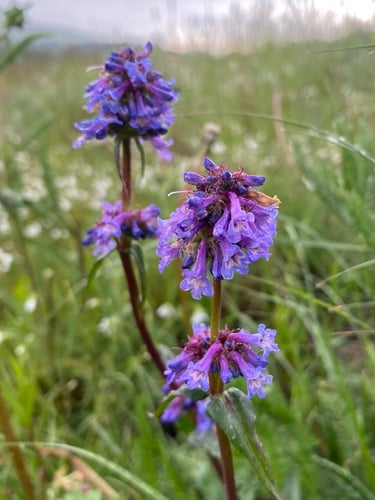
Penstemon procerus
Yellow penstemon
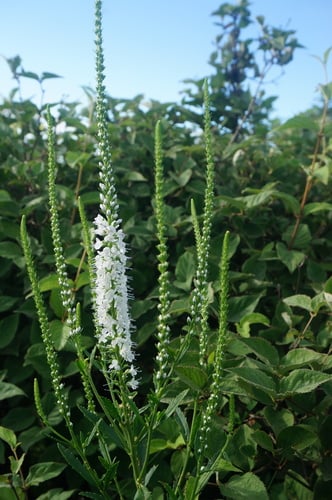
Pseudolysimachion linariifolium subsp. dilatatum
Shui man jing
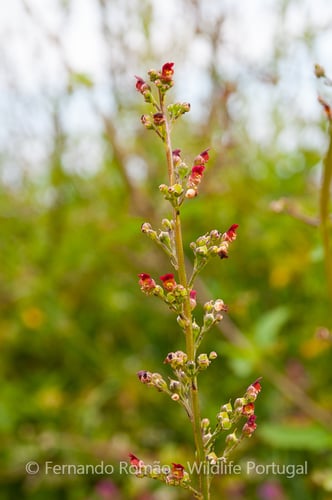
Scrophularia auriculata
Bishop's leaves, Water-betony, Water figwort