Buddleja asiatica
Lour.
White butterfly bush
iNaturalist· cc-by-nc-sa
(c) 106611639464075912591, some rights reserved (CC BY-NC-SA), uploaded by 106611639464075912591
iNaturalist· cc-by-nc
(c) Carol McDougall, some rights reserved (CC BY-NC), uploaded by Carol McDougall
iNaturalist· cc-by-nc-nd
(c) Sunnetchan, some rights reserved (CC BY-NC-ND), uploaded by Sunnetchan
Summary
Source: WikipediaBuddleja asiatica, also known as dogtail, is a species of flowering plant in the figwort family, Scrophulariaceae. It grows in open woodland at elevations < 2,800 m either as understorey scrub, or as a small tree. First described by Loureiro in 1790, B. asiatica was introduced to the UK in 1874, and accorded the RHS Award of Garden Merit (record 675) in 1993. It is highly invasive in Hawaii, Guam, and the Northern Mariana Islands.
Description
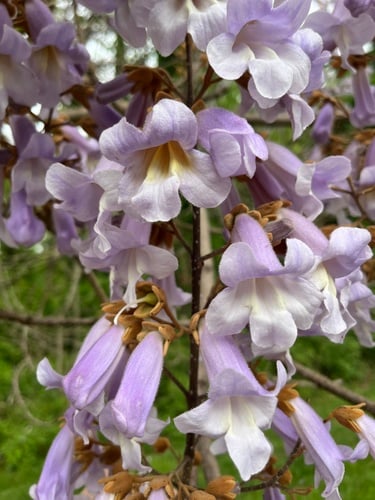
An evergreen, tree like shrub. It grows 3 m high. New shoots are arching and woolly white. The leaves are long and narrow. They are dark green on the upper side and paler underneath. The flowers are in long drooping racemes. They are creamy white. They are fragrant. They flowers grow on last year's growth. The fruit is a capsule and is small and narrowly oval.
Edible Uses
In Nepal leaves of B. asiatica are collected as fodder for domesticated animals, and the trunk is cut for firewood. During Thangmi wedding rituals, the female relatives of the groom wear necklaces made of the white flower.
Traditional Uses
The flowers are eaten with meat. The flowers are boiled to make a yellow liquid poured over rice. The root is dried and powdered and and used to make a fermented liquor. The bark is chewed.
Medicinal Uses
The plant has been used as an abortifacient and also in the treatment of skin complaints. The juice f the plant is applied as a wash to treat skin diseases.
Known Hazards
Because of its saponin content, the plant is sometimes used as a fish poison.
Distribution
It is a tropical plant. It grows from about 80 to 2900 m altitude in Papua New Guinea. It mostly grows in disturbed areas like old gardens and along roadsides. In Pakistan it grows up to 1,600 m above sea level. It suits hardiness zones 8-12. In Sichuan and Yunnan.
Where It Grows
Asia, Australia, Bangladesh, Bhutan, Cambodia, China, East Africa, Guam, Hawaii, Himalayas, India, Indochina, Indonesia, Laos, Malaysia, Myanmar, Nepal, Northeastern India, Pacific, Pakistan, Papua New Guinea, PNG, Philippines, SE Asia, Sikkim, Taiwan, Thailand, Tibet, Vietnam, Zimbabwe,
Cultivation
The plant is likely to be damaged or killed by temperatures lower than 0°c. So long as the plant is well mulched it resprouts freely from the base if cut back by severe weather. Requires a sunny position, succeeding in most reasonably good soils so long as they are well-drained. Prefers a rich loamy soil. Plants are very tolerant of alkaline soils. The plant has escaped from cultivation and become naturalized in some areas of the tropics. It has been classified as 'invasive' in Hawaii and some other Pacific Islands. Hybridizes freely with other members of this genus. Any pruning is best done after flowering. An excellent plant for bees and butterflies.
Propagation
Seed - cold stratify for 4 weeks at 4°c and surface sow the seed in a nursery (the pre-chilling might not be required for this species). Germination usually takes place within 3 - 4 weeks at 21°c. When large enough to handle, prick the seedlings out into individual pots and plant them out when large enough. Seedlings are inclined to damp off and so should be watered with care and kept well-ventilated. Cuttings of half-ripe wood in a frame. Use short side-shoots. Very high percentage. Cuttings of mature wood of the current season's growth, 15 - 20cm long, in a frame.
Other Uses
An essential oil from the plant is used in perfumery. A sweet freesia-like fragrance. Wood - tough, moderately hard. It could be used for making walking sticks. The wood is sometimes used as a fuel. The plant is often a natural pioneer of open spaces.
Other Information
It is sold in local markets in China.
Notes
There are 90-100 Buddleja species. This one can become invasive. Also put in the family Buddlejaceae.
Synonyms
Also Known As
Agiachita, Bana, Bhati, Bhimsen pate, Dhaula, Dogtail, Gentud ulangan, Karukattaan, Khundamora, Kyaung-migo, Mai-yun-puk, Majitala, Markong-abang, Neemda, Nuneheru-arong, Pondam-kung, Rachawadi pa, Samna-bat, Sau dau chuot, Winter lilac, Wu gu huang teng, Yang-ren, Ya-pun-puk
References (21)
- Ambasta S.P. (Ed.), 2000, The Useful Plants of India. CSIR India. p 90
- Conn, B.J., (Ed.) 1995, Handbooks of the Flora of Papua New Guinea. Vol 3. Melbourne University Press. p 128
- Cundall, P., (ed.), 2004, Gardening Australia: flora: the gardener's bible. ABC Books. p 264
- Dobriyal, M. J. R. & Dobriyal, R., 2014, Non Wood Forest Produce an Option for Ethnic Food and Nutritional Security in India. Int. J. of Usuf. Mngt. 15(1):17-37
- Etherington, K., & Imwold, D., (Eds), 2001, Botanica's Trees & Shrubs. The illustrated A-Z of over 8500 trees and shrubs. Random House, Australia. p 145
Show all 21 references Hide references
- Facciola, S., 1998, Cornucopia 2: a Source Book of Edible Plants. Kampong Publications, p 62
- Fl. cochinch. 1:72. 1790
- Flora of Pakistan.
- Hibbert, M., 2002, The Aussie Plant Finder 2002, Florilegium. p 47
- Leenhouts, 1962, Loganiaceae, Flora Malesiana, Ser. 1. Vol 6 (2) p 337
- Li, D. et al, 2017, Ethnobotanical survey of herbal tea plants from the traditional markets in Chaoshan, China. Journal of Ethnopharmacology. 205 (2017) 195-206
- Li, S., et al, 2020, Monpa, memory, and change: an ethnobotanical study of plant use in Mêdog County, South-east Tibet, China. Journal of Ethnobiology and Ethnomedicine. (2020) 16:5 p 23
- Marinelli, J. (Ed), 2004, Plant. DK. p 446
- Maisuthisakul, P., 2012, Phenolic Constituents and Antioxidant Properties of some Thai Plants. www.intechopen.com p 189
- Masoodi, H. U. R. & Sundriyal, R. C., 2020, Richness of non-timber forest products in Himalayan communities—diversity, distribution, use pattern and conservation status. Journal of Ethnobiology and Ethnomedicine 16:56
- Patiri, B. & Borah, A., 2007, Wild Edible Plants of Assam. Geethaki Publishers. p 83
- Sarma, H., et al, 2010, Updated Estimates of Wild Edible and Threatened Plants of Assam: A Meta-analysis. International Journal of Botany 6(4): 414-423
- Savita, et al, 2006, Studies on wild edible plants of ethnic people in east Sikkim. Asian J. of Bio Sci. (2006) Vol. 1 No. 2 : 117-125
- Sawian, J. T., et al, 2007, Wild edible plants of Meghalaya, North-east India. Natural Product Radiance Vol. 6(5): p 413
- Singh, B., et al, 2012, Wild edible plants used by Garo tribes of Nokrek Biosphere Reserve in Meghalaya, India. Indian Journal of Traditional Knowledge. 11(1) pp 166-171
- Wild edible plants of Himachal Pradesh