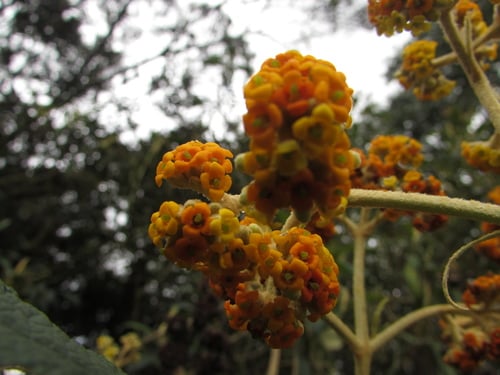
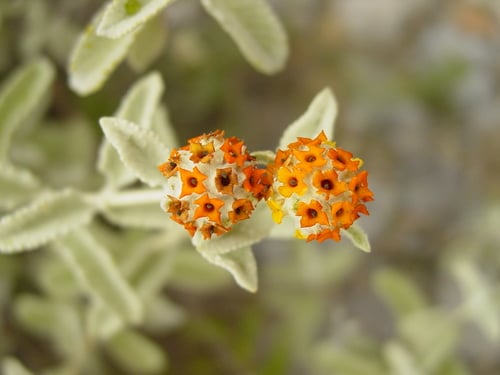
Buddleja americana
L.
American butterfly bush
iNaturalist· cc-by-sa
(c) Oscar Alejandro Morales Juárez, some rights reserved (CC BY-SA)
iNaturalist· cc-by-nc
(c) Pablo Alejandro Montero Herrera, some rights reserved (CC BY-NC)
iNaturalist· cc-by-nc
(c) Pablo Alejandro Montero Herrera, some rights reserved (CC BY-NC)
Summary
Source: WikipediaBuddleja americana is the most widespread of all the Buddleja species native to the Americas, its range extending south from Tamaulipas, Mexico, through Central America and much of the West Indies into South America, reaching eastward to Venezuela, westward as far as the Galapagos, and south to Bolivia. It occurs at elevations from sea level to 2500 m, in a variety of habitats, including cloud forest, mountain savanna, pine–oak forest, and rocky slopes near rivers. It also invades fields and roadsides. The species was originally named and described by Linnaeus in 1753.
Description
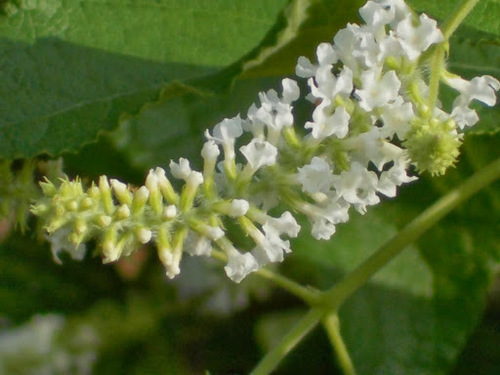
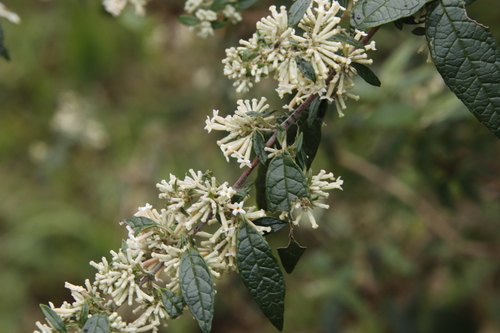
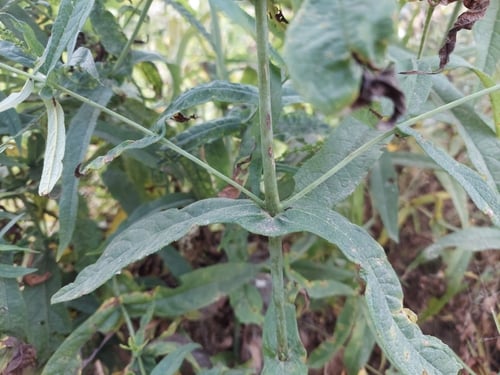
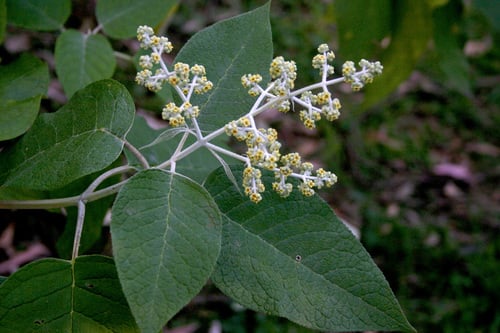
A small tree. The leaves are opposite. The leaves are heart shaped and brown underneath. The flowers are small and in dense heads.
This description is brief — help expand it
Distribution
It is a tropical plant. It grows in the edge of forests in mountains.
Where It Grows
Amazon, Andes, Belize, Bolivia, Central America, Colombia, Costa Rica, Cuba, Ecuador, El Salvador, Guatemala, Honduras, Jamaica, Mexico, Nicaragua, Panama, Peru, South America, Venezuela, West Indies,
Notes
There are 90-100 Buddleja species. Also as family Loganiaceae. Also put in the family Buddlejaceae. .
Synonyms
Also Known As
Jacte, Jankko-kolli, Orkoko, Kiswara, Sactzam, Teposan
References (4)
- Condit, R., et al, 2011, Trees of Panama and Costa Rica. Princeton Field Guides. p 446
- Grandtner, M. M., 2008, World Dictionary of Trees. Wood and Forest Science Department. Laval University, Quebec, Qc Canada. (Internet database http://www.WDT.QC.ca)
- Grandtner, M. M. & Chevrette, J., 2013, Dictionary of Trees, Volume 2: South America: Nomenclature, Taxonomy and Ecology. Academic Press p 79
- Kew Plants of the World On line