Acaena anserinifolia
(Forst. & Forst.f.) Druce
Bidgee widgee, Buzzy, New Zealand Bur
iNaturalist· cc-by-nc
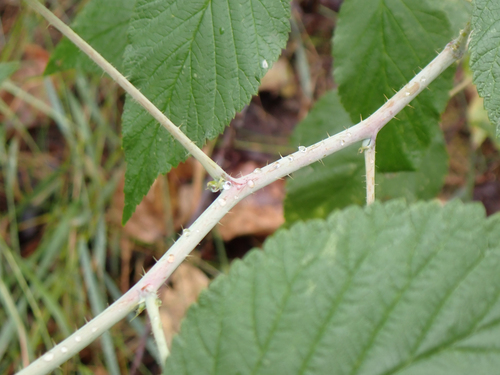
(c) slee, some rights reserved (CC BY-NC), uploaded by slee
iNaturalist· cc-by-nc
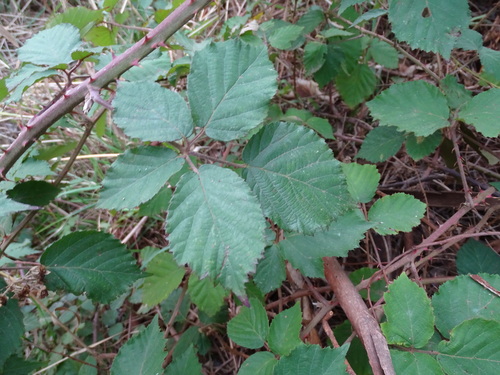
(c) nickysharp, some rights reserved (CC BY-NC)
iNaturalist· cc-by-nc
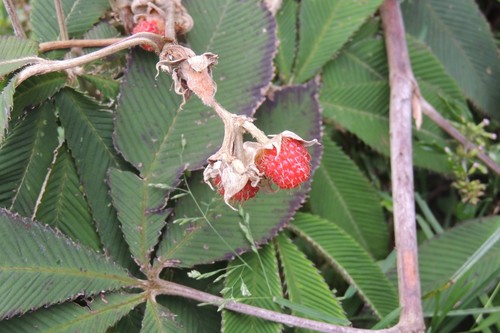
(c) mattward, some rights reserved (CC BY-NC), uploaded by mattward
Summary
Source: WikipediaAcaena anserinifolia, the bidibidi, hutiwai, or piripiri, is a species of plant, endemic to New Zealand. It has been introduced to the United Kingdom and Ireland. Known for its distinctive hooked seeds which easily attach to clothing and animals, bidibidi can be used to make a tea, used by both Māori and Pākehā settlers in New Zealand, as well as in ointments for wounds and medical purposes.
Description
A shrub or small tree. It grows 5 m tall. There are prickles along the stem. The leaves are twice divided and there are 8-18 pairs of pinnae. There are up to 50 pairs of pinnules on each pinnae. The flowers are yellow. They are in large clusters at the ends of branches. The pods are flattened.
Edible Uses
Dried leaves are brewed into a tea drink.
Traditional Uses
A tea drink can be made from the dried leaves of this plant.
This uses section is brief — help expand it
Distribution
It is a temperate plant. It grows naturally in eastern Australia. It prefers light to heavy soils. It is mostly in poorly drained sites. It is more common in protected and partly shaded places. It is frost resistant. It is damaged by drought. In Tasmania it grows up to 1300 m altitude. It suits hardiness zones 6-10. Tasmania Herbarium.
Where It Grows
Australia*, Britain, Europe, New Zealand*, Tasmania*,
Cultivation
It can be grown from cuttings. It can also be grown by dividing the rootstock. It can also be grown by seed.
Production
The leaves are easily stripped off by running the hands along the stems. More leaves are needed than with tea.
Notes
There are about 100 Acaena species. The name has been misapplied to A. novae-zelandiae in some areas. The plant in Tasmania is Acaena novae-zelandiae.
Synonyms
Also Known As
Bidibid, Piripiri
References (19)
- Biocyclopedia Edible Plant Species
- Bodkin, F., 1991, Encyclopedia Botanica. Cornstalk publishing, p 37
- Bot. Soc. Exch. Club Brit. Isles 4:484. 1917
- Brickell, C. (Ed.), 1999, The Royal Horticultural Society A-Z Encyclopedia of Garden Plants. Convent Garden Books. p 61
- Cribb, A.B. & J.W., 1976, Wild Food in Australia, Fontana. p 177
Show all 19 references Hide references
- Cronin, L., 1989, The Concise Australian Flora. Reed. p 46
- Crowe, A., 1997, A Field Guide to the Native Edible Plants of New Zealand. Penguin. p 96
- Cundall, P., (ed.), 2004, Gardening Australia: flora: the gardener's bible. ABC Books. p 80
- Curtis, W.M., 1956, The Students Flora of Tasmania Vol 1 p 172
- Elliot, W.R., & Jones, D.L., 1982, Encyclopedia of Australian Plants suitable for cultivation. Vol 2. Lothian. p 133
- Facciola, S., 1998, Cornucopia 2: a Source Book of Edible Plants. Kampong Publications, p 192 (As Acaena sanguisorbae)
- Hedrick, U.P., 1919, (Ed.), Sturtevant's edible plants of the world. p 21 (As Acaena sanguisorbae)
- Lamp, C & Collet F., 1989, Field Guide to Weeds in Australia. Inkata Press. p 2
- Lazarides, M. & Hince, B., 1993, Handbook of Economic Plants of Australia, CSIRO. p 7
- Low, T., 1992, Bush Tucker. Australia’s Wild Food Harvest. Angus & Robertson. p 33
- Morley, B.D., & Toelken, H.R., (Eds), 1983, Flowering Plants in Australia. Rigby. p 145
- Steenbeeke, Greg as part of the Plants Directory project. List of plant species from northern NSW that may be used as food plants p 2
- Tasmanian Herbarium Vascular Plants list p 50 (Acaena novae-zealandae)
- Woolmore, E et al, 2002, King Island Flora: A Field Guide. p 70