Prunus sargentii
Rehder
Sargent Cherry, Mountain cherry
iNaturalist· cc-by-nc
(c) sergeyprokopenko, some rights reserved (CC BY-NC), uploaded by sergeyprokopenko
iNaturalist· cc-by-nc
(c) Tatjana Koroteeva, some rights reserved (CC BY-NC)
iNaturalist· cc-by
(c) Violetta Dzizyurova, some rights reserved (CC BY)
Summary
Source: WikipediaPrunus sargentii, commonly known as Sargent's cherry or North Japanese hill cherry, is a species of cherry native to Japan, Korea, Sakhalin (Russia), and China. The tree was named for Charles Sprague Sargent.
Description
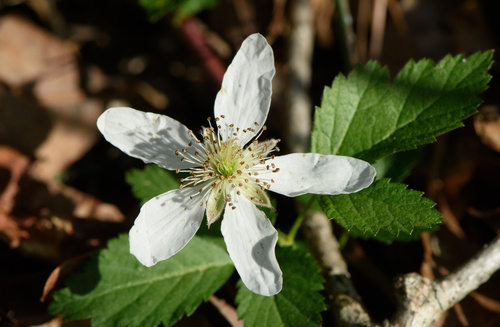
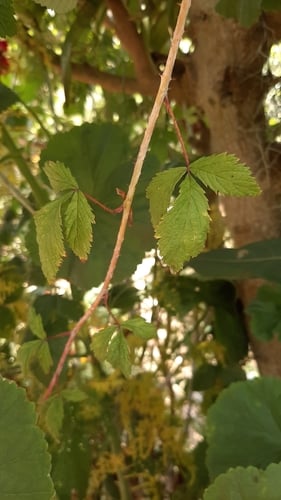
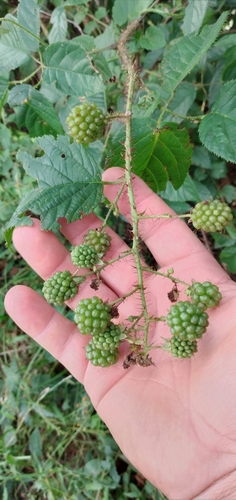
It is a deciduous tree. It grows 20 m tall. It is a broad spreading shape. The bark is glossy red-brown with pale lenticels. The leaves are narrowly oval and 12 cm long by 6 cm wide. They taper abruptly to a point. They have sharp teeth. Leaves are reddish when young and become glossy green above and are smooth on both sides. They turn brilliant orange and red in autumn. The flowers are 4 cm across and pink with 5 petals which have notches at the tip. The flowers are in clusters. The fruit is rounded or egg shaped and glossy purple-black. They are about 1 cm long.
Edible Uses
The fruit can be eaten raw or cooked and measures approximately 11mm x 8mm, containing one large seed. The seed is also edible raw or cooked, but should not be eaten if it tastes excessively bitter.
Traditional Uses
The fruit are infused in alcohol.
This uses section is brief — help expand it
Medicinal Uses
No specific research has been recorded for this species, but all Prunus members contain amygdalin and prunasin, which break down in water to release hydrocyanic acid (prussic acid or cyanide). In small amounts, this highly toxic compound can stimulate respiration, aid digestion, and produce a sense of well-being.
Known Hazards
Although no specific mention has been seen for this species, it belongs to a genus where most, if not all members of the genus produce hydrogen cyanide, a poison that gives almonds their characteristic flavour. This toxin is found mainly in the leaves and seed and is readily detected by its bitter taste. It is usually present in too small a quantity to do any harm but any very bitter seed or fruit should not be eaten. In small quantities, hydrogen cyanide has been shown to stimulate respiration and improve digestion, it is also claimed to be of benefit in the treatment of cancer. In excess, however, it can cause respiratory failure and even death.
Distribution
It is a temperate plant. It is native to Japan. It grows in woods in mountains. It suits hardiness zones 4-9.
Where It Grows
Asia, Australia, Japan, Korea, Manchuria, North America, Russia, Slovenia, USA,
Cultivation
Thrives in a well-drained moisture-retentive loamy soil. Prefers some lime in the soil but is likely to become chlorotic if too much lime is present. Succeeds in sun or partial shade though it fruits better in a sunny position. Most members of this genus are shallow-rooted and will produce suckers if the roots are damaged. Plants in this genus are notably susceptible to honey fungus.
Propagation
Seed requires 2–3 months of cold stratification and is best sown in a cold frame as soon as it is ripe. Stored seed should be sown in a cold frame as early in the year as possible, with protection from mice. Germination can be slow, sometimes taking up to 18 months. Prick out seedlings into individual pots when large enough to handle, overwinter in a greenhouse or cold frame, and plant out in late spring or early summer the following year. Cuttings of half-ripe wood with a heel can be taken in July/August in a frame. Softwood cuttings from vigorous plants can be taken in spring to early summer in a frame. Layering can be done in spring.
Other Uses
A green dye can be extracted from the leaves, and the fruit yields a dark grey to green dye.
Other Information
Fruit are not very palatable.
Notes
There are about 200 Prunus species.
Synonyms
Also Known As
Beojji, Japonska češnja
References (9)
- Arora, R. K., 2014, Diversity in Underutilized Plant Species - An Asia-Pacific Perspective. Bioversity International. p 83
- Coombes, A.J., 2000, Trees. Dorling Kindersley Handbooks. p 268
- Cundall, P., (ed.), 2004, Gardening Australia: flora: the gardener's bible. ABC Books. p 1097
- http://www.botanic-gardens-ljubljana.com/en/plants
- Kermath, B. M., et al, 2014, Food Plants in the Americas: A survey of the domesticated, cultivated and wild plants used for Human food in North, Central and South America and the Caribbean. On line draft. p 715
Show all 9 references Hide references
- Lord, E.E., & Willis, J.H., 1999, Shrubs and Trees for Australian gardens. Lothian. p 67
- Ong, H. G., et al, 2015, Ethnobotany of the wild edible plants gathered in Ulleung Island, South Korea. Genet Resourc Crop Evol. Springer
- Plants for a Future, The Field, Penpol, Lostwithiel, Cornwall, PL22 0NG, UK. http://www.scs.leeds.ac.uk/pfaf/
- Zeven, A. C. & de West, J. M. J., 1982, Dictionary of cultivated plants and their regions of diversity. Wageningen. p 41