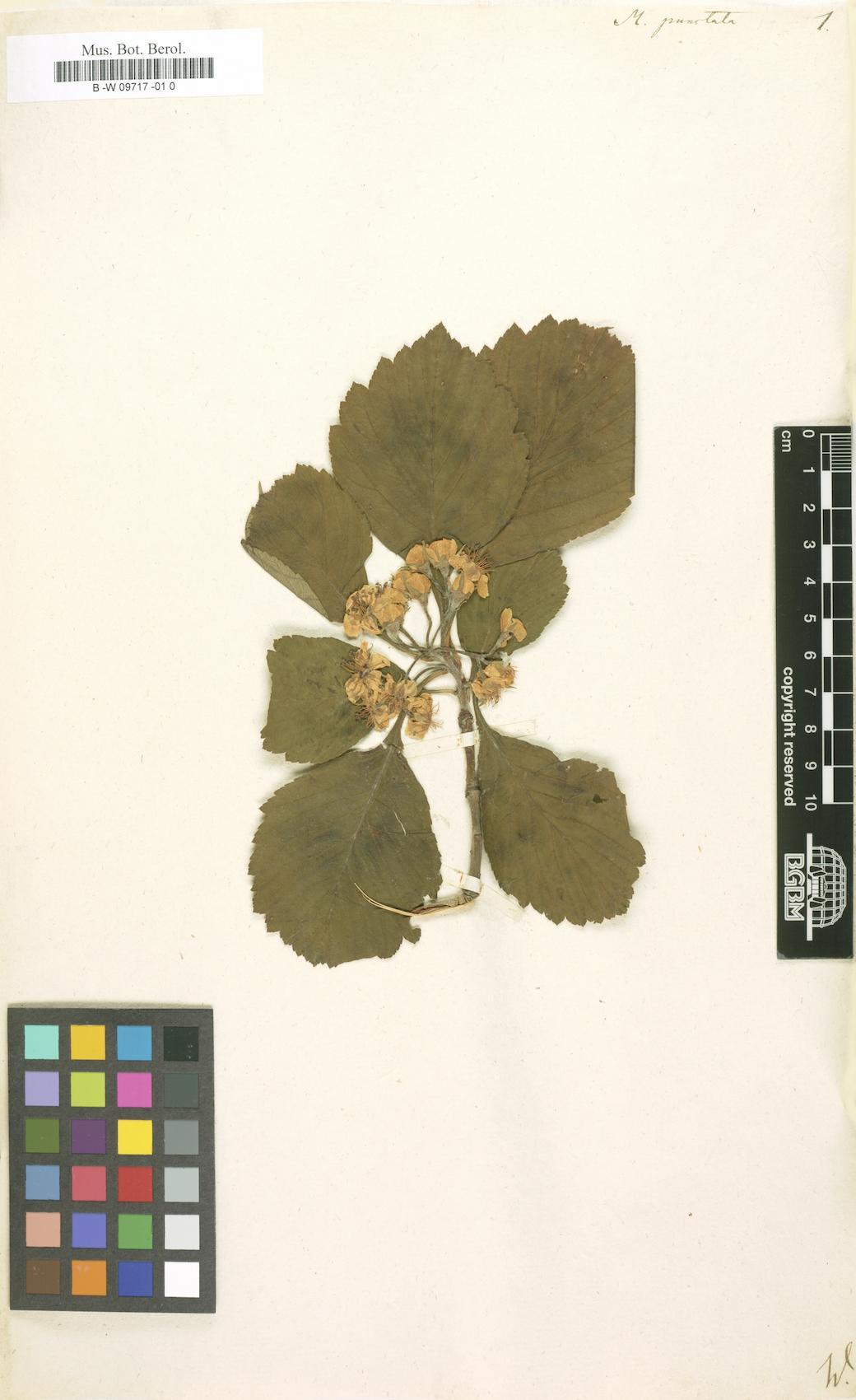
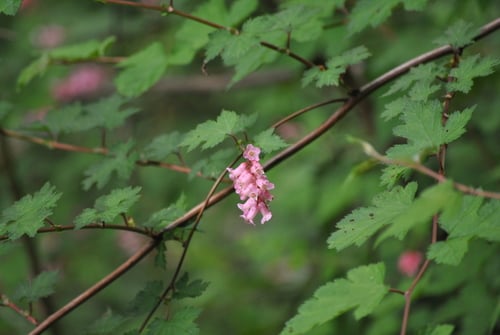
Prunus serotina subsp. capuli
(Cav.) McVaugh
Capulin, Capuli, Capulin black cherry
iNaturalist· cc-by-nc-nd
(c) Danny Barron, some rights reserved (CC BY-NC-ND)
iNaturalist· cc-by-nc
(c) allysonv, some rights reserved (CC BY-NC), uploaded by allysonv
iNaturalist· cc-by-sa
(c) Douglas Goldman, some rights reserved (CC BY-SA), uploaded by Douglas Goldman
Summary
Source: WikipediaPrunus serotina, commonly called black cherry, wild black cherry, rum cherry, or mountain black cherry, is a deciduous tree or shrub in the rose family Rosaceae. Despite its common names, it is not very closely related to commonly cultivated cherries. It is found in the Americas.
Description
A tree. It grows to 10-20 m tall. The trunk can be 70 cm across. The fruit occur in large clusters.
This description is brief — help expand it
Edible Uses
Prunus serotina subsp. capuli was cultivated in Central and South America well before European contact. Known as capolcuahuitl in Nahuatl (the source of the capuli epithet), it was an important food in pre-Columbian Mexico. Native Americans ate the fruit. Edible raw, the fruit is also made into jelly, and the juice can be used as a drink mixer, hence the common name 'rum cherry'. Prunus serotina timber is valuable, perhaps the premier cabinetry timber of the U.S., traded as "cherry". High quality cherry timber is known for its strong orange hues, tight grain and high price. Low-quality wood, as well as the sap wood, can be more tan. Its density when dried is around 560 kg/m3 (35 lb/cu ft). Prunus serotina was widely introduced into Western and Central Europe as an ornamental tree in the mid-20th century, where it has become locally naturalized. It has acted as an invasive species there, negatively affecting forest community biodiversity and regeneration.
Traditional Uses
The fruit are eaten raw and in jellies. The stones or pits are ground and made into flour.
This uses section is brief — help expand it
Distribution
A high altitude tropical plant. It does not require frost for flowering or fruiting. It can tolerate light frosts when 2 years old. It will grow on many different soils. It grows between 900-1,400 m above sea level in Mexico but can be higher.
Where It Grows
Australia, Bolivia, Central America, Colombia, Ecuador, Europe, Guatemala, Mediterranean, Mexico, North America, Peru, South America, Tasmania, USA, Venezuela,
Production
Plants grow rapidly. They can fruit is 4-5 years.
Other Information
Fruit are sold in markets.
Notes
There are about 200 Prunus species.
Synonyms
Also Known As
Capolin, Capulin blanco, Cerezo, Cusabi, Jeco, Pakshumk, Pate, Shimai-ma-lu, Shencua, Shengua, T-nundaya, Tzu'uri, Uasiqui, Xengua
References (17)
- Anales Hist. Nat. 2:110. 1800 (As Prunus capuli)
- Beckstrom-Sternberg, Stephen M., and James A. Duke. "The Foodplant Database." http://probe.nalusda.gov:8300/cgi-bin/browse/foodplantdb.(ACEDB version 4.0 - data version July 1994) (As Prunus capuli)
- Camou-Guerrero, A., et al, 2008, Knowledge and use Value of Plant Species in a Raramuri Community: A Gender Perspective for Conservation. Human Ecology, 36:259-272
- Casas, A., et al, 2016, Evolutionary Ethnobotanical Studies of Incipient Domestication of Plants in Mesoamerica. In Lira, R., et al, (eds.) Ethnobotany of Mexico, Ethnobiology. Springer p 266 (As Prunus capuli)
- Franquemont, C., et al, 1990, The Ethnobotany of Chinchero, an Andean Community in Southern Peru. Fieldiana Botany No. 24 p 95
Show all 17 references Hide references
- Gonzalez-Espinosa, M. et al, 2011, The Red List of Mexican Cloud Forest Trees. Flora and Fauna International, Cambridge. p 115
- Glowinski, L., 1999, The Complete Book of Fruit Growing in Australia. Lothian. p 74 (As Prunus capuli)
- Gouldstone, S., 1983, Growing your own Food-bearing Plants in Australia. Macmillan p 83 (As Prunus capuli)
- Grandtner, M. M., 2008, World Dictionary of Trees. Wood and Forest Science Department. Laval University, Quebec, Qc Canada. (Internet database http://www.wdt.qc.ca)
- Hermandez Bermejo, J.E., and Leon, J. (Eds.), 1994, Neglected Crops. 1492 from a different perspective. FAO Plant Production and Protection Series No 26. FAO, Rome. p17
- Kermath, B. M., et al, 2014, Food Plants in the Americas: A survey of the domesticated, cultivated and wild plants used for Human food in North, Central and South America and the Caribbean. On line draft. p 715
- Kiple, K.F. & Ornelas, K.C., (eds), 2000, The Cambridge World History of Food. CUP p 1744 (As Prunus capuli)
- Macmillan, H.F. (Revised Barlow, H.S., et al) 1991, Tropical Planting and Gardening. Sixth edition. Malayan Nature Society. Kuala Lumpur. p 317 (As Prunus capuli)
- Morton, J. F., 1987, Fruits of Warm Climates. Wipf & Stock Publishers p 108 (As Prunus salicifolia)
- Segura, S., et al, 2018, The edible fruit species in Mexico. Genet Resour Crop Evol (2018) 65:1767–1793
- Self, M., 199, Phoenix Seeds catalogue. p 14 (As Prunus capuli)
- USDA, ARS, National Genetic Resources Program. Germplasm Resources Information Network - (GRIN). [Online Database] National Germplasm Resources Laboratory, Beltsville, Maryland. Available: www.ars-grin.gov/cgi-bin/npgs/html/econ.pl (10 April 2000)