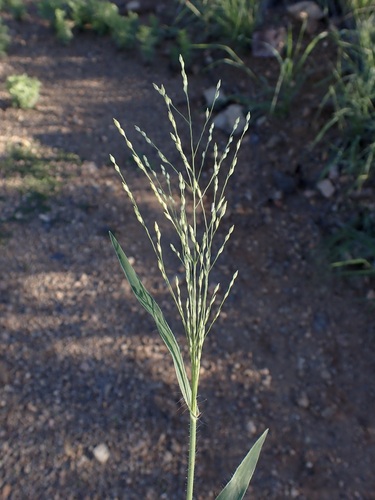
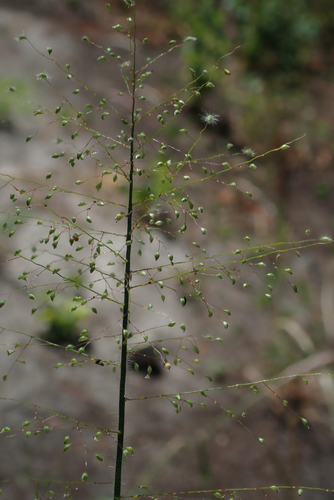
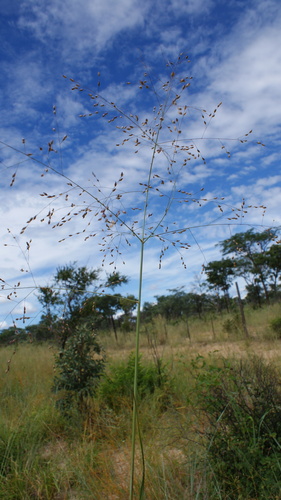
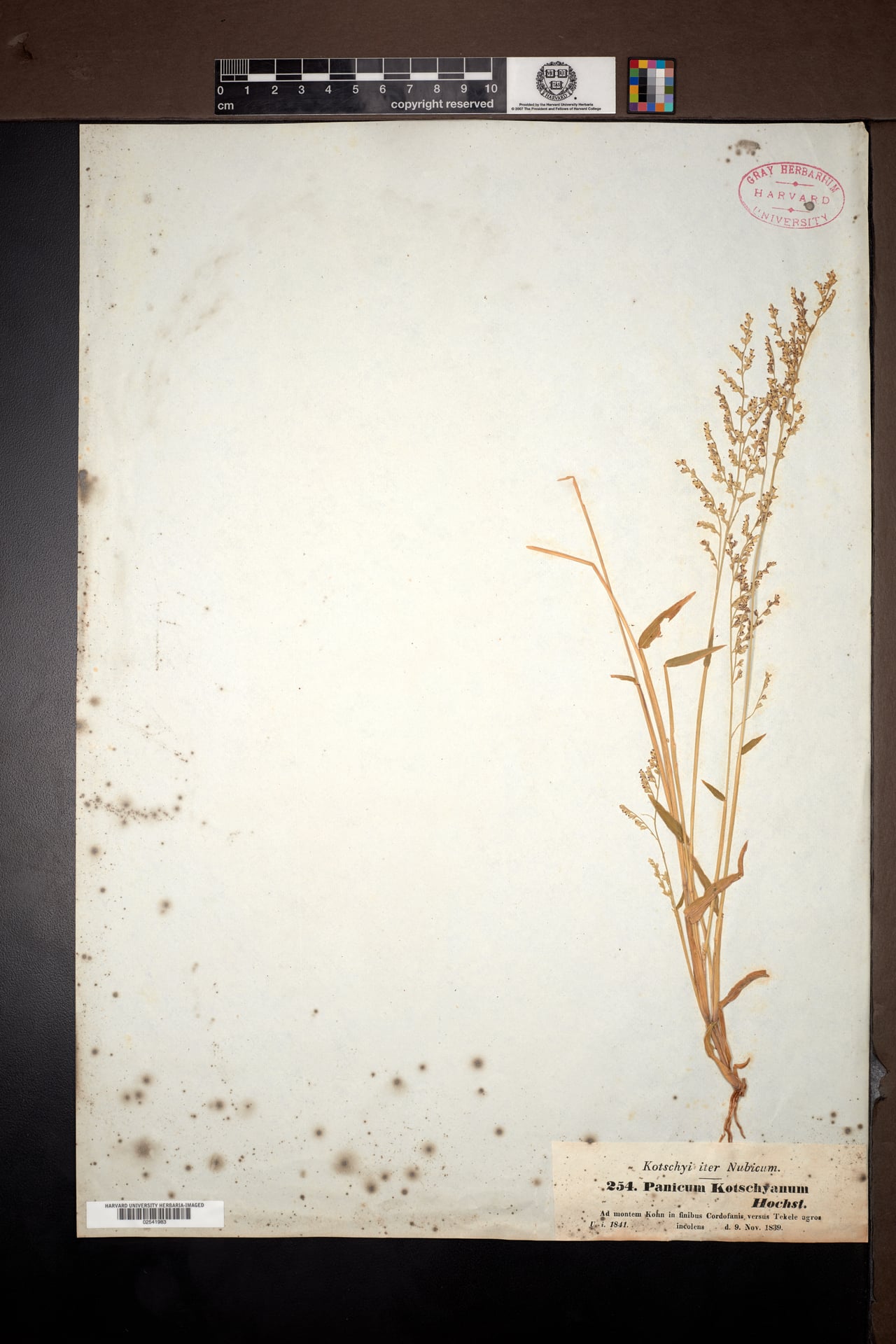
Echinochloa turneriana
(Domin) J. M. Black
Channel millet, Channel Sorghum
wikimedia· cc-by-sa
Wikimedia Commons - Mark Marathon
wikimedia· cc-by-sa
Wikimedia Commons - Mark Marathon
Description
A large annual millet grass in the Poaceae family, native to tropical regions where it grows in arid areas with minimal rainfall.
This description is brief — help expand it
Edible Uses
The seeds are eaten as a cereal.
Distribution
A tropical plant. It will grow in arid areas and with small amounts of rain.
Where It Grows
Australia,
Cultivation
A plant of the dry, lowland tropics to subtropics, where it is found at elevations up to 200 metres. It grows best in areas where annual daytime temperatures are within the range 22 - 30°c, but can tolerate 15 - 35°c. It prefers a mean annual rainfall in the range 300 - 375mm, but tolerates 250 - 2,000mm. Requires a sunny position. Succeeds in shallow, preferably fertile, soils. Plants are not very tolerant of drought. Prefers a pH in the range 7 - 8, tolerating 6.5 - 8.5. The seed will not sprout unless there has been heavy rain and the soil has been flooded. It is then able to grow to maturity and ripen a seed crop even if there is no more rain.
Propagation
Seed - it will not germinate until the soil in which it is found has been flooded.
Synonyms
References (5)
- Chivers, I., et al, 2015, Native grasses make new products. A review of current and past uses and assessment of potential. Rural Industries Research and Development Corporation. Aust. Gvt.
- Facciola, S., 1998, Cornucopia 2: a Source Book of Edible Plants. Kampong Publications, p 175
- Fl. S. Austral., ed. 2, 1:72. 1945
- Macmillan, H.F. (Revised Barlow, H.S., et al), 1991, Tropical Planting and Gardening. Sixth edition. Malayan Nature Society. Kuala Lumpur. p 353 (As Eleusine turnerana - presumably a typographical error)
- World Checklist of Useful Plant Species 2020. Royal Botanic Gardens, Kew