Aplectrum hyemale
(Muhl. ex Willd.) Nutt.
Puttyroot, Adam & Eve
iNaturalist· cc-by-nc
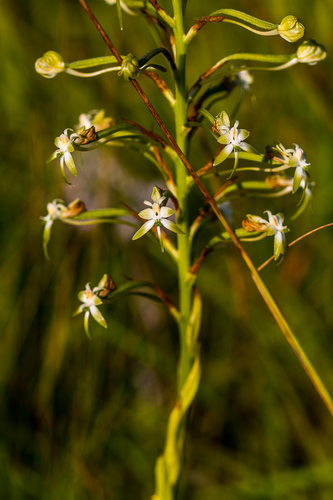
(c) Robby Deans, some rights reserved (CC BY-NC), uploaded by Robby Deans
iNaturalist· cc-by-nc
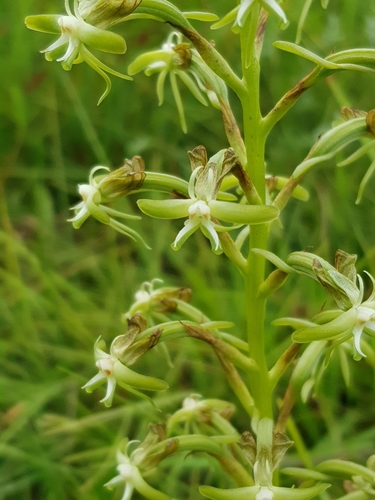
(c) Crystal J Rust, some rights reserved (CC BY-NC), uploaded by Crystal J Rust
iNaturalist· cc-by-nc
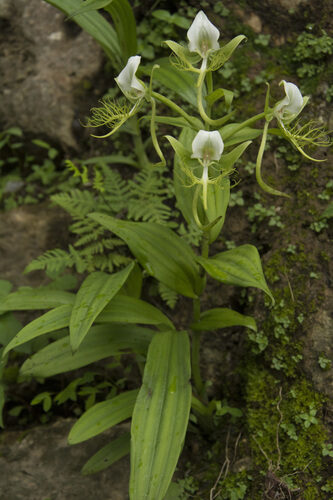
(c) Paul Marcum, some rights reserved (CC BY-NC), uploaded by Paul Marcum
Summary
Source: WikipediaAplectrum hyemale is a perennial orchid reaching 0.5 m tall and 0.2 m wide. It leafs from October to May and flowers May to June, with seeds ripening June to July. The plant is hermaphroditic and insect-pollinated. It thrives in light sandy, medium loamy, or heavy clay soils with mildly acidic to basic pH. Hardy to UK zone 5, it grows in full to semi-shade conditions and prefers consistently moist soil.
Description
Aplectrum hyemale is a perennial orchid reaching 0.5 m tall and 0.2 m wide. It leafs from October to May and flowers May to June, with seeds ripening June to July. The plant is hermaphroditic and insect-pollinated. It thrives in light sandy, medium loamy, or heavy clay soils with mildly acidic to basic pH. Hardy to UK zone 5, it grows in full to semi-shade conditions and prefers consistently moist soil.
Edible Uses
None known
Traditional Uses
The corm can be boiled for 20 minutes and served with butter.
This uses section is brief — help expand it
Medicinal Uses
Analgesic Pectoral Poultice The roots are macerated to a paste and applied to boils or used to treat head pains. A tea made from the roots has been used in the treatment of bronchial troubles. The roots were given to children by some tribes of native North American Indians in order to endow the children with the gift of eloquence and to make them fat.
Distribution
It is a temperate plant.
Where It Grows
North America, USA,
Propagation
Seed - surface sow, preferably as soon as it is ripe, in the greenhouse and do not allow the compost to dry out. The seed of this species is extremely simple, it has a minute embryo surrounded by a single layer of protective cells. It contains very little food reserves and depends upon a symbiotic relationship with a species of soil-dwelling fungus. The fungal hyphae invade the seed and enter the cells of the embryo. The orchid soon begins to digest the fungal tissue and this acts as a food supply for the plant until it is able to obtain nutrients from decaying material in the soil. It is best to use some of the soil that is growing around established plants in order to introduce the fungus, or to sow the seed around a plant of the same species and allow the seedlings to grow on until they are large enough to move. Division of the tubers as the flowers fade. This species produces a new tuber towards the end of its growing season. If this is removed from the plant as its flowers are fading, the shock to the plant can stimulate new tubers to be formed. The tuber should be treated as being dormant, whilst the remaining plant should be encouraged to continue in growth in order to give it time to produce new tubers. Division can also be carried out when the plant has a fully developed rosette of leaves but before it comes into flower. The entire new growth is removed from the old tuber from which it has arisen and is potted up, the cut being made towards the bottom of the stem but leaving one or two roots still attached to the old tuber. This can often be done without digging up the plant. The old tuber should develop one or two new growths, whilst the new rosette should continue in growth and flower normally.
Other Uses
Adhesive A glue can be obtained from the tubers. The roots are bruised with a small addition of water, this gives a strong cement that is used for repairing broken pots, glass etc. Special Uses
Synonyms
References (2)
- Facciola, S., 1998, Cornucopia 2: a Source Book of Edible Plants. Kampong Publications, p 164
- Lim, T. K., 2015, Edible Medicinal and Non Medicinal Plants. Volume 9, Modified Stems, Roots, Bulbs. Springer p 10