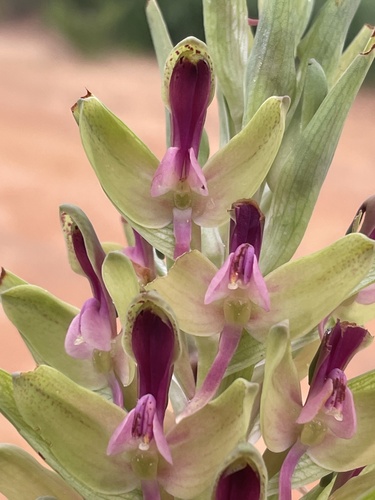
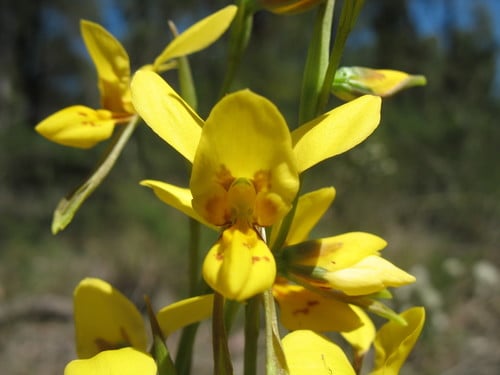
Polystachya spp
gbif· cc-by-nc
Guillaume Martin
gbif· cc-by-nc
Omar Monzon Carmona
gbif· cc-by-nc
Omar Monzon Carmona
Description
A tropical orchid in the family Orchidaceae.
This description is brief — help expand it
Edible Uses
The tubers of D. polystachya can be eaten raw (grated or sliced), while most other yams must be cooked before consumption (due to harmful substances in the raw state). First the skin needs to be removed by peeling (or by scraping off using a hard-bristled brush). This may cause a slight irritation to the hand, and wearing a latex glove is advised, but if an itch develops then lemon juice or vinegar may be applied. The peeled whole tubers are briefly soaked in a vinegar-water solution, to neutralize irritant oxalate crystals found in their skin, and to prevent discoloration. The raw vegetable is starchy and bland, mucilaginous when cut or grated, and may be eaten plain as a side dish, or added to noodles, etc. Chinese yam is referred to as shānyào (山药; 山藥), or mountain medicine, in Chinese traditional medicine, or referred to as huáishān (怀山; 懷山 or 淮山) in the culinary usage. The tuber is consumed raw, steamed, or deep-fried. It is added to savory soups, or can be sweetened with a berry sauce. When used fresh, the tuber is peeled before slicing and using them in stir-fries (mainly in Cantonese cuisine). Oftentimes, Chinese yam can be found sold in prepared, dried slices in dried goods specialty shops. When using the dry ingredient in soups, the slices need to be soaked before adding them to soups to cook. In Japanese cuisine, both the Chinese yam cultivars and the Japanese yam (often wild-foraged) are used interchangeably in dishes. The difference is that nagaimo tends to be more watery, while the native Japanese yam is more viscous. Tororo is the mucilaginous purée made by grating varieties of the Chinese yam (nagaimo, ichōimo, tsukuneimo) or the native Japanese yam. The classic Japanese culinary technique is to grate the yam by grinding it against the rough grooved surface of a suribachi, an earthenware mortar. Or the yam is first grated crudely using an oroshigane grater, and subsequently worked into a smoother paste in the suribachi using a wooden pestle. The tororo is mixed with other ingredients that typically include tsuyu broth (soy sauce and dashi), sometimes wasabi or green onions, and eaten over rice or mugimeshi (steam-cooked blend of rice and barley). The tororo poured over raw tuna (maguro) sliced into cubes is called yamakake, and eaten with soy sauce and wasabi. The tororo may also be poured over noodles to make tororo udon/soba. Noodles with grated yam over it is also called yamakake. Grated yam is also used as a binding agent in the batter of okonomiyaki. Sometimes the grated yam is used as an additive for making the skin of the manjū confection, in which case the product is called jōyo manjū (薯蕷饅頭; "yam manjū"). The yam is also used in making a regional confection called karukan, a specialty of the Kyūshū region. In Korea, there are two main types of Chinese yam; the straight, tube-shaped variant is called jangma (Korean: 장마; lit. '"long ma"'), while danma (Korean: 단마; lit. '"short ma"') refers to the variant, which grows shorter, cluster-like tubes. Both are used in cooking and the tubers are prepared in a variety of ways. They are most commonly consumed raw, after the skinned roots have been blended with water, milk or yogurt (occasionally with additional honey) to create a nourishing drink known as majeup (마즙) or "ma juice" (마주스). Alternatively, the peeled tubers are cut into pieces and served—either raw, after cooking, steaming or frying, along with seasoning sauces.
Distribution
It is a tropical plant.
Where It Grows
Africa, East Africa, Zambia,
References (1)
- Malaisse, F., 1997, Se nourrir en floret claire africaine. Approche ecologique et nutritionnelle. CTA., p 67