Erythropalum scandens
Blume
Vegetable vine, Fish-smelling vine
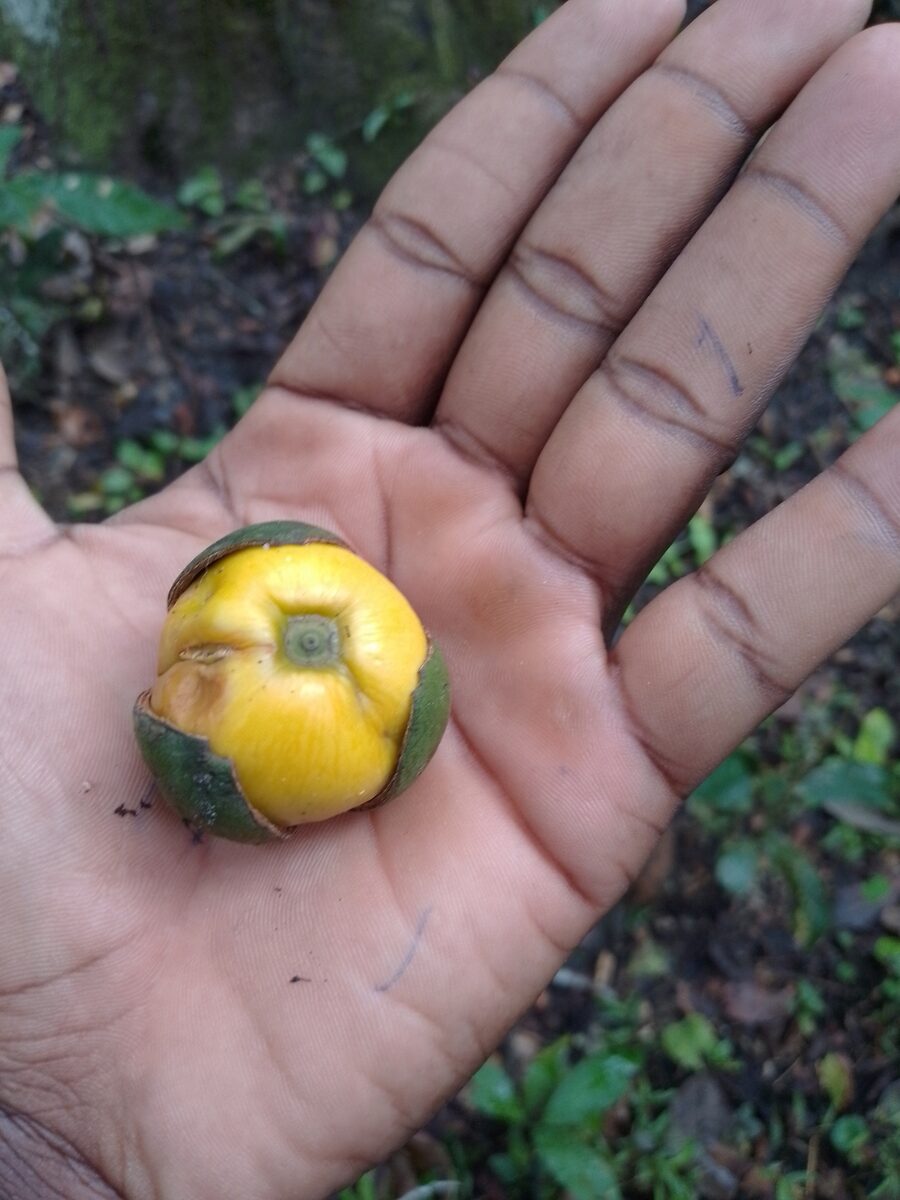
iNaturalist· cc-by-sa
(c) NusHub, some rights reserved (CC BY-SA)
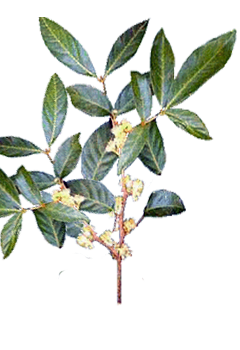
iNaturalist· cc-by
(c) Ansil B.R., some rights reserved (CC BY), uploaded by Ansil B.R.
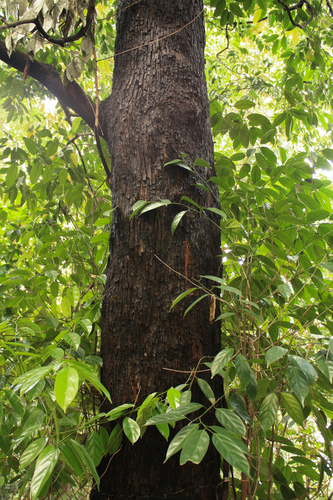
iNaturalist· cc-by
(c) Chayant Gonsalves, some rights reserved (CC BY), uploaded by Chayant Gonsalves
Description
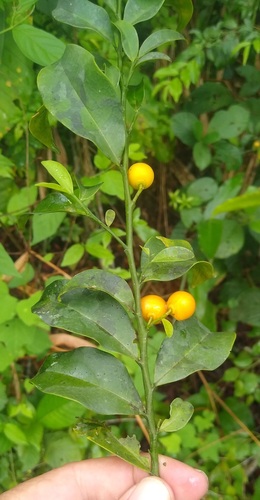
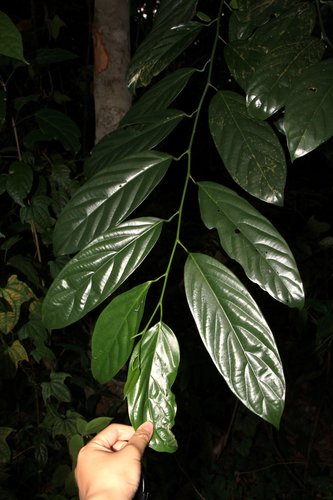
A much branched climber. It grows 5-10 m high. The leaves are alternate and nearly triangular. They have a wavy edge. They are dark green on the upper surface and have a waxy bloom underneath. They are 9-16 cm long by 6-11.5 cm wide. The leaf stalk is swollen at the ends. It is 3-10 cm long. It has tendrils in the axils of leaves. The flower arrangements are 10 cm wide. The flowers are green with a yellow disk. The fruit is pear shaped. It is 1.5-1.8 cm long by 1 cm wide. It is yellow or red. It has a strong smell. There is one seed inside. This is oval and 1.2 cm long.
Edible Uses
The shoots and leaves are often used in curries and as a potherb, though they are bitter.
Traditional Uses
The shoots and leaves are often used in curries and as a potherb. They are bitter.
This uses section is brief — help expand it
Distribution
A tropical plant. It is found in streams in evergreen forests. It grows between 100-1,500 m above sea level. It is also cultivated. In Yunnan. It occurs in the Western Ghats in India.
Where It Grows
Asia, Cambodia, China, India, Indochina, Indonesia, Laos, Malaysia, Myanmar, Philippines, SE Asia, Thailand, Vietnam,
Cultivation
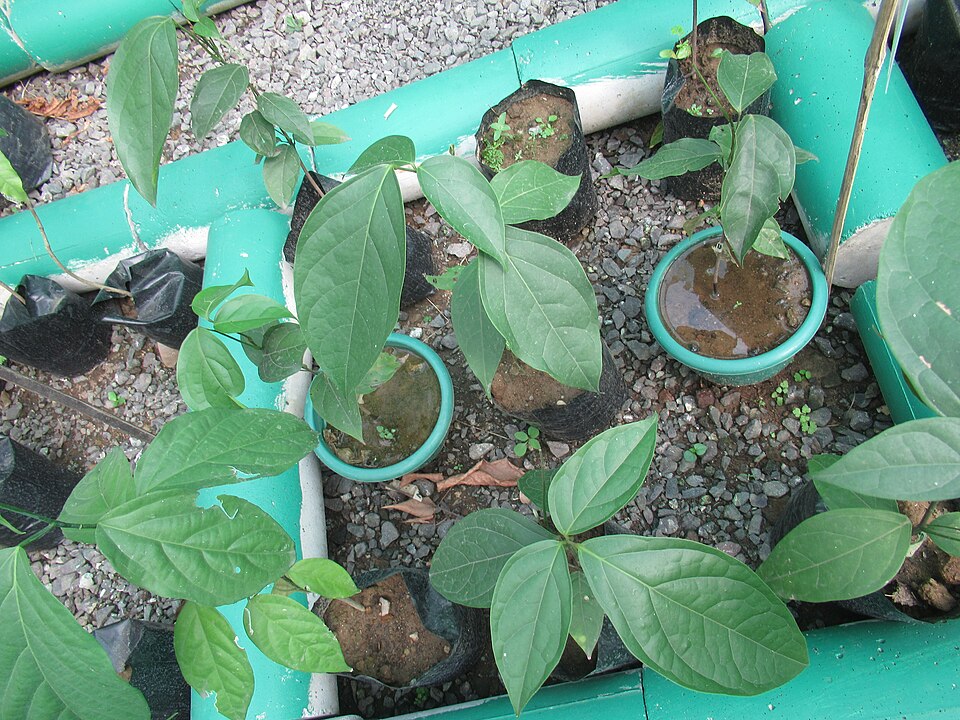
Plants can be grown from seeds or cuttings.
Other Information
It is sold in local markets.
Notes
It is also put in the family Erythropalaceae.
Nutrition
| Part | Moisture | kJ | kcal | Protein | Vit A | Vit C | Iron | Zinc |
|---|---|---|---|---|---|---|---|---|
| Leaves | 78.8 | 210 | 50 | 6 | — | 60 | — | — |
Synonyms
Also Known As
Bokai, Bo khai, Bu khai, Gai yang, Gawng-chu-na-du, Kulim akar, Le-lu, Nibu, Pak keenak, Papu, Phak haak, Phak rot
References (13)
- Burkill, I.H., 1966, A Dictionary of the Economic Products of the Malay Peninsula. Ministry of Agriculture and Cooperatives, Kuala Lumpur, Malaysia. Vol 1 (A-H) p 965
- Cao, Y., et al, 2020, Ethnobotanical study on wild edible plants used by three trans-boundary ethnic groups in Jiangcheng County, Pu’er, Southwest China. Journal of Ethnobiology and Ethnomedicine (2020) 16:66
- Eiadthong, W., et al, 2010, Management of the Emerald Triangle Protected Forests Complex. Botanical Consultant Technical Report. p 48
- Flora of China @ efloras.org Volume 5
- Hu, Shiu-ying, 2005, Food Plants of China. The Chinese University Press. p 369
Show all 13 references Hide references
- Jacquat, C., 1990, Plants from the Markets of Thailand. D.K. Book House p 83
- Kuhnlein, H. V., et al, 2009, Indigenous Peoples' food systems. FAO Rome p 171
- Luo, B., et al, 2019, Wild edible plants collected by Hani from terraced rice paddy agroecosystem in Honghe Prefecture, Yunnan, China. Journal of Ethnobiology and Ethnomedicine 15:56
- Mot So Rau Dai an Duoc O Vietnam. Wild edible Vegetables. Ha Noi 1994, p 114
- Srichaiwong, P., et al, 2014, A Study of the Biodiversity of Natural Food Production to Support Community Upstream of Chi Basin, Thailand. Asian Social Science 10 (2):
- Sukarya, D. G., (Ed.) 2013, 3,500 Plant Species of the Botanic Gardens of Indonesia. LIPI p 927
- Van Sam, H. et al, 2008, Uses and Conservation of Plant Species in a National Park. A case study of Ben En, Vietnam. Economic Botany 62:574-593
- Xu, You-Kai, et al, 2004, Wild Vegetable Resources and Market Survey in Xishuangbanna, Southwest China. Economic Botany. 58(4): 647-667.