Olax acuminata
Wall. ex Benth.
gbif· cc0
Royal Botanic Garden Edinburgh
Description
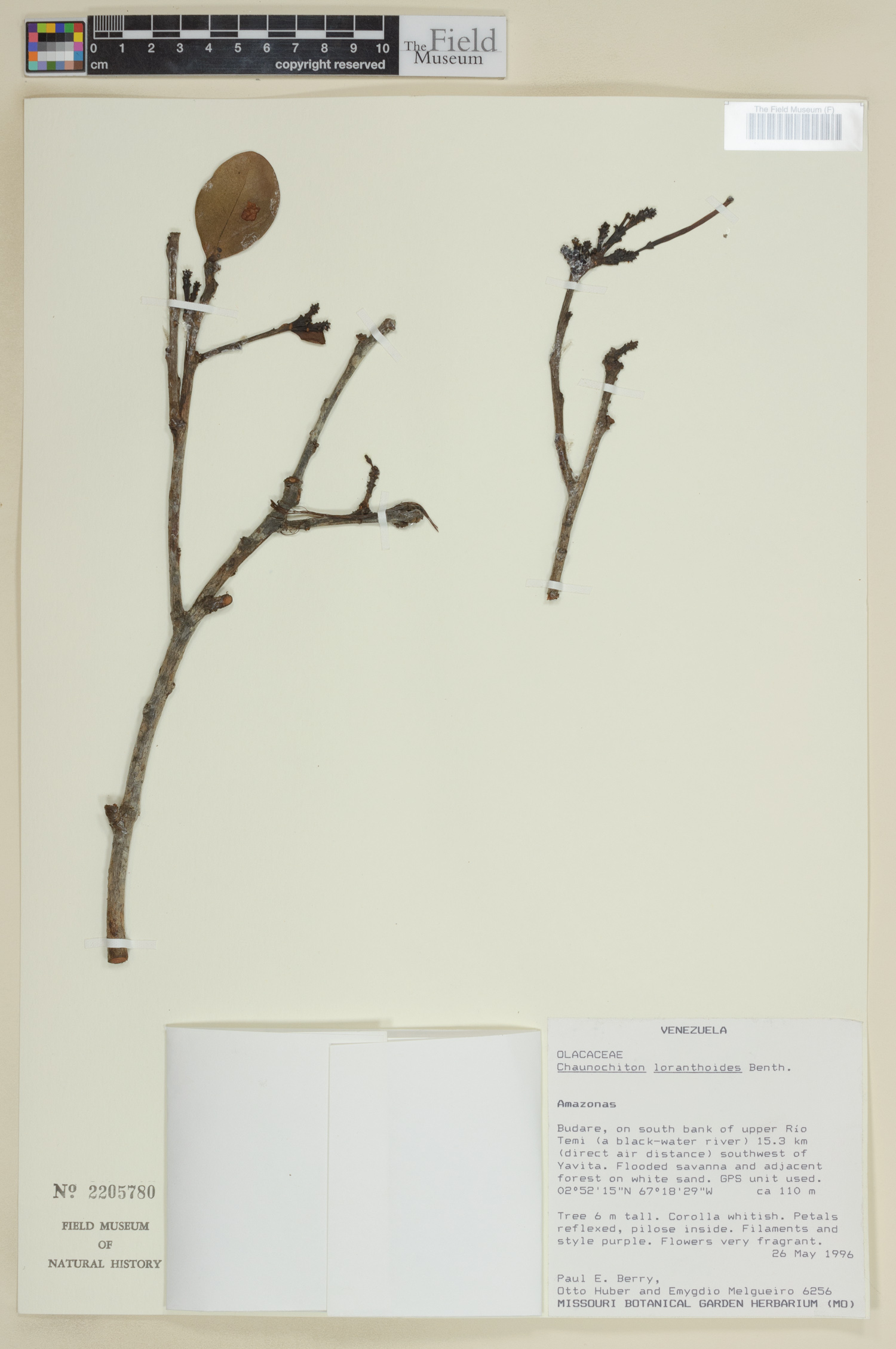
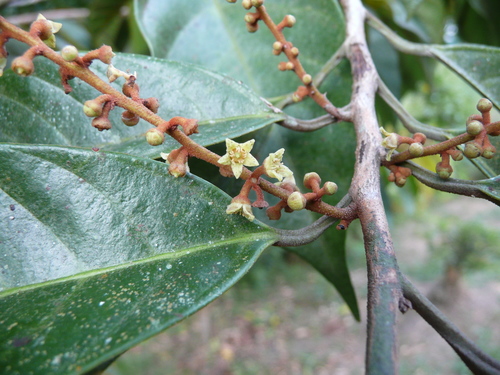
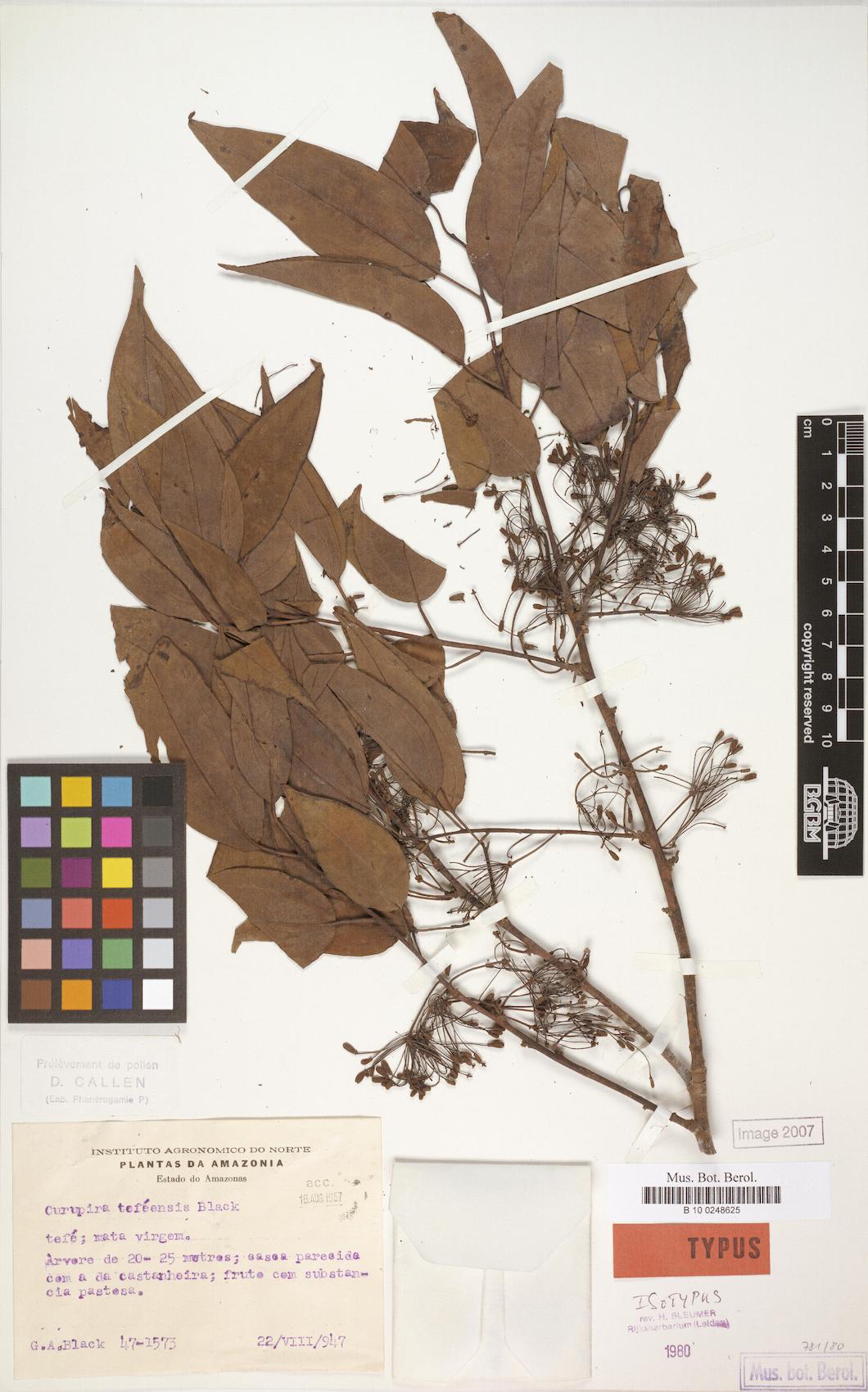
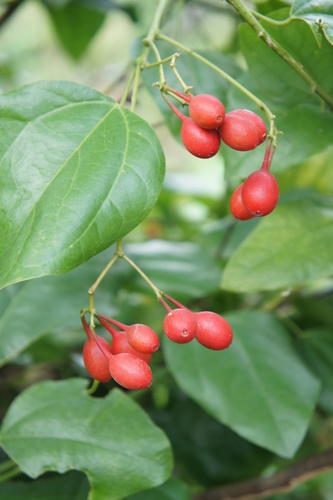
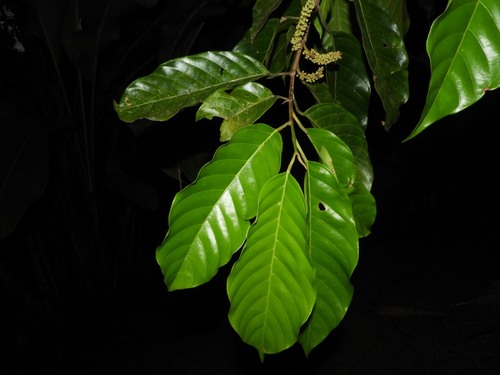
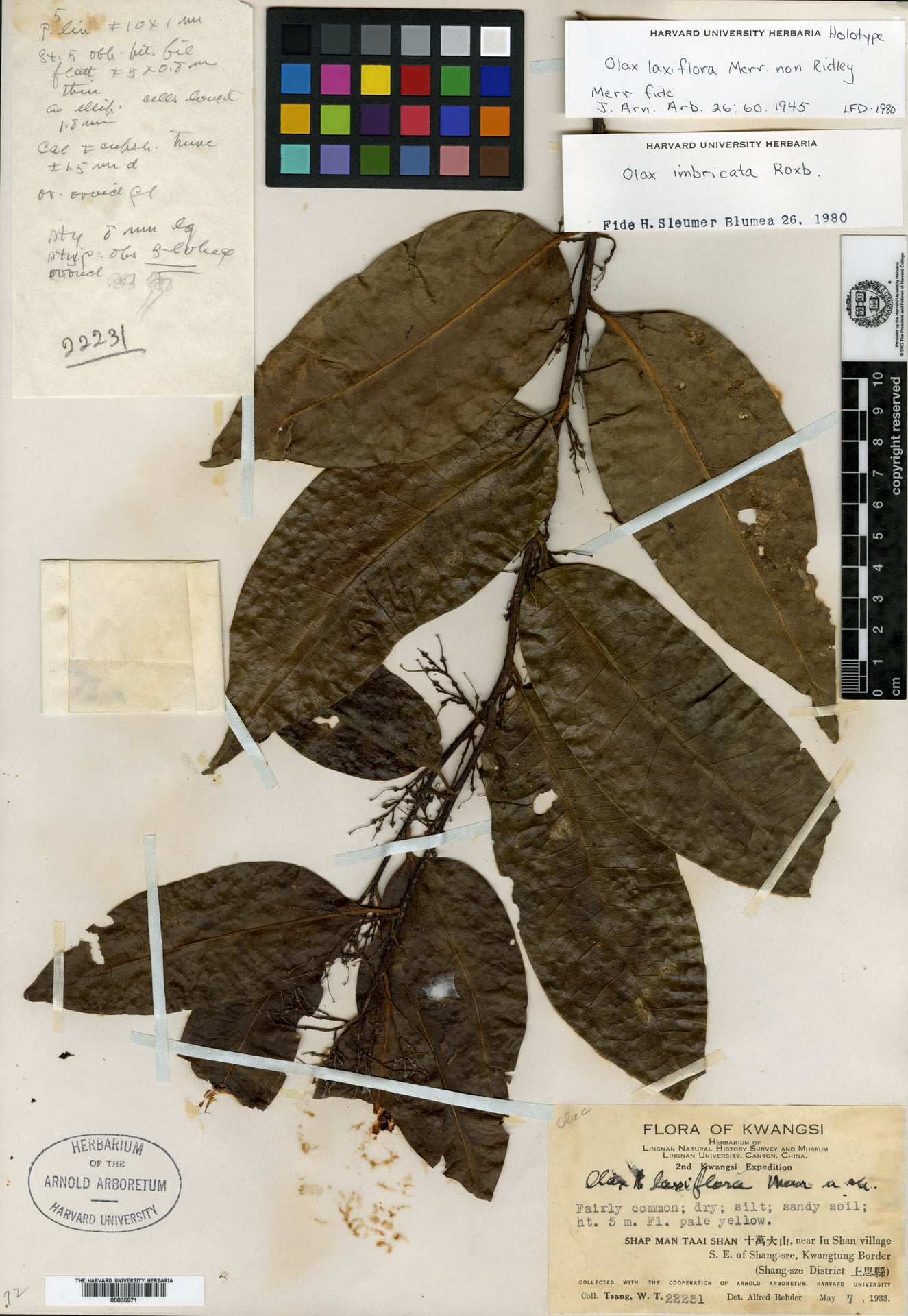
A shrub. It grows 5 m tall. The branches do not have thorns. They are yellow. The leaf stalk is 3-7 mm long. The leaf blade is oblong to sword shaped and 6-10 cm long by 2.5-3.5 cm wide. It is papery. It is rounded or wedge shaped at the base and tapers to the tip. There are 9-11 veins. The flower racemes are in the axils of leaves. They are 1-1.5 cm long. There are 3-8 flowers. There are 3 yellow petals. The fruit is fleshy with a hard covering over the seed. It is oval and covered half way by the calyx. It is 1.5-1.8 cm across and orange.
Edible Uses
The leaves are cooked and eaten with fish and meat, or prepared in curry.
Traditional Uses
The leaves are cooked and eaten with fish and meat. They are eaten in curry. They probably should not be eaten in large amounts.
This uses section is brief — help expand it
Known Hazards
The leaves should probably not be eaten in large amounts.
Distribution
A tropical and subtropical plant. It grows in the rainforest below 500 m altitude in S China. It occurs in Yunnan.
Where It Grows
Asia, Bhutan, China, Himalayas, India, Indochina, Myanmar, Northeastern India, SE Asia,
Cultivation
Plants can be grown from seeds.
Notes
There are about 40 Olax species. They are tropical.
Also Known As
Bol-narang, Dieng-tilut, Dieng-tyrut, Hanboka, Han-boka, Han-kanoj, Han-misang, Jian ye tie qing shu, Moen, Pachilaing, Yaolai
References (11)
- Ambasta, S.P. (Ed.), 2000, The Useful Plants of India. CSIR India. p 406
- Dobriyal, M. J. R. & Dobriyal, R., 2014, Non Wood Forest Produce an Option for Ethnic Food and Nutritional Security in India. Int. J. of Usuf. Mngt. 15(1):17-37
- Ethnobotany of Karbis. Chapter 4 in p 84
- Flora of China @ efloras.org Volume 5
- Kar, A., & Borthakur, S. K., 2008, Wild vegetables of Karbi - Anglong district, Assam, Natural Product Radiance, Vol. 7(5), pp 448-460
Show all 11 references Hide references
- Medhi, P., Sarma, A and Borthakur, S. K., 2014, Wild edible plants from the Dima Hasao district of Assam, India. Pleione 8(1): 133-148
- Phangchopi, U., et al, 2015, Diversity of wild edible plants in Marat Longri Wildlife Sanctuary, Assam. Indian Journal of Natural Products and Resources Vol. 6(4), December 2015 pp. 305-313
- Sawian, J. T., et al, 2007, Wild edible plants of Meghalaya, North-east India. Natural Product Radiance Vol. 6(5): p 419
- Schatz, G.E., 2001, Generic Tree Flora of Madagascar. Royal Botanical Gardens, Kew and Missouri Botanical Garden. p 293 (Genus)
- Singh, H.B., Arora R.K.,1978, Wild edible Plants of India. Indian Council of Agricultural Research, New Delhi. p 31
- Teron, R. & Borthakur, S. K., 2016, Edible Medicines: An Exploration of Medicinal Plants in Dietary Practices of Karbi Tribal Population of Assam, Northeast India. In Mondal, N. & Sen, J.(Ed.) Nutrition and Health among tribal populations of India. p 153