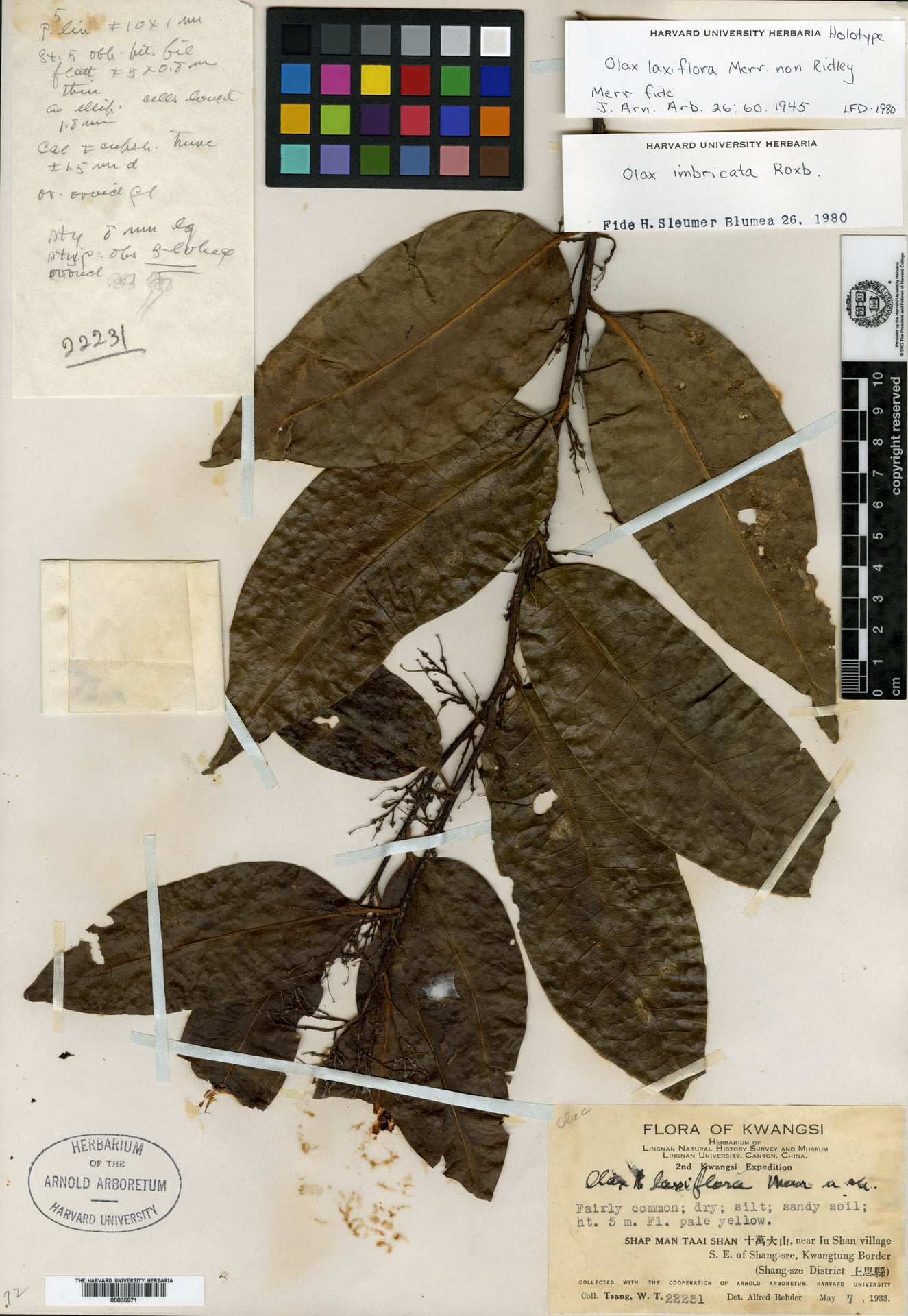
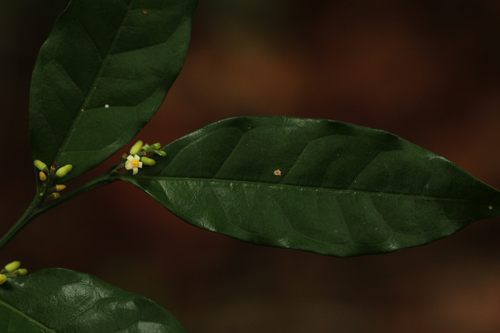
Minquartia guianensis
Aubl.
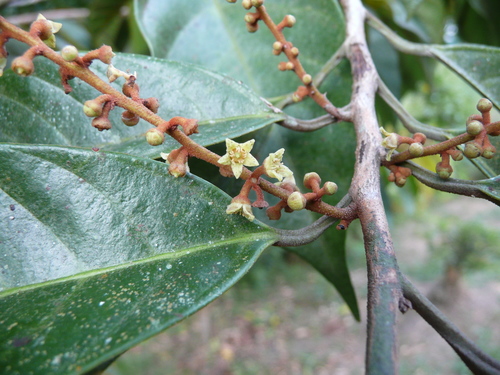
iNaturalist· cc-by-nc-sa
(c) Reinaldo Aguilar, some rights reserved (CC BY-NC-SA)
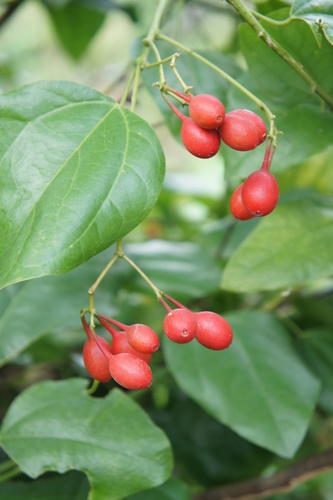
iNaturalist· cc-by-nc
(c) capepolly, some rights reserved (CC BY-NC)
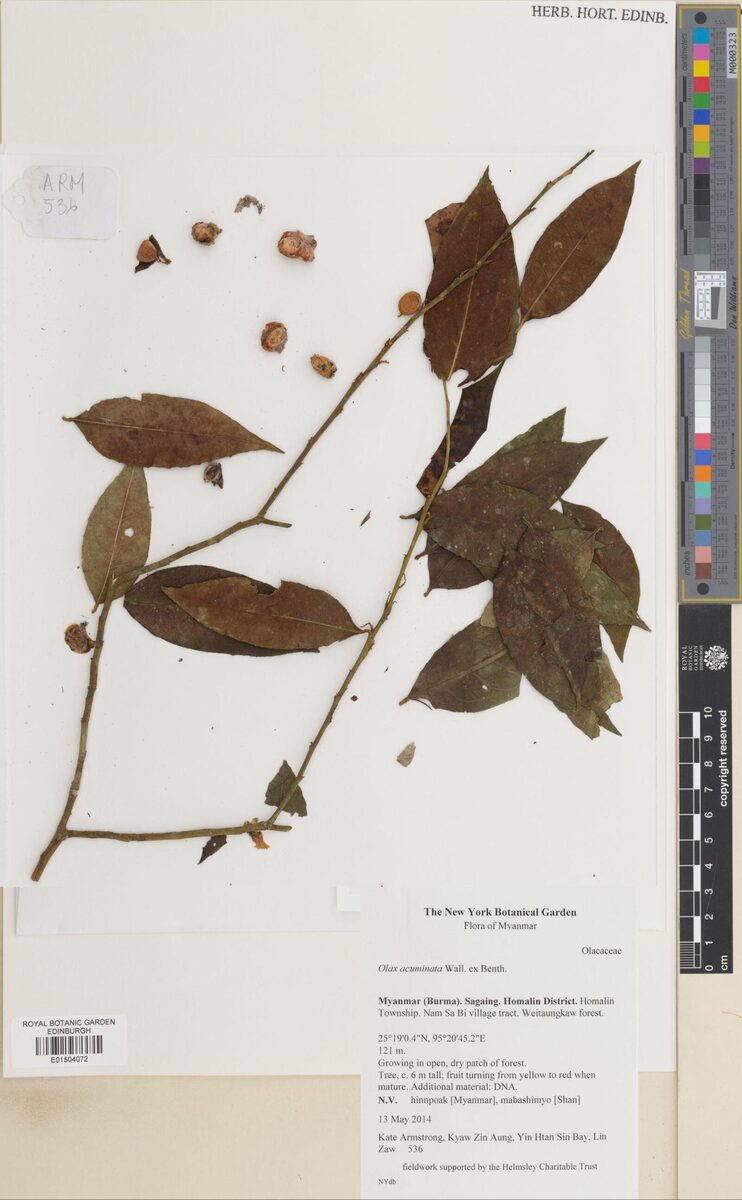
iNaturalist· cc-by-nc
(c) capepolly, some rights reserved (CC BY-NC)
Summary
Source: WikipediaAn evergreen tree reaching 20 m tall and 15 m wide at moderate growth rates. Hardy to UK zone 10. Thrives in light, medium, or heavy soils with good drainage and tolerates mildly acidic to alkaline pH. Grows in full to semi-shade and prefers consistently moist conditions.
Description
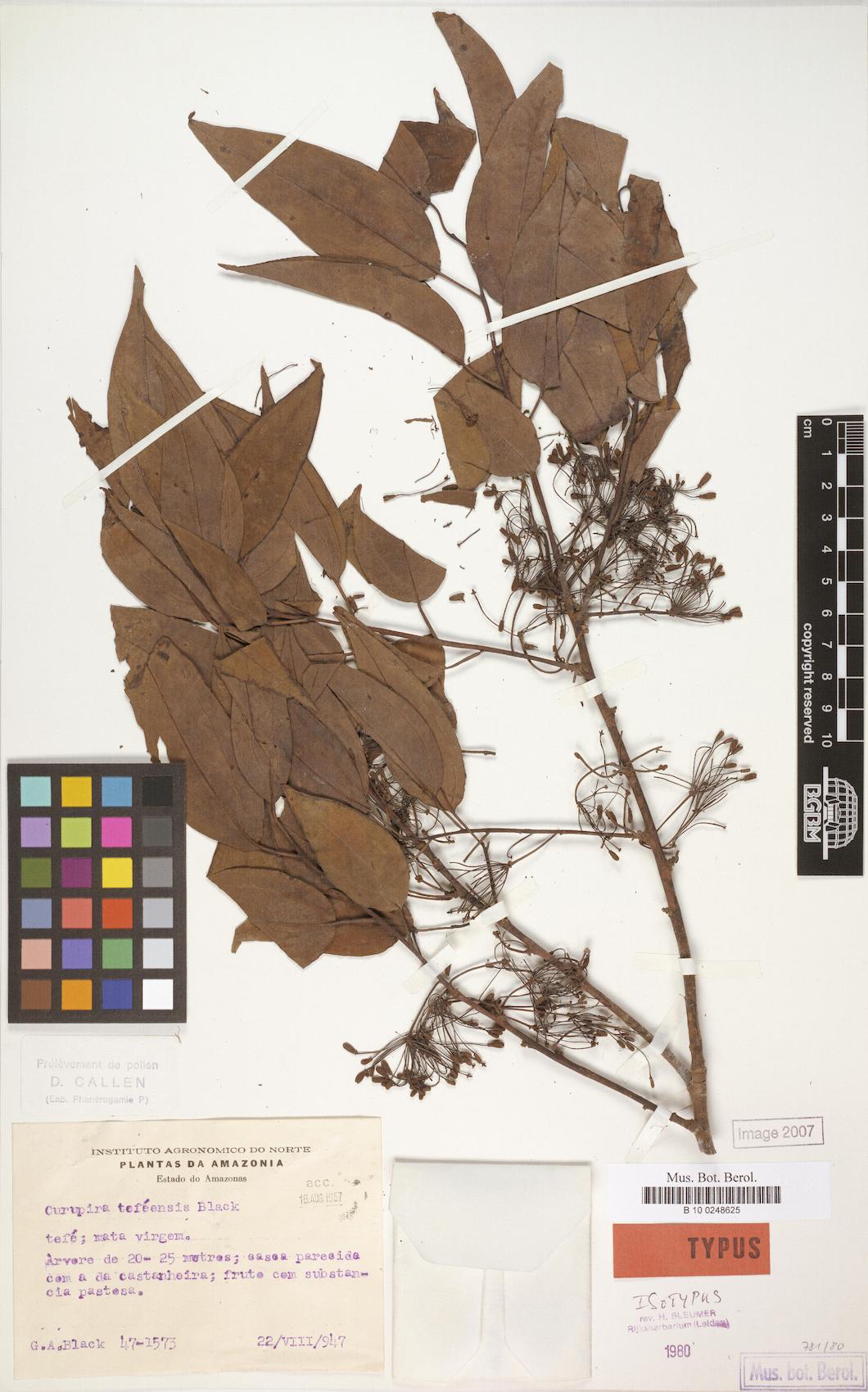
A tree. It grows 33 m high. The trunk has holes and furrows. The leaves have straight parallel side veins. The flowers are in spikes in the axils of leaves. They are 5 cm long. It has brown hairs. The fruit is narrowly oval. It is 2 cm long by 1 cm wide. It is green when young and turns yellow to red when ripe. The flesh is edible. The seed casing is 1.5 cm long by 0.8 cm wide.
Edible Uses
None known.
Medicinal Uses
The bark has been used in the treatment of malaria, intestinal parasites, and colds.
Distribution
It is a tropical plant. It grows in rainforest and savanna forest.
Where It Grows
Amazon, Andes, Bolivia, Brazil, Central America, Colombia, Costa Rica, Ecuador, French Guiana, Guianas, Guyana, Panama, Peru, South America*, Suriname, Nicaragua, Venezuela,
Cultivation
Prefers a position in some shade.
Propagation
Sow seed as soon as ripe in a partially shaded position in a nursery seedbed or individual containers. Germination rates are generally low, with sprouting occurring within 30–40 days. When seedbed-sown seedlings reach 4–5cm, pot them into individual containers; they should be ready to plant out 8–9 months later.
Other Uses
In agroforestry trials in Peru, best establishment and growth occurred when seedlings were mixed with plantains or planted on field borders where neighbouring taller vegetation provided partial shade. Compared to individuals in natural forests, agroforestry-grown trees achieved larger diameter at breast height for a given height, and higher diameter growth overall, showing the species can establish and thrive under these conditions. Trees in these trials flowered and fruited from approximately 6 years of age, with fertile periods broadly coinciding with patterns observed in natural flood plain forests. Without silvicultural intervention to enhance density and growth, natural flood plain forests have only a limited ability to supply timber from this species. The fissured bark exudes a white latex when cut. The wood is fine-textured, irregular-grained, very heavy, and almost impervious to rot. Extremely hard to cut, it is valued for external applications such as poles and posts, and has been reported to last 30–40 years in the ground without decay. It resists both fungal attack and termites, and has been extracted for subsistence and commercial use primarily for construction poles and posts.
Notes
Probably now in the family Erythroxylaceae.
Synonyms
Also Known As
Acapu, Acaricorana, Ahumado, Alata-oedoe, Alata-udu, Alata-oedoe, Aquariquara roxa, Arariuba, Arataweri, Caricuara amarillo, Cispero, Cricamola, Crillio negro, Criollo, Cuajado negro, Cuajado, Cuyubi, Fierro caspi, Guascanato, Guayacan, Guayacan pechiche, Huacapu, Huambula, Igualan, Iscocharasi, Juilla, Kayeyakawe, Kobakadetapo, Maka, Manu, Mincouart, Negro, Nispero, Oaiya-can-chi, Pachiche, Paenim, Paini, Palo criollo, Palo de barbasco, Palo de cuyubi, Punte canado, Sena'mba quini 'cco, Tsindo'cho, Vararicuara, Wambilla cara, Wambulla ruyu, Wanania, Wanpula, Wayakan chi, Yaji siu, Yajisu ni, Yatyutya chi jaki, Yura wanpula
References (12)
- Condit, R., et al, 2011, Trees of Panama and Costa Rica. Princeton Field Guides. p 158
- Daly, D. C., An Index of Common Names of Plants in Acre, Brazil. New York Botanical Garden Universidade Federal do Acre.
- Gilmore, M. P., et al, 2013, The socio-cultural importance of Mauritia flexuosa palm swamps (aguajales) and implications for multi-use management in two Maijuna communities of the Peruvian Amazon. Journal of Ethnobiology and Ethnomedicine 2013, 9:29
- Grandtner, M. M. & Chevrette, J., 2013, Dictionary of Trees, Volume 2: South America: Nomenclature, Taxonomy and Ecology. Academic Press p 416
- Hist. pl. Guiane 4: t. 370. 1775
Show all 12 references Hide references
- Jimenez, Q. & Knapp, S., 2011, Olacaceae, Flora Mesoamericana Volume 2(1) Olacaceae. p
- Kermath, B. M., et al, 2014, Food Plants in the Americas: A survey of the domesticated, cultivated and wild plants used for Human food in North, Central and South America and the Caribbean. On line draft. p 541
- Lopez-Diago, D. & Garcia, N., 2021, Wild edible fruits of Colombia. Biota ColomBiana 22 (2) p 46
- Roa, J. A. G. & Boada, D. S. G., 2018, Fundación para el Fortalecimiento de la Fruticultura y Plantas Alimenticias no Convencionales en Colombia.
- Torre, de la, L., et al, 2008, Enciclopedia de las Plantas Útiles del Ecuador. Herbario QCA. Pontificia Universidad Católica del Ecuador. p 473
- van Roosmalen, M.G.M., 1985, Fruits of the Guianan Flora. Utrecht Univ. & Wageningen Univ. p 336
- Vasquez, R. and Gentry, A. H., 1989, Use and Misuse of Forest-harvested Fruits in the Iquitos Area. Conservation Biology 3(4): 350f