Aloe zebrina
Baker
Zebra leaf aloe
iNaturalist· cc-by-sa
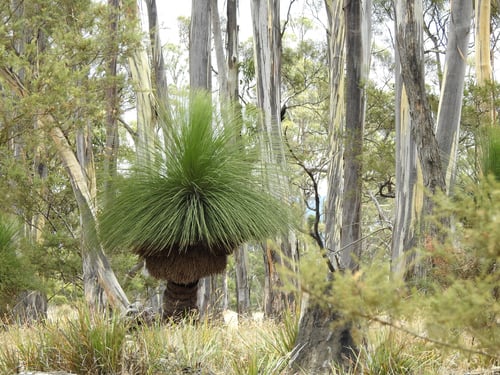
(c) Andrew Hankey, some rights reserved (CC BY-SA), uploaded by Andrew Hankey
iNaturalist· cc-by-nc
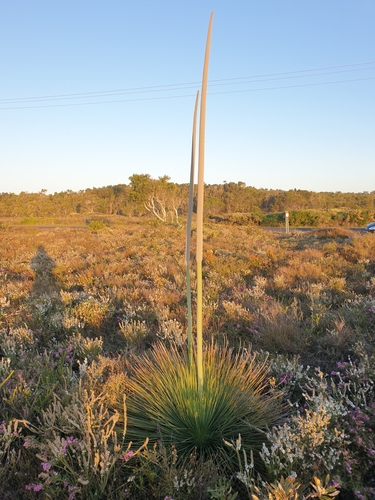
(c) riana60, some rights reserved (CC BY-NC), uploaded by riana60
iNaturalist· cc-by-nc
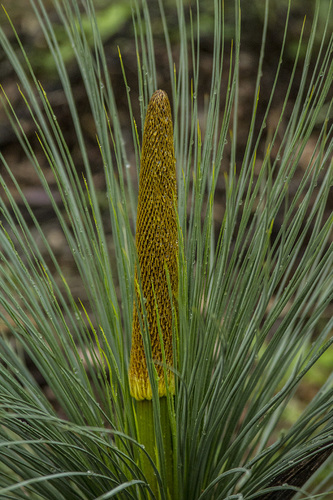
(c) riana60, some rights reserved (CC BY-NC), uploaded by riana60
Description
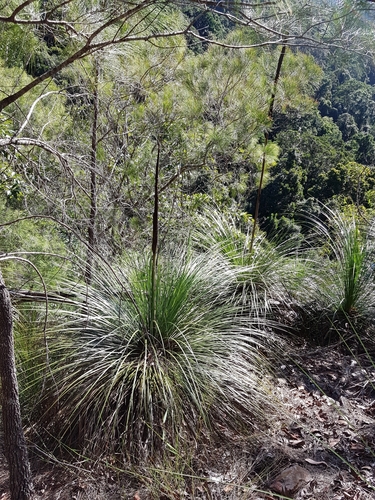
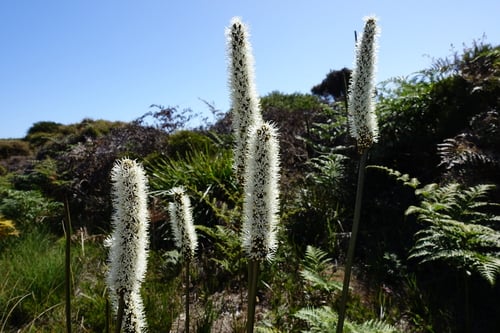
It is a small herb or shrub. It can occur singly or suckering. The leaves are in a compact ring. The leaves are 15-35 cm long by 6-7 cm wide toward the base. There are white spots on the upper surface. The flowers are erect and 1-2 m high.
Edible Uses
The flowers, flower buds, and sweet nectar are eaten, with flowers and buds sometimes boiled, pressed, and made into cakes.
Traditional Uses
The flowers and flower buds are eaten. They can be boiled, pressed and made into cakes. The sweet nectar of the flowers is eaten.
This uses section is brief — help expand it
Medicinal Uses
The pulpy gel-like makerial in the leaves is taken internally to treat stomach problems. The (bitter) juice of this and many other Aloe species is used as a powerful purgative and worm expellant, as a disinfectant for wounds, and to treat skin problems including conjunctivitis. Applied externally, the gel is used to treatburns, skin ailments and eye ailments. A decoction of the powdered stem and leaf bases is taken orally twice a day by women after delivery to cleanse the system. The yellow leaf sap of most Aloe species contains anthrone C-glycosides such as aloin and homonataloin, and the yellow root sap anthranoid aglycones such as chrysophanol (a fast orange-brown colorant) and asphodeline. The roots of this species also contain aloesaponarin, aloesaponol and related compounds of the 1-methyl-8-hydroxyanthraquinone pathway. Isoleutherol is a unique chemical compound found in the roots of this and other species of spotted aloes.
Known Hazards
The sap of Aloe species contains anthraquinones. These compounds have several beneficial medicinal actions, particularly as a laxative, and many species of Aloe are thus employed in traditional medicine. Whilst safe in small doses and for short periods of time, anthraquinones do have potential problems if used in excess. These include congestion and irritation of the pelvic organs. Long term use of anthraquinone laxatives may also play a role in development of colorectal cancer as they have genotoxic potential, and tumorigenic potential.
Distribution
It is a tropical plant. It grows in grassland and woodland. It southern Africa it grows between 200-1,600 m altitude. It can grow in arid places. In Brisbane Botanical Gardens.
Where It Grows
Africa, Angola, Australia, Botswana, Canada, Central Africa, East Africa, Eswatini, Malawi, Mozambique, Namibia, North America, Slovenia, South Africa, Southern Africa, Swaziland, Zambia, Zimbabwe,
Cultivation
Temperatures are usually high in the summer but may, in parts of its range, become very low in winter. The plant can probably tolerate light frosts. Rainfall in the distribution area of this species is high in the extreme northwest, but low elsewhere, with a summer maximum throughout. Prefers a position in full sun, but can tolerate light shade. The plants sucker freely and can form dense groups, although differences exist between populations. The roots can easily be collected on a sustainable basis because plants easily form new roots, provided they are left to grow again. For dyeing Hyphaene palm fibres, the roots are collected from the wild, preferably on a small scale, and boiled with the weaving material until a golden-yellow colour is obtained. In Ethiopia, the leaves of Aloe sp. (‘sete ret’) are chopped and boiled in water with white cloth until it is dyed red. Aloe species follow the Crassulacean acid metabolism (CAM). CAM plants can fix carbon dioxide at night and photosynthesize with closed stomata during the day, thus minimizing water loss. This, plus their succulent leaves and stems, and the presence of a thick cuticle, makes them well adapted to dry conditions.
Propagation
Seed - we have no specific information on this species - in general Aloes are sown in a sandy, well-drained potting soil in a warm, shady position in standard seed trays. Germination takes about three weeks. Cover the seed with a thin layer of sand (1 - 2mm), keep moist. The seedlings can be planted out in individual bags or containers as soon as they are large enough to handle.
Other Uses
The roots are one of the main dyes for the Hyphaene palm fibres used in basketry weaving in southern Africa, giving a golden-yellow colour to the fibres. They have also been adopted for wool dyeing by Europeans, who introduced the use of metallic mordants such as alum to obtain more intense, fast colours.
Notes
Also put in the family Aloaceae. Also put in the family Asphodelaceae.
Nutrition
| Part | Moisture | kJ | kcal | Protein | Vit A | Vit C | Iron | Zinc |
|---|---|---|---|---|---|---|---|---|
| Leaves | 93.2 | 98 | 23 | 0.5 | — | 2.3 | 0.4 | 0.2 |
| Flowers | — | — | — | — | — | — | — | — |
| Nectar | — | — | — | — | — | — | — | — |
Synonyms
Also Known As
Aalwyn, Aukoreb, Kanembe, Mangana
References (15)
- Facciola, S., 1998, Cornucopia 2: a Source Book of Edible Plants. Kampong Publications, p 143
- Fowler, D. G., 2007, Zambian Plants: Their Vernacular Names and Uses. Kew. p 65
- Fox, F. W. & Young, M. E. N., 1982, Food from the Veld. Delta Books. p 255
- Grivetti, L. E., 1980, Agricultural development: present and potential role of edible wild plants. Part 2: Sub-Saharan Africa, Report to the Department of State Agency for International Development. p 70
- Jardin, C., 1970, List of Foods Used In Africa, FAO Nutrition Information Document Series No 2.p 53 (As Aloe baumii)
Show all 15 references Hide references
- Leger, S., 1997, A Description of Today's Use of Plants in West Bushmanland (Namibia). German Development Service. PO Box 220035, 14061 Berlin, Germany. http://www.sigridleger.de/book/
- Martin, F.W. & Ruberte, R.M., 1979, Edible Leaves of the Tropics. Antillian College Press, Mayaguez, Puerto Rico. p 202 (As Aloe baumii)
- Peters, C. R., O'Brien, E. M., and Drummond, R.B., 1992, Edible Wild plants of Sub-saharan Africa. Kew. p 10
- Pickering, H., & Roe, E., 2009, Wild Flowers of the Victoria Falls Area. Helen Pickering, London. p 31
- Royal Botanic Gardens, Kew (1999). Survey of Economic Plants for Arid and Semi-Arid Lands (SEPASAL) database. Published on the Internet; http://www.rbgkew.org.uk/ceb/sepasal/internet [Accessed 24th March 2011]
- Ruiters-Welcome, A. K., 2019, Food plants of southern Africa. Ph.D. thesis. Univ. of Johannesburg p 30 (Also as Aloe ammophila)
- Swaziland's Flora Database http://www.sntc.org.sz/flora
- Wehmeyer, A. S, 1986, Edible Wild Plants of Southern Africa. Data on the Nutrient Contents of over 300 species (As Aloe ammophila)
- Welcome, A. K. & Van Wyk, B.-E., 2019, An inventory and analysis of the food plants of southern Africa. South African Journal of Botany 122 (2019) 136–179 (Also as Aloe ammophila)
- World Checklist of Useful Plant Species 2020. Royal Botanic Gardens, Kew