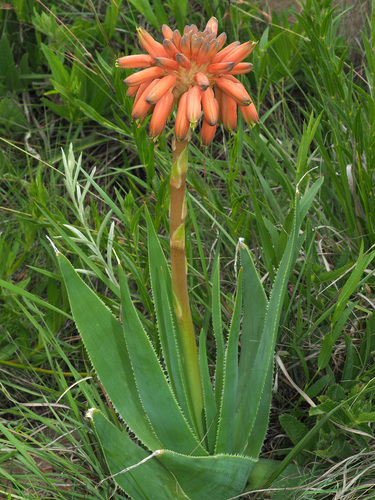
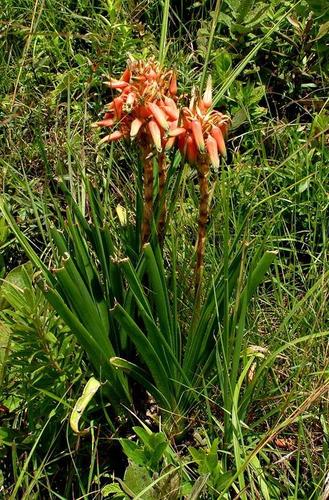
Aloe buettneri
A. Berger
iNaturalist· cc-by-nc
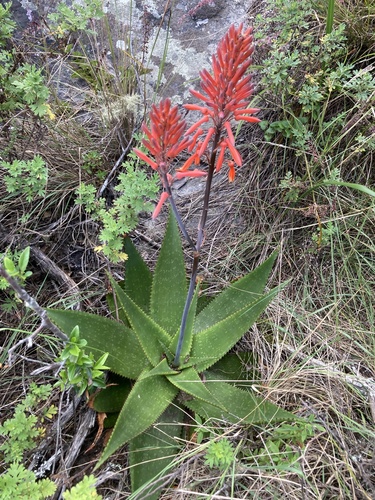
(c) paullatham36, some rights reserved (CC BY-NC)
iNaturalist· cc-by-nc
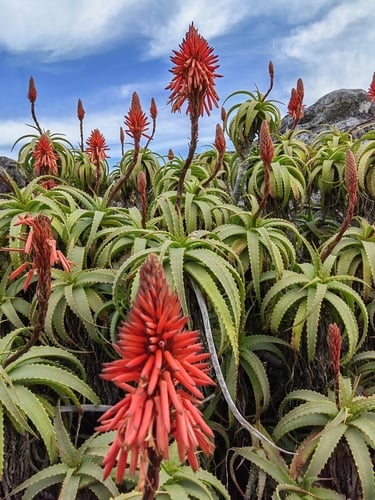
(c) Carel Jongkind, some rights reserved (CC BY-NC), uploaded by Carel Jongkind
iNaturalist· cc-by-nc-sa
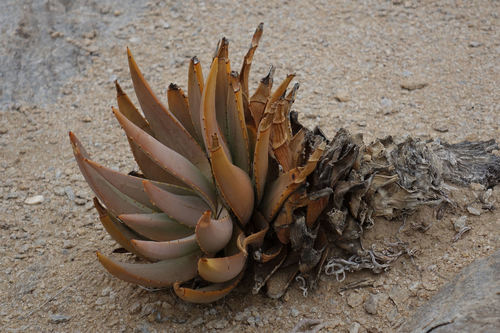
(c) Marco Schmidt, some rights reserved (CC BY-NC-SA)
Summary
Source: WikipediaAloe buettneri is a species of succulent plant in the family Asphodelaceae. It is found in West Africa and is known for its medicinal uses.
Description
A succulent herb. It keeps growing from year to year. The leaves are thick and fleshy and they are arranged in a ring. The leaves are 40-80 cm long and 8-9 cm wide. There are teeth along the edge.
Edible Uses
The leaves, roots, rhizomes, and other parts are eaten as vegetables.
Medicinal Uses
The leaves of Aloe buettneri can be applied externally and are believed to help skin conditions such as burns, wounds, insect bites, Guinea worm sores and vitiligo. In Burkina Faso the dried powdered leaves are taken to treat malaria, while in Côte d’Ivoire and Togo the roots are used for this purpose. Rheumatism is treated with leaf ash.
Known Hazards
The sap of Aloe species contains anthraquinones. These compounds have several beneficial medicinal actions, particularly as a laxative, and many species of Aloe are thus employed in traditional medicine. Whilst safe in small doses and for short periods of time, anthraquinones do have potential problems if used in excess. These include congestion and irritation of the pelvic organs. Long term use of anthraquinone laxatives may also play a role in development of colorectal cancer as they have genotoxic potential, and tumorigenic potential.
Distribution
It is a tropical plant. It grows in savannah. It suits warm dry areas. It grows between 250-900 m above sea level.
Where It Grows
Africa, Angola, Burkina Faso, Central Africa, Congo DR, Côte d'Ivoire, East Africa, Guinea, Guinée, Guinea-Bissau, Ivory Coast, Malawi, Senegal, Togo, West Africa, Zambia,
Cultivation
It can be grown from offsets, stem cuttings or leaf cuttings. It can also be grown from seed.
Propagation
Seed - we have no specific information on this species - in general Aloes are sown in a sandy, well-drained potting soil in a warm, shady position in standard seed trays. Germination takes about three weeks. Cover the seed with a thin layer of sand (1 - 2mm), keep moist. The seedlings can be planted out in individual bags or containers as soon as they are large enough to handle.
Notes
It is used in medicine. Also put in the family Aloaceae. Also put in the family Asphodelaceae.
Synonyms
Also Known As
Ba di neski, Nagelmgou
References (5)
- Batawila, K., et al, 2007, Diversite et gestion des legumes de cueillete au Togo. African Journal of Food, Agriculture, Nutrition and Development 7( 3& 4): 66
- Gohre, A., et al, 2016, Plants from disturbed savannah vegetation and their usage by Bakongo tribes in Uíge, Northern Angola. Journal of Ethnobiology and Ethnomedicine (2016) 12:42
- Grubben, G. J. H. and Denton, O. A. (eds), 2004, Plant Resources of Tropical Africa 2. Vegetables. PROTA, Wageningen, Netherlands. p 559
- Latham, P. & Mbuta, A. K., 2014, Useful Plants of Bas-Congo Province, Democratic Republic of Congo. Volume 1. p 38
- Latham, P. & Mbuta, A. K., 2017, Plants of Kongo Central Province, Democratic Republic of Congo. Volume 1. 3rd ed p 42