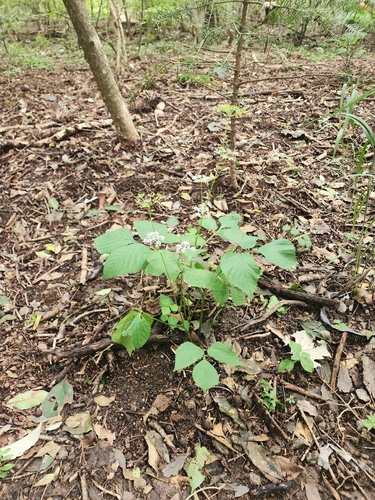
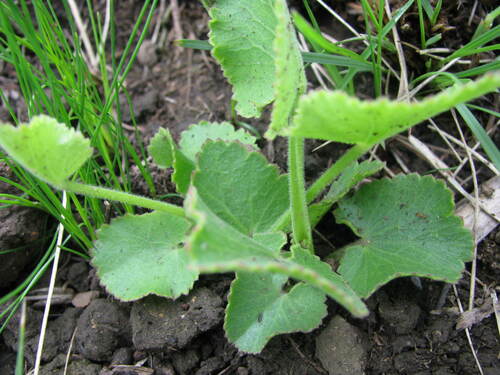
Peucedanum ostruthium
(L.) W. D. J. Koch
Masterwort, Hog-fennel
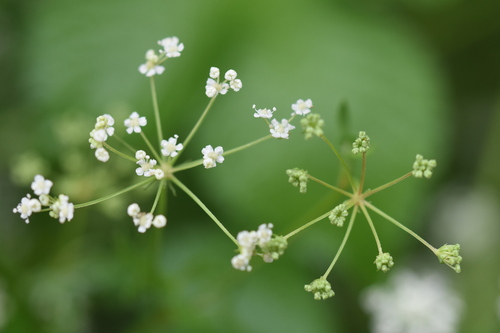
iNaturalist· cc-by-nc-sa
(c) Dave, some rights reserved (CC BY-NC-SA)
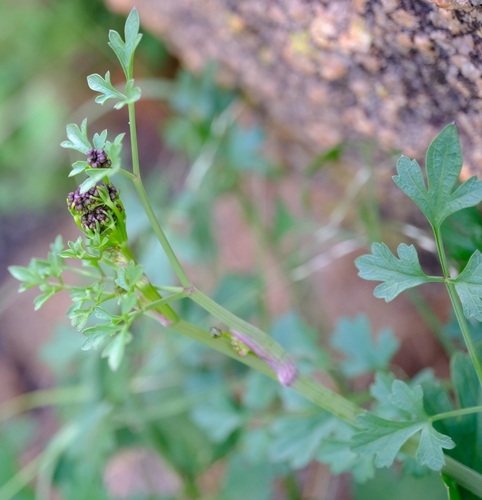
iNaturalist· cc-by-nc
(c) lucapassalacqua, some rights reserved (CC BY-NC)
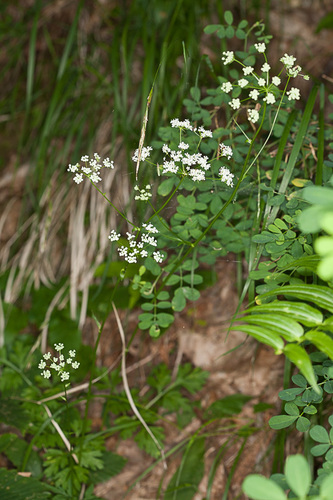
iNaturalist· cc-by-nc
(c) Petr Šíma, some rights reserved (CC BY-NC), uploaded by Petr Šíma
Summary
Source: WikipediaPeucedanum ostruthium or Imperatoria ostruthium, masterwort, is a species of flowering plant in the family Apiaceae. It is native to the mountains of Central and Southern Europe, but has been widely introduced outside its native range.
Description
A herb. It keeps growing from year to year. It grows 25-70 cm tall. The leaves are twice divided with 3 large leaflets. The flowers are white or pink and in large flat topped groups.
Edible Uses
The leaves are edible cooked, used as a potherb or as a flavouring. The aromatic roots are also used as a flavouring and are said to taste hotter than pepper. A popular fermented drink is made from the roots.
Traditional Uses
The leaves are boiled and eaten as a potherb. The roots have been used in the preparation of gin and in cheese. They are also used for tea. The bitter element must be removed before using the starch.
Medicinal Uses
Masterwort is rarely used in modern herbalism but may merit further investigation. It was highly regarded during the Middle Ages, particularly for its ability to dispel flatulence and stimulate urine and menstrual flow. It was also used for rheumatic conditions, shortness of breath, kidney and bladder stones, water retention and wounds. The root is antispasmodic, aromatic, bitter, strongly carminative, diaphoretic, digestive, diuretic, emmenagogue, expectorant, febrifuge, stimulant and stomachic, and is useful in treating asthma, dyspepsia and menstrual complaints. An infusion can help relieve migraine. The root is harvested in spring or autumn and dried for later use. An essential oil from the plant has euphoric and odontalgic effects and relieves skin irritation when applied externally. External use of the plant or its essential oil can cause an allergic reaction to sunlight. A homeopathic remedy is also prepared from the roots.
Known Hazards
External use of the plant or its essential oil may cause allergic reactions to sunlight.
Distribution
It is a temperate plant.
Where It Grows
Andorra, Austria, Canada, Europe, France, Italy, Mediterranean, North America, Norway, Scandinavia, Switzerland, USA,
Propagation
Sow seed in a cold frame as soon as it is ripe, or in early spring if ripe seed is not available. Prick seedlings into individual pots once large enough to handle and plant out in summer.
Other Uses
None known Special Uses
Other Information
It is cultivated.
Notes
It is used in medicine.
Synonyms
Also Known As
Mesterrot, Utrehle
References (10)
- Abbet, C., et al, 2014, Ethnobotanical survey on wild alpine food plants in Lower and Central Valais (Switzerland). Journal of Ethnopharmacology 151 (2014) 624–634
- Christanell, A., et al, 2010, The Cultural Significance of Wild Gathered Plant Species in Kartitsch (Eastern Tyrol, Austria) and the Influence of Socioeconomic Changes on Local Gathering Practices. Chapter 3 in Ethnobotany in the New Europe. Berghahn Books.
- Esperanca, M. J., 1988. Surviving in the wild. A glance at the wild plants and their uses. Vol. 2. p 79
- Facciola, S., 1998, Cornucopia 2: a Source Book of Edible Plants. Kampong Publications, p 21
- Girard, N. J., 2020, Sustainable Foraging of Wild Edible Plants in Norway. A Biocultural Approach. M. Sc. thesis Norwegian University. p 127
Show all 10 references Hide references
- Nat. arr. Brit. pl. 2:519. 1821 (As Imperatoria major)
- Nova Acta Phys.-Med. Acad. Caes. Leop.-Carol. Nat. Cur. 12(1):95. 1824
- PARMEMTIER (As Imperatoria major)
- Wiersema, J. H. & Leon, B., 2013, World Economic Plants. A Standard Reference CRC Press. 2nd Ed. p 512
- World Checklist of Useful Plant Species 2020. Royal Botanic Gardens, Kew