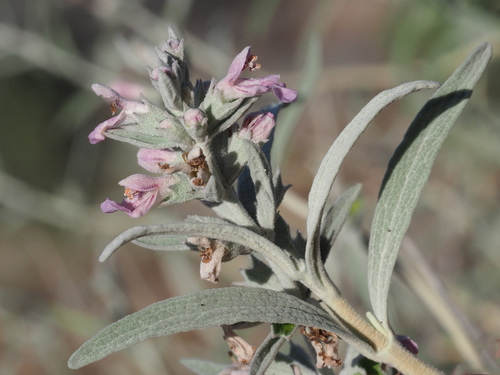
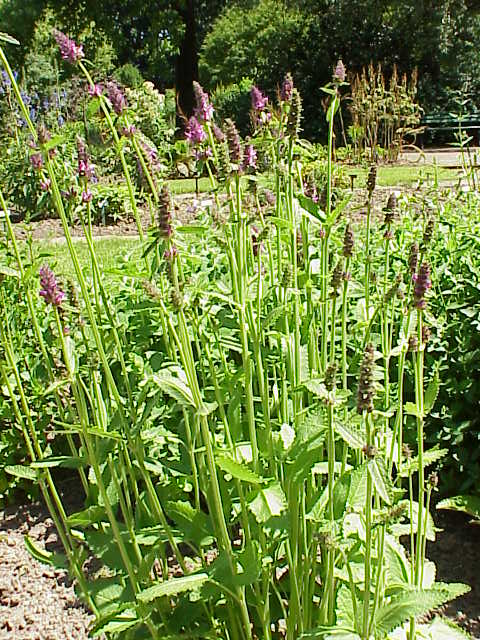
Pycnanthemum incanum
Michx.
Hoary mountain-mint
iNaturalist· cc-by-nc
(c) Suzanne Cadwell, some rights reserved (CC BY-NC)
iNaturalist· cc-by-nc
(c) Suzanne Cadwell, some rights reserved (CC BY-NC)
Summary
Source: WikipediaPycnanthemum incanum, with the common name hoary mountainmint, "mountain mint", wild basil or hoary basil, is a herbaceous perennial in the mint family.
Description
A herb. The stems are about 1 m long. They are finely hairy. The leaves are oval or sword shaped and have teeth along the edge. The leaves are 5-10 cm long by 1.5-3.5 cm wide.
Edible Uses
Fresh or dried leaves can be brewed into an aromatic, mint-like tea.
Traditional Uses
The fresh or dried leaves are brewed into a mint-like tea.
This uses section is brief — help expand it
Medicinal Uses
A tea made from the leaves is diaphoretic and carminative. A leaf poultice is used to treat headaches. An infusion of the plant is taken for stomach upsets, fevers, colds and sinus headaches. A warm infusion has also been used to bathe an inflamed penis. The plant is harvested as it comes into flower and can be used fresh or dried.
Distribution
It is a temperate plant.
Where It Grows
North America, USA,
Propagation
Sow seed in spring or autumn in a cold frame. Prick seedlings into individual pots when large enough to handle and plant out during summer. Where seed is plentiful it can be sown in an outdoor seedbed in April. Divide in spring.
Other Uses
None known Special Uses
Synonyms
References (4)
- Facciola, S., 1998, Cornucopia 2: a Source Book of Edible Plants. Kampong Publications, p 133
- Fl. bor.-amer. 2:7. 1803
- Kermath, B. M., et al, 2014, Food Plants in the Americas: A survey of the domesticated, cultivated and wild plants used for Human food in North, Central and South America and the Caribbean. On line draft. p 730
- Moerman, D. F., 2010, Native American Ethnobotany. Timber Press. p 456