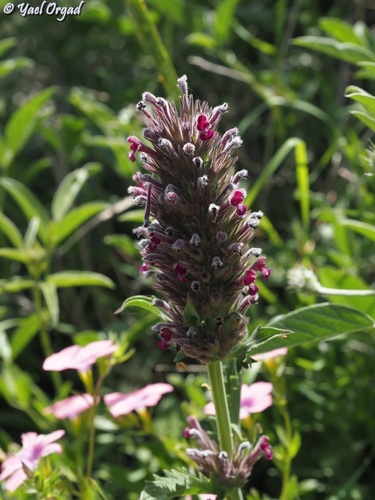
Stachys palustris
L.
Marsh Woundwort
iNaturalist· cc-by-nc
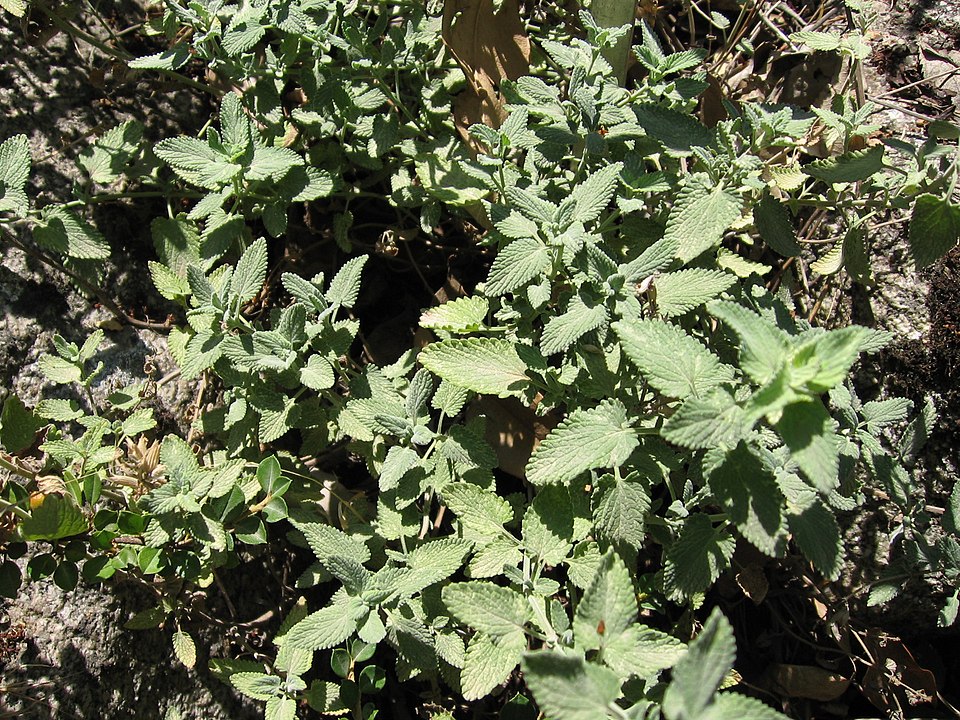
(c) Y Nielsen, some rights reserved (CC BY-NC), uploaded by Y Nielsen
iNaturalist· cc-by-nc
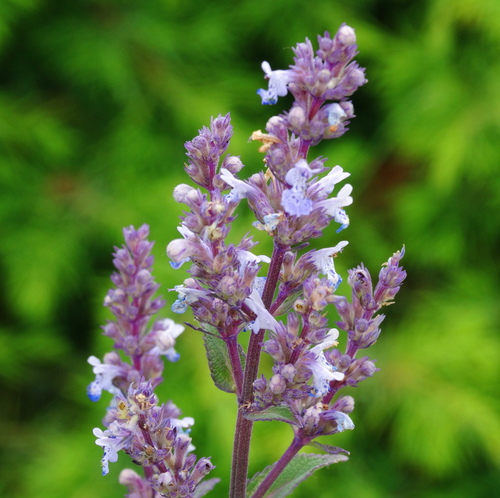
(c) Mark Cumming, some rights reserved (CC BY-NC), uploaded by Mark Cumming
iNaturalist· cc-by-nc
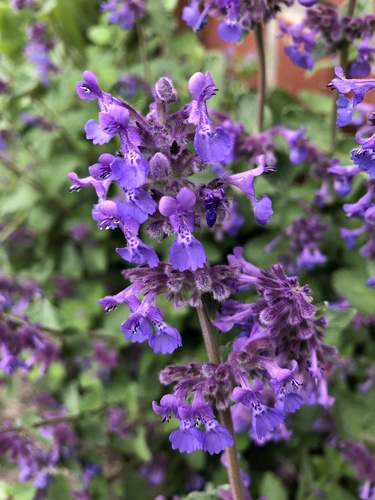
(c) Svetlana Nesterova, some rights reserved (CC BY-NC), uploaded by Svetlana Nesterova
Summary
Source: WikipediaStachys palustris, commonly known as marsh woundwort, marsh betony, clown's woundwort, clown's heal-all, marsh hedgenettle, or hedge-nettle, is an edible perennial grassland herb growing to 80 centimeters tall. It is native to parts of Eurasia but has been introduced to North America. The species epithet palustris is Latin for "of the marsh" and indicates its common habitat.
Description
A herb. It keeps growing from year to year. It has robust underground stems. The above ground stems are branched. They are 60-110 cm high. The stalks of the stem leaves are 2-3 mm long. The leaf blade is oblong to sword shaped and 3-8 cm long by 1.2-1.5 cm wide. They are hairy. There are 6 flowers in rings and they are purple or red. The nutlets are brown and 3 sided.
Edible Uses
The tubers can be eaten raw or cooked and have a pleasant, mild, nutty flavour — wholesome and nutritious. They form in autumn and, while fairly small, are reasonably smooth and produced in sufficient quantity to be practical. They can also be dried and ground into a powder for use in bread and similar preparations. Young shoots can be cooked as an asparagus substitute; they have a pleasant taste, though the smell is disagreeable. The seed is also edible, though no further details are recorded.
Medicinal Uses
The plant is antiseptic, antispasmodic, emetic, emmenagogue, expectorant, haemostatic, nervine, sedative, tonic, and vulnerary. It has been highly valued for wound healing, being effective against both internal and external bleeding, and is also used to treat gout, cramps, and joint pain. The herb is harvested in summer when just coming into flower and can be dried for later use.
Known Hazards
Avoid during pregnancy & breast feeding.
Distribution
It is a cool temperate plant. They grow in marshy areas near lakes and streams. They grow up to 500 m in north China. It can grow in water 8 cm deep. It suits hardiness zone 3. Tasmania Herbarium.
Where It Grows
Armenia, Asia, Australia, Britain, Canada, Caucasus, Central Asia, China, Europe, Hungary, India, Iran, Kazakhstan, Kyrgyzstan, Luxembourg, Middle East, Mongolia, North America, Norway, Pakistan, Russia, Scandinavia, Slovenia, Tajikistan, Tasmania, Turkey, Türkiye, USA,
Cultivation
Requires a moist soil for good root production. A good bee plant. All parts of the plant emit an unpleasant smell when bruised.
Propagation
Sow seed in spring in a cold frame. Prick seedlings into individual pots once large enough to handle and plant out in summer. For division in spring, larger clumps can go directly into permanent positions, while smaller divisions do best potted up and grown on in a lightly shaded cold frame until well established, then planted out in summer.
Other Uses
A yellow dye is obtained from the plant.
Notes
There are about 300 Stachys species. It is used in medicine.
Synonyms
Also Known As
Abeghakhot, Marsh Woodwort, Marsh betony, Močvirnati čišljak, Swamp hedge-nettle, Zhao sheng shui su
References (22)
- Ambasta, S.P. (Ed.), 2000, The Useful Plants of India. CSIR India. p 597
- Bodkin, F., 1991, Encyclopedia Botanica. Cornstalk publishing, p 946
- Cerne, M., 1992, Wild Plants from Slovenia used as Vegetables. Acta Horticulturae 318
- Curtis, W.M., 1993, The Student's Flora of Tasmania. Part 3 St David's Park Publishing, Tasmania, p 551
- Facciola, S., 1998, Cornucopia 2: a Source Book of Edible Plants. Kampong Publications, p 137
Show all 22 references Hide references
- Hedrick, U.P., 1919, (Ed.), Sturtevant's edible plants of the world. p 633
- http://www.botanic-gardens-ljubljana.com/en/plants
- Irving, M., 2009, The Forager Handbook, A Guide to the Edible Plants of Britain. Ebury Press p 222
- Kermath, B. M., et al, 2014, Food Plants in the Americas: A survey of the domesticated, cultivated and wild plants used for Human food in North, Central and South America and the Caribbean. On line draft. p 835
- Li Hai-wen, Hedge, I.C., Lamiaceae. Flora of China. 233
- MacKinnon, A., et al, 2009, Edible & Medicinal Plants of Canada. Lone Pine. p 281
- Moerman, D. F., 2010, Native American Ethnobotany. Timber Press. p 542
- Nanagulyan, S., et al, 2020, Wild plants and fungi sold in the markets of Yerevan (Armenia). Journal of Ethnobiology and Ethnomedicine 16:26
- Plants for a Future database, The Field, Penpol, Lostwithiel, Cornwall, PL22 0NG, UK. http://www.scs.leeds.ac.uk/pfaf/
- Romanowski, N., 2007, Edible Water Gardens. Hyland House. p 90
- SAYCE,
- Slocum, P.D. & Robinson, P., 1999, Water Gardening. Water Lilies and Lotuses. Timber Press. p 102
- Sp. pl. 2:580. 1753
- Tasmanian Herbarium Vascular Plants list p 36
- Turner, N. J. et al, 2011, Edible and Tended Wild Plants, Traditional Ecological Knowledge and Agroecology. Critical Reviews in Plant Sciences, 30:198-225
- Ulian, T., et al, 2020, Unlocking plant resources to support food security and promote sustainable agriculture. Plants, People, Planet. 2020;2:421–445.
- Urgamal, M., Oyuntsetseg, B., Nyambayar, D. & Dulamsuren, Ch. 2014. Conspectus of the vascular plants of Mongolia. (Editors: Sanchir, Ch. & Jamsran, Ts.). Ulaanbaatar, Mongolia. “Admon“ Press. 334pp. (p. 79-90).