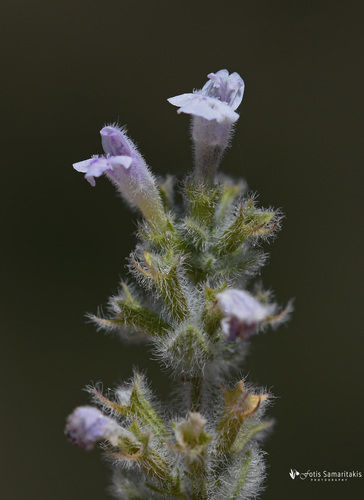
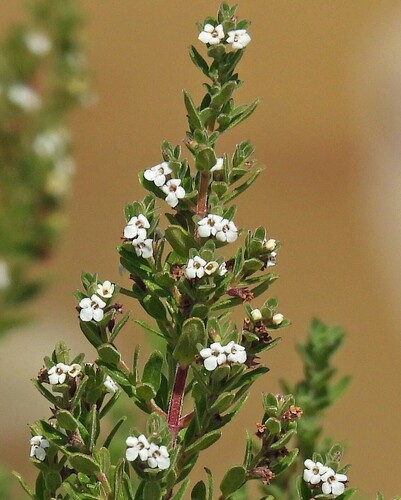
Ocimum kilimandscharicum
Baker ex Gurke
Camphor basil, Karpoor basil
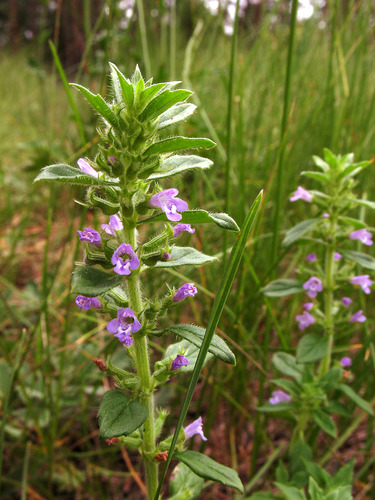
iNaturalist· cc-by-sa
(c) Dinesh Valke, some rights reserved (CC BY-SA)
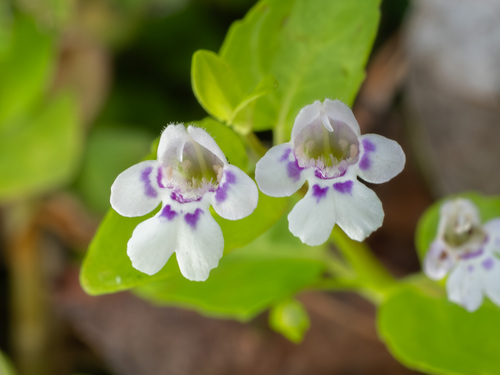
iNaturalist· cc-by-nc
(c) sreenivasan, some rights reserved (CC BY-NC)
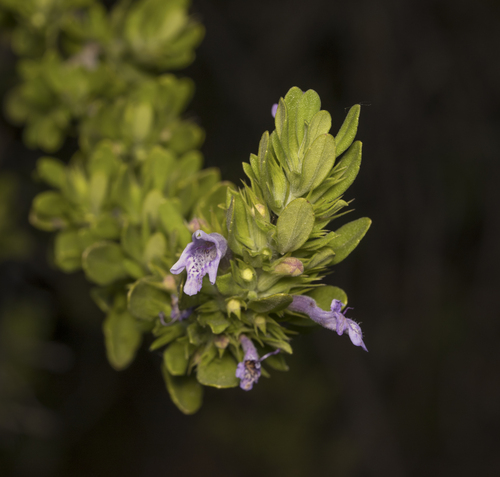
iNaturalist· cc-by-nc
(c) Narendra Bhagwat, some rights reserved (CC BY-NC)
Summary
Source: WikipediaOcimum kilimandscharicum, also known as camphor basil, is a basil species native to Kenya, Tanzania, Uganda, Sudan, and Ethiopia.
Description
A shrub. It keeps growing from year to year. It grows 2 m tall. The branches are 4 sided and hairy. The leaves are simple, opposite and oblong. They narrow to the base. There are teeth along the edge. The seeds are black and very small. They are 2 mm long and 1 mm wide.
Edible Uses
The leaves are used for tea and to flavor rice, dahls, and vegetables. Shoots are cooked with dried fish and alkali solution and eaten.
Traditional Uses
The leaves are occasionally use for tea. They are used to flavour rice, dahls and vegetables. The shoots are cooked with dried fish and alkali solution and eaten.
Medicinal Uses
The plant is used to lower fevers.
Distribution
A tropical plant. It needs well drained soil. It suits areas with a rainfall or 1,250 mm per year. In India it grows up to 900 m above sea level.
Where It Grows
Africa, Asia, Cuba, East Africa, Himalayas, India, Kenya*, Northeastern India, Turkey, Türkiye, West Indies,
Cultivation
It can be grown by seeds or cuttings. The seeds are put in a nursery and then transplanted.
Propagation
Seed - sow in a nursery seedbed and only just cover the seed. Germination is usually free and quick, prick out the seedlings into individual pots when they are large enough to handle and plant out when large enough.
Other Uses
The plant is a commercial source of camphor. The plant is grown as a mosquito repellent.
Notes
The oil can be used to protect stored grain from insects.
Synonyms
Also Known As
Lopong, Lopong birik
References (10)
- H. G. A. Engler, Pflanzenw. Ost-Afrikas C:349. 1895
- Ethnobotany of Karbis. Chapter 4 in p 84, 108
- Facciola, S., 1998, Cornucopia 2: a Source Book of Edible Plants. Kampong Publications, p 131
- Glover et al, 1966b,
- Grivetti, L. E., 1980, Agricultural development: present and potential role of edible wild plants. Part 2: Sub-Saharan Africa, Report to the Department of State Agency for International Development. p 45
Show all 10 references Hide references
- Maundu, P. et al, 1999, Traditional Food Plants of Kenya. National Museum of Kenya. 288p
- Miguel, E., et al, 1989, A checklist of the cultivated plants of Cuba. Kulturpflanze 37. 1989, 211-357
- Mutie, F. M., et al, 2023, Important Medicinal and Food Taxa (Orders and Families) in Kenya, Based on Three Quantitative Approaches. Plants 2023, 12, 1145
- Peters, C. R., O'Brien, E. M., and Drummond, R.B., 1992, Edible Wild plants of Sub-saharan Africa. Kew. p 118
- Teron, R. & Borthakur, S. K., 2016, Edible Medicines: An Exploration of Medicinal Plants in Dietary Practices of Karbi Tribal Population of Assam, Northeast India. In Mondal, N. & Sen, J.(Ed.) Nutrition and Health among tribal populations of India. p 152