Babiana namaquensis
Baker
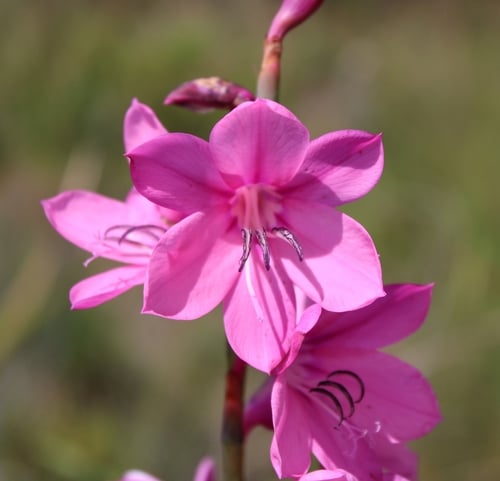
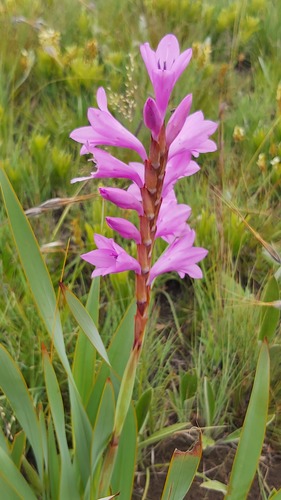
iNaturalist· cc-by-nc
(c) pietermier, some rights reserved (CC BY-NC)
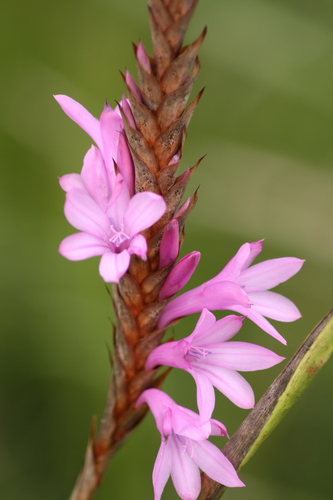
iNaturalist· cc-by-sa
(c) leandra-k_89, some rights reserved (CC BY-SA), uploaded by leandra-k_89
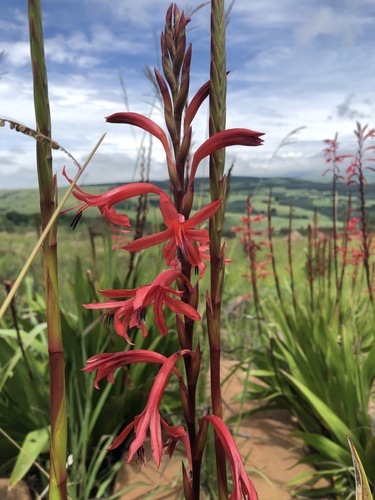
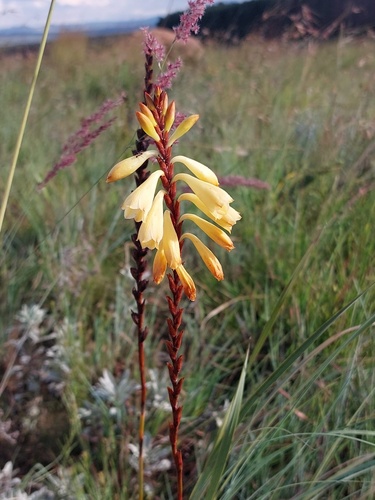
iNaturalist· cc-by-nc
(c) Frank Gaude, some rights reserved (CC BY-NC)
Summary
Source: WikipediaBabiana namaquensis is a perennial flowering plant and geophyte belonging to the genus Babiana. The species is native to the Northern Cape and Namibia. It occurs from southern Namibia to the Anenous Pass in the Richtersveld, in the beach and desert duneveld. The plant has a range of 4779 km². There are five to ten subpopulations and the species is threatened by overgrazing and mining activities. The population numbers are declining.
Description
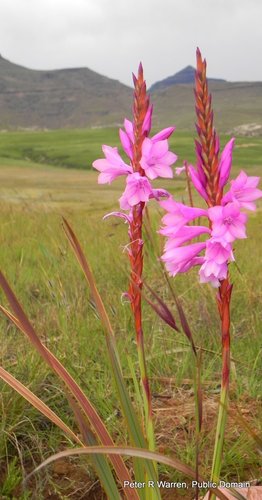
A bulb or corm plant. It does not have a stem but has narrow sword shaped leaves. These can be twisted in spirals. There are 1-3 flowers in a dense spike.
Edible Uses
The bulb or corm is eaten as a snack and also cooked as a vegetable.
Traditional Uses
The bulb or corm is eaten as a snack and also cooked as a vegetable.
This uses section is brief — help expand it
Distribution
It is a subtropical plant. It grows on rocky outcrops.
Where It Grows
Africa, Namibia, South Africa, Southern Africa,
Synonyms
References (2)
- Ruiters-Welcome, A. K., 2019, Food plants of southern Africa. Ph.D. thesis. Univ. of Johannesburg p 66
- Welcome, A. K. & Van Wyk, B.-E., 2019, An inventory and analysis of the food plants of southern Africa. South African Journal of Botany 122 (2019) 136–179