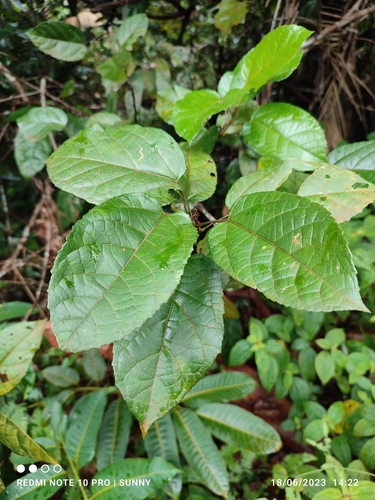
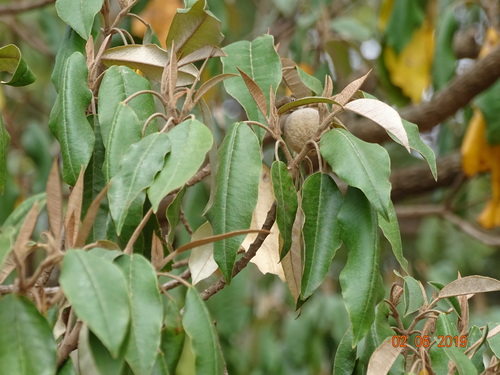
Macaranga grandifolia
(Blanco) Merr.
Samac, Parasol leaf tree
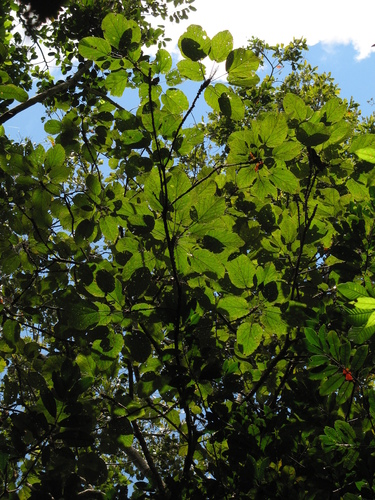
iNaturalist· cc-by-nc
(c) Jardin Boricua, some rights reserved (CC BY-NC)
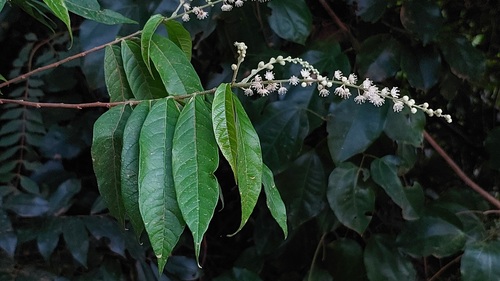
iNaturalist· cc-by-nc
(c) mkobayas, some rights reserved (CC BY-NC)
Summary
Source: WikipediaMacaranga grandifolia is a species of flowering plant in the family Euphorbiaceae. Common names for this plant include nasturtium tree, parasol leaf tree and bingabing. It is endemic to the Philippines and has been widely cultivated in Hawaii as a tropical ornamental. This plant has become a very popular garden ornamental in many parts of the tropics for its extraordinarily grandiose leaves, which are rounded-ovate in shape, with prominent reddish veins, and the stem attached towards the center of the leaf blade. The flowers are pinkish red, and the males are held in coral-like, congested inflorescences. Twine made from the bark and the wood was used for fishing spears. The leaves were used to wrap food. Birds eat the ripe fruit.
Description
A tropical tree in the Euphorbiaceae family found in regions including Cairns. The genus Macaranga contains about 280 tropical species.
This description is brief — help expand it
Edible Uses
The leaves, bark, and fruit are added to sugar to ferment into an alcoholic drink.
Traditional Uses
The leaves, bark and fruit are added to sugar to ferment into an alcoholic drink. Caution: Alcohol is a cause of cancer.
This uses section is brief — help expand it
Medicinal Uses
A resin obtained from the stems is used as an astringent gargle to treat ulcerated mouths.
Known Hazards
Alcohol is a cause of cancer.
Distribution
A tropical plant. In Cairns BG.
Where It Grows
Asia, Australia, Philippines*, SE Asia,
Cultivation
A dioecious species, both male and female forms need to be grown if fruit and seed are required.
Notes
There are about 280 Macaranga species. They are tropical.
References (3)
- Facciola, S., 1998, Cornucopia 2: a Source Book of Edible Plants. Kampong Publications, p 101
- Philipp. J. Sci., C 7:394. 1912
- Steinkraus,