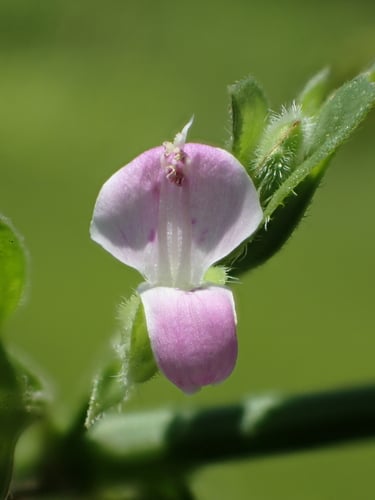
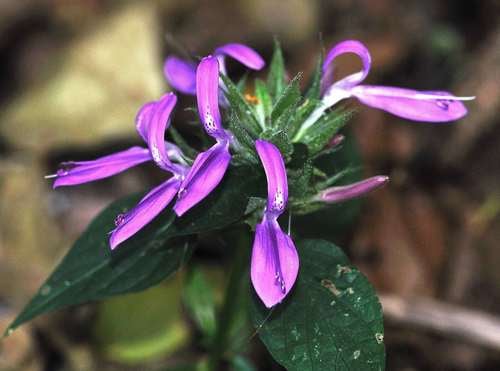
Thunbergia grandiflora
(Roxburgh) Roxburgh
Blue trumpet vine
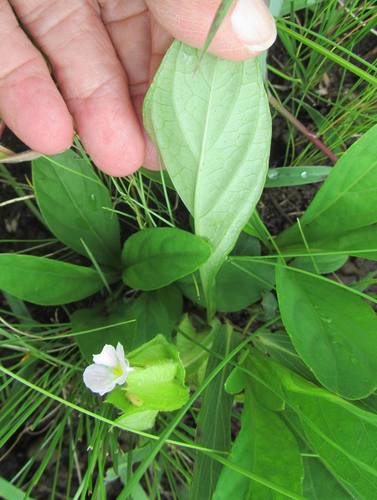
iNaturalist· cc-by-nc
(c) Andy Pearce 🕊, some rights reserved (CC BY-NC), uploaded by Andy Pearce 🕊
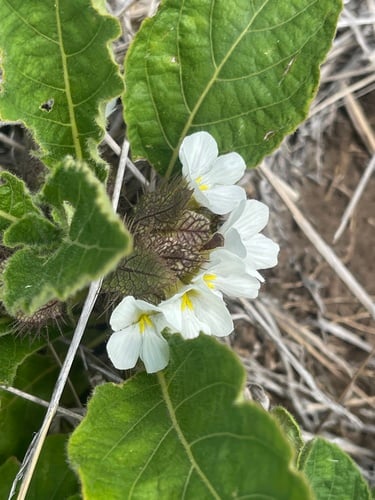
iNaturalist· cc-by-nc
(c) jhosuegamboa, some rights reserved (CC BY-NC)
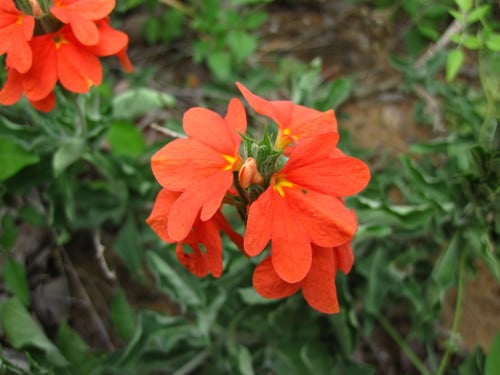
iNaturalist· cc-by-nc
(c) thaven, some rights reserved (CC BY-NC)
Summary
Source: WikipediaThunbergia grandiflora is an evergreen vine in the family Acanthaceae. It is native to China, India, Nepal, Bangladesh, Indochina and Myanmar and widely naturalised elsewhere. Common names include Bengal clockvine, Bengal trumpet, blue skyflower, blue thunbergia, blue trumpetvine, clockvine, skyflower and skyvine.
Description
A woody vine. The stems can be 4 cm across. The young stems are hairy. It has underground runners. The leaves have leaf stalks. The leaf blades are oval and 1-2 times as long as wide. They usually have lobes spread out like fingers on a hand. The flowering clusters can be in the axils of leaves or at the ends of branches. They hang in groups 2 m long. They are light blue.
Edible Uses
The leaves are cooked as a vegetable and can be stored for 4-5 days after harvest. The flowers are fried with dry fish or used to make a tea drink.
Traditional Uses
The leaves are cooked as a vegetable and eaten. The harvested leaves can be stored for 4-5 days. The flowers are fried with dry fish. They are also used for a tea drink.
Medicinal Uses
The leaves, either on their own or in combination with the leaves of Abelmoschus moschatus and the seeds of Clausena lansium, are used as a remedy against snake bites. The petioles are removed and the juice of the leaves is used to massage the site of the bite, whilst the remaining pulp is then applied as a poultice. The dried and powdered leaves can also be used, they are moistened and applied as a poultice.
Distribution
It is a tropical plant. In Costa Rica it grows from sea level to 1,400 m altitude. In Yunnan.
Where It Grows
Africa, Asia, Australia, Caribbean, Central America, China, Costa Rica, Dominica, Dominican Republic, East Africa, Fiji, Guiana, Guianas, Guyana, Haiti, Hawaii, India, Indochina, Indonesia, Laos, Maldives, Mozambique, Myanmar, Nauru, Nigeria, Northeastern India, Pacific, Philippines, Puerto Rico, SE Asia, Sikkim, Suriname, Thailand, USA, Vietnam, West Africa, West Indies,
Cultivation
It can be grown from seed, air-layering, or cuttings of mature stems of the current year's growth.
Propagation
Seed - Cuttings
Synonyms
Also Known As
Bengal trumpet vine, Blue sky flower, Bunga tunbergia, Clockvine, Dengkhakhlu, Githa, Hmab ko tshob, Hugoule, Jyrmi-khnong, Kauri lota, Khakkhu, Kokua lota, Kukua-loti, Lao gua dan, Large-flowered thunbergia, Nong nonga, Nuolonglie, Pan-ye-sut-nwe, Skyflower skyvine, Va-ko, Za kuo luo kuo
References (30)
- Acevedo-Rodriguez, P., 2005, Vine and Climbing Plants of Puerto Rico and the Virgin islands. Contributions to the United States National Herbarium. Volume 51:1-483 p 25
- Baro, D., Baruah, S. and Borthukar, S. K. 2015, Documentation on wild vegetables of Baksa district, BTAD (Assam). Scholars Research Library. Archives of Applied Science Research, 2015, 7 (9):19-27
- Bot. Reg. 6: t. 495. 1820 (Hort. bengal. 45. 1814, nom. nudum)
- Burkill, H. M., 1985, The useful plants of west tropical Africa, Vol. 1. Kew.
- Cao, Y., et al, 2020, Ethnobotanical study on wild edible plants used by three trans-boundary ethnic groups in Jiangcheng County, Pu’er, Southwest China. Journal of Ethnobiology and Ethnomedicine (2020) 16:66
Show all 30 references Hide references
- Dutta, U., 2012, Wild Vegetables collected by the local communities from the Churang reserve of BTD, Assam. International Journal of Science and Advanced Technology. Vol. 2(4) p 124
- Ethnobotany of Karbis. Chapter 4 in p 102
- Ghorbani, A., et al, 2012, A comparison of the wild food plant use knowledge of ethnic minorities in Naban River Watershed Nature Reserve, Yunnan, SW China. Journal of Ethnobiology and Ethnomedicine; 8:17
- Grubben, G. J. H. and Denton, O. A. (eds), 2004, Plant Resources of Tropical Africa 2. Vegetables. PROTA, Wageningen, Netherlands. p 565
- Kar, A., & Borthakur, S. K., 2007, Wild vegetables sold in local markets of Karbi Anglong, Assam. Indian Journal of Traditional Knowledge. 6(1) January 2007, pp 169-172
- Kar, A., et al, 2013, Wild Edible Plant Resources used by the Mizos of Mizoram, India. Kathmandu University Journal of Science, Engineering and Technology. Vol. 9, No. 1, July, 2013, 106-126
- Khodram,S. D., et al, 2019, Local knowledge of edible flowers used in Mizoram. Indian Journal of Traditional Knowledge Vol 18(40 pp 715-723
- Kumar, S. A., Manus, D. & Mallika, M., 2018, Impact of non-timber forest products on Forest and in Livelihood Economy of the People of Adjoining Areas of Jalpaiguri Forest Division, West Bengal, India. Int. J. of Life Sciences, 2018; 6 (2):365-385
- Liu, Yi-tao, & Long, Chun-Lin, 2002, Studies on Edible Flowers Consumed by Ethnic Groups in Yunnan. Acta Botanica Yunnanica. 24(1):41-56 (Also as Thunbergia lancei)
- Patiri, B. & Borah, A., 2007, Wild Edible Plants of Assam. Geethaki Publishers. p 96
- Pegu, R., et al, 2013, Ethnobotanical study of Wild Edible Plants in Poba Reserved Forest, Assam, India. Research Journal of Agriculture and Forestry Sciences 1(3):1-10
- Plants of Haiti Smithsonian Institute http://botany.si.edu
- Recher, P, 2001, Fruit Spirit Botanical Gardens Plant Index. www.nrg.com.au/~recher/ seedlist.html p 7
- Sawian, J. T., et al, 2007, Wild edible plants of Meghalaya, North-east India. Natural Product Radiance Vol. 6(5): p 422
- Singh, B., et al, 2012, Wild edible plants used by Garo tribes of Nokrek Biosphere Reserve in Meghalaya, India. Indian Journal of Traditional Knowledge. 11(1) pp 166-171
- Smith, A.C., 1991, Flora Vitiensis Nova, Lawaii, Kuai, Hawaii, Volume 5 p 120
- Staples, G.W. and Herbst, D.R., 2005, A tropical Garden Flora. Bishop Museum Press, Honolulu, Hawaii. p 94
- Sujanapal, P., & Sankaran, K. V., 2016, Common Plants of Maldives. FAO & Kerala FRI, p 272
- Sukarya, D. G., (Ed.) 2013, 3,500 Plant Species of the Botanic Gardens of Indonesia. LIPI p 983 (Has Thunbergia alata as a synonym)
- Teron, R. & Borthakur, S. K., 2016, Edible Medicines: An Exploration of Medicinal Plants in Dietary Practices of Karbi Tribal Population of Assam, Northeast India. In Mondal, N. & Sen, J.(Ed.) Nutrition and Health among tribal populations of India. p 148
- Whitney, C. W., et al, 2014, Conservation and Ethnobotanical Knowledge of a Hmong Community in Long Lan, Luang Prabang, Lao People’s Democratic Republic. Ethnobotany Research and Applications 12:643-658
- World Checklist of Useful Plant Species 2020. Royal Botanic Gardens, Kew
- Xu, Z., Tao, G. & Tan, J., 1988, Tropical Wild Flowers and Plants in Xishuangbanna, Agricultural Publishing House. photo 75
- Xu, You-Kai, et al, 2004, Wild Vegetable Resources and Market Survey in Xishuangbanna, Southwest China. Economic Botany. 58(4): 647-667.
- Zuchowski W., 2007, Tropical Plants of Costa Rica. A Zona Tropical Publication, Comstock Publishing. p 111