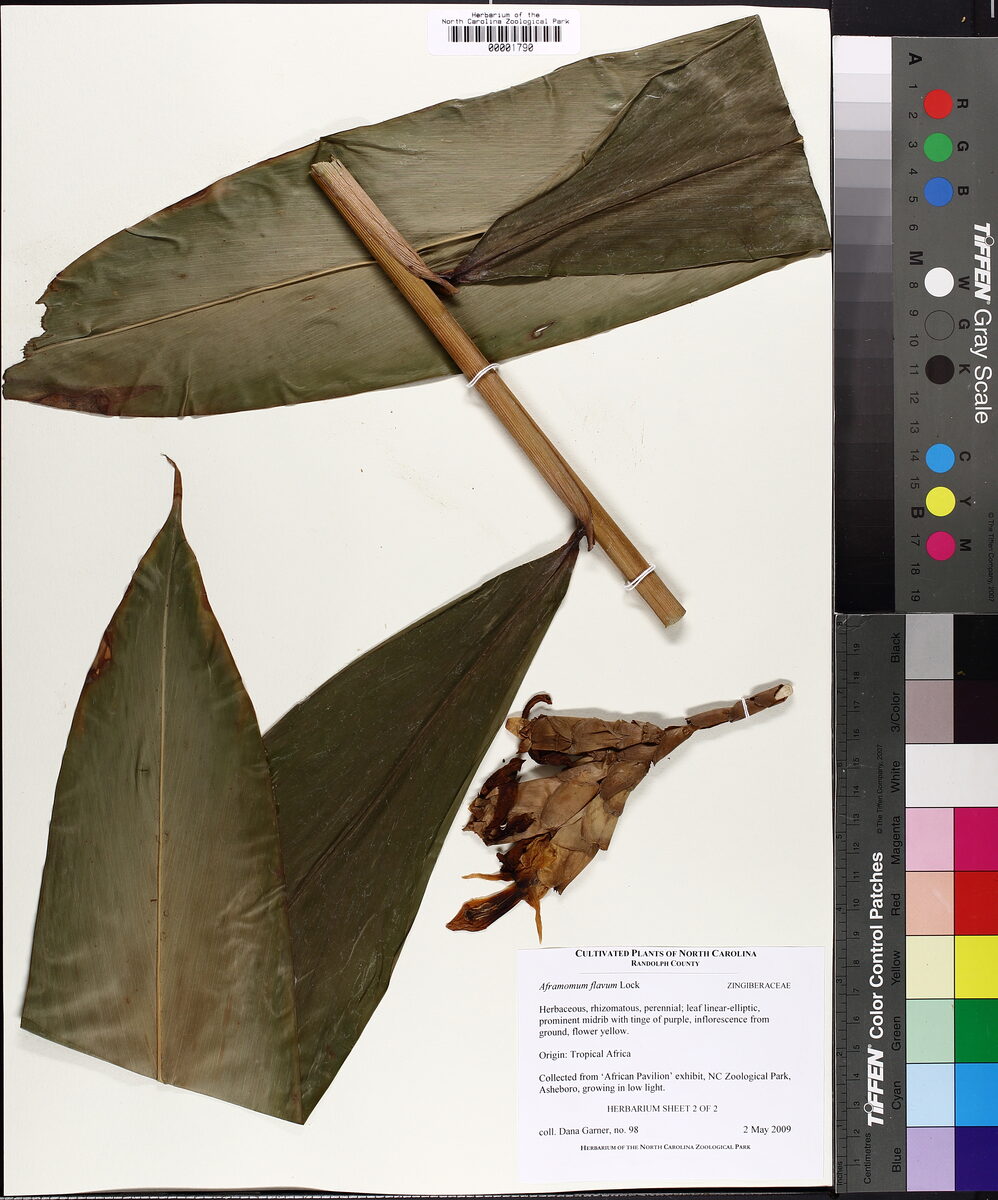
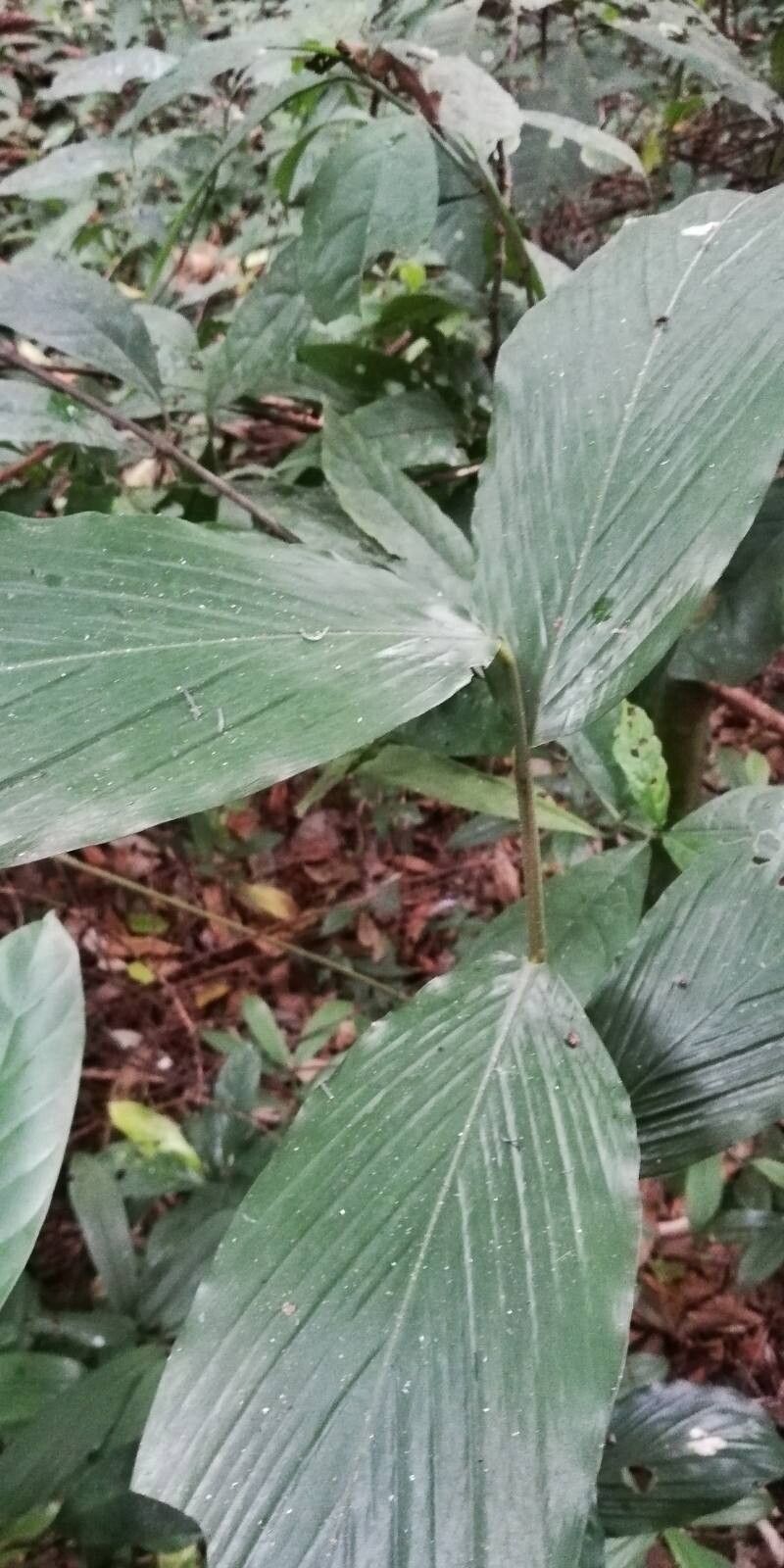
Curcuma pseudomontana
R. Graham
Hill turmeric
iNaturalist· cc-by-sa
(c) Dinesh Valke, some rights reserved (CC BY-SA)
iNaturalist· cc-by-sa
(c) Dinesh Valke, some rights reserved (CC BY-SA)
Description
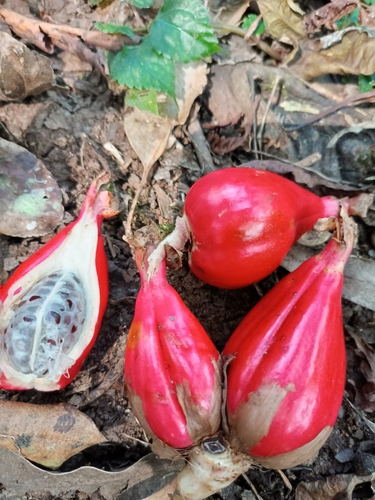
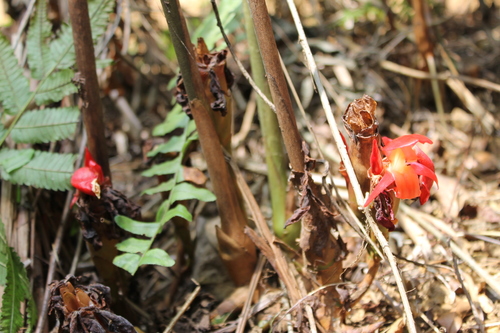
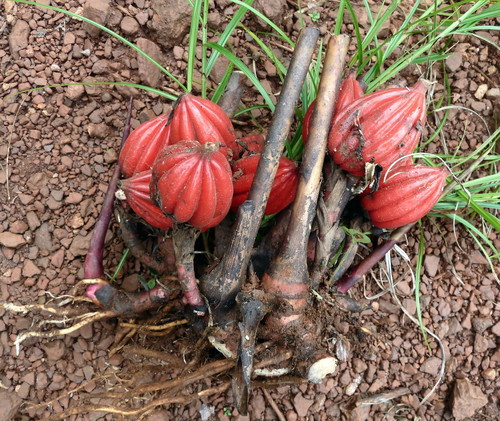
A ginger family herb. It is erect and grows 75 cm tall. It has a stout rootstock and round tubers at the ends of roots. They are white inside. There are 3-5 leaves. They are oblong to sword shaped and 20-30 cm long by 6-9 cm wide. The flowering spikes are 10-25 cm long. The bracts are green with a pink top. There are 2-4 flowers in each fertile bract. They are yellow. The fruit are round capsules splitting by 3 valves. The seeds are oval.
Edible Uses
The tubers and rhizomes yield a form of arrowroot starch, and are used as an emergency food source when food is scarce.
Traditional Uses
The rhizomes yield a form of arrowroot starch.
This uses section is brief — help expand it
Medicinal Uses
The rhizomes are processed into starch for traditional use.
Distribution
It is a tropical plant. It grows in moist shady places in forests. It occurs on the Deccan in India. It is usually in shade and near the banks of streams. It occurs at about 800 m or higher above sea level.
Where It Grows
Asia, India,
Other Information
It is used when food is scarce.
Notes
There are about 50 Curcuma species. They are mostly in SE Asia.
Synonyms
Also Known As
Kachura, Kattumanjal, Raan halada, Sinderwani, Sindarbar
References (7)
- Ambasta, S.P. (Ed.), 2000, The Useful Plants of India. CSIR India. p 152
- Kew, Plants of the World on Line
- Kuvar, S. D. & Shinde, R. D., 2019, Wild Edible Plants used by Kokni Tribe of Nasik District, Maharashtra. Journal of Global Biosciences. Volume 8, Number 2, 2019, pp. 5936-5945
- Lim, T. K., 2015, Edible Medicinal and Non Medicinal Plants. Volume 9, Modified Stems, Roots, Bulbs. Springer p 30
- Lim, T. K., 2016, Edible Medicinal and Non-Medicinal Plants: Volume 12 Modified Stems, Roots p 7
Show all 7 references Hide references
- Patil, M. V. & Patil, D. A., 2000, Some More Wild Edible Plants of Nasik District (Maharashtra). Ancient Science of Life Vol. X1X (3&4): 102-104
- WATT,