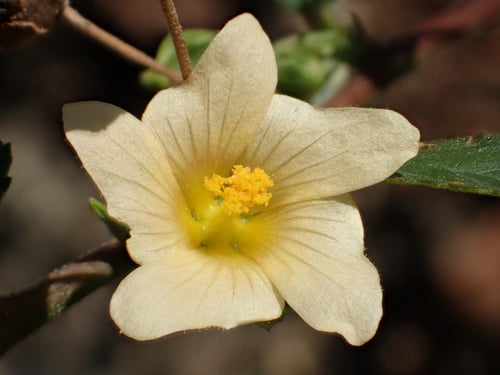
Sphaeralcea angustifolia
(Cav.) G. Don
Narrow leaf globe mallow, Copper globemallow
iNaturalist· cc-by-nc
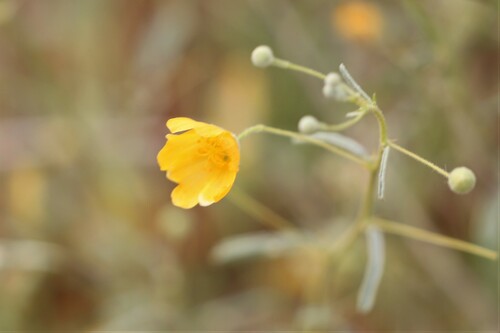
(c) daled79, some rights reserved (CC BY-NC)
iNaturalist· cc-by-nc
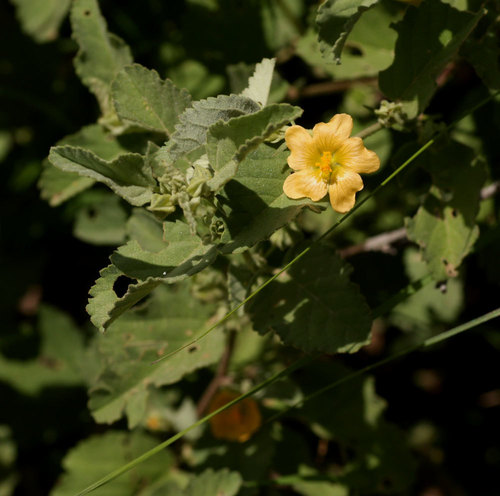
(c) josevelarde391718, some rights reserved (CC BY-NC)
iNaturalist· cc-by-nc
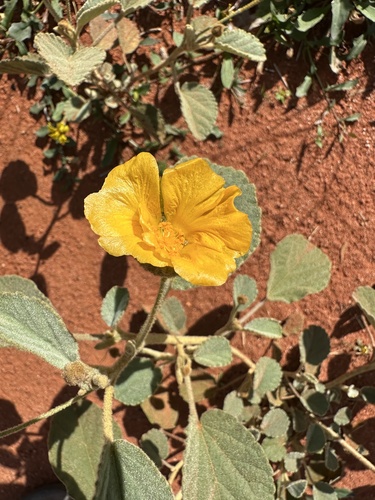
(c) Joel Galván, some rights reserved (CC BY-NC), uploaded by Joel Galván
Summary
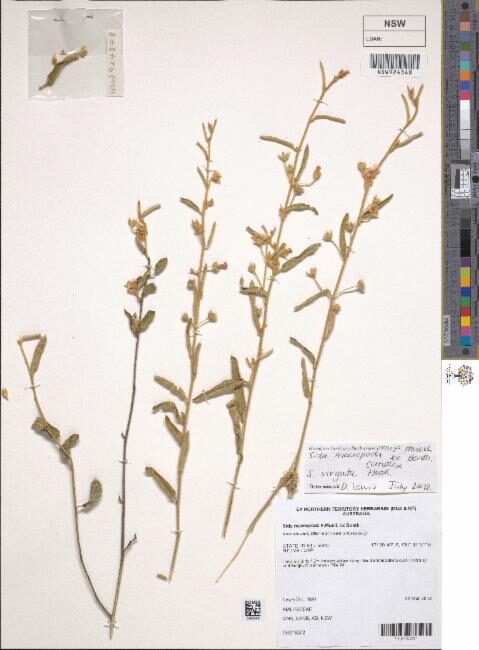
Source: WikipediaSphaeralcea angustifolia is a species of flowering plant in the mallow family known by the common names copper globemallow and narrow-leaved globemallow. It is native to the southwestern United States as well as northern and central Mexico, where it grows in desert and plateau habitat. It produces many erect stems, approaching three meters in maximum height. It is woolly or felt-like in texture. The gray-green leaf blades are lance-shaped and measure up to about 5 cm long. They have wavy or slightly lobed edges. The leafy inflorescence bears several flowers each with five wedge-shaped orange petals just under 1 cm in length, and yellow anthers.
Description
A herb. It grows 60-90 cm tall. The leaves are narrow and 2.5-5 cm long. The flowers can be pink or red. They are cup shaped and have 5 petals.
This description is brief — help expand it
Edible Uses
The seeds are edible but small, bitter, and enclosed in tough shells that are difficult to process. Cooking does not improve the flavor, and dust produced during winnowing can be irritating. The Hopi Indians of northeastern Arizona reportedly chewed the mucilaginous stems like gum, though the stems and other vegetative parts are covered in irritating hairs that can inflame the eyes, skin, and lungs — the mucilage itself is harmless but handling raw stems presents safety concerns. Flowers are better-tasting than the seeds, though not widely reported as food; only the petals, stamens, and pistils should be eaten, as other floral parts carry irritating hairs. The flowers offer a brief sweetness but a slimy texture from mucilage. Like all members of the genus, the irritating hairs throughout the plant limit its safe use as food.
Traditional Uses
The seeds are used for food.
This uses section is brief — help expand it
Medicinal Uses
The plant is used as a remedy for coughs, colds, and influenza. A decoction of the leaves treats diarrhoea, and a decoction of the root is used for biliousness. A poultice of pulverized roots is applied to snakebites and purulent sores. Sphaeralcea species are good sources of mucilaginous mucopolysaccharide starches, which have been shown to stimulate macrophage activity and support healing and resistance, particularly in the skin, upper intestinal tract, urinary tract, and lungs. The whole plant is demulcent and emollient — taken internally it soothes sore throats and irritation along the digestive and urinary tracts; applied externally it soothes and promotes healing of cuts, burns, and wounds.
Distribution
It is a temperate plant.
Where It Grows
Mexico, North America, USA,
Propagation
The seed has a hard coat and benefits from autumn sowing or scarification of stored seed. Scarification can usually be done by pouring a small amount of nearly boiling water over the seeds (taking care not to cook them), then soaking in warm water for 12–24 hours until swollen. If seeds have not swollen, carefully nick the seedcoat without damaging the embryo and soak for a further 12 hours before sowing. Softwood cuttings can be taken in a frame in early summer. Division is also possible.
Other Uses
The plant is a rich source of mucilage. An infusion used as a hair rinse after shampooing is said to give the hair body; a strong infusion left in without rinsing will curl the hair. The dried root skin is pounded to a powder, mixed with water, and used as a face paint. Root sap is used as a glue.
Notes
There are about 60 Sphaeralcea species.
Synonyms
References (4)
- Beckstrom-Sternberg, Stephen M., and James A. Duke. "The Foodplant Database." http://probe.nalusda.gov:8300/cgi-bin/browse/foodplantdb.(ACEDB version 4.0 - data version July 1994)
- Gen. hist. 1:465. 1831
- Loughmiller, C & L., 1985, Texas Wildflowers. A Field Guide. University of Texas, Austin. p 163
- Moerman, D. F., 2010, Native American Ethnobotany. Timber Press. p 540 (As Sphaeralcea angustifolia var. lobata)