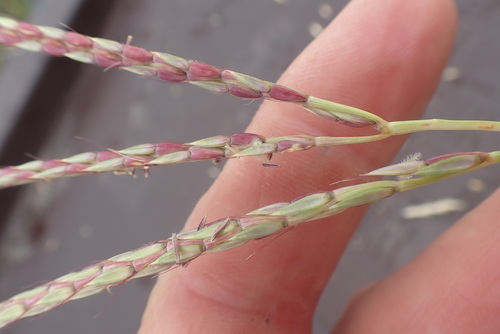
Gigantochloa hasskarliana
(Kurz) Backer ex K. Heyne
Pingit bamboo
iNaturalist· cc-by-nc-sa
(c) Smithsonian Institution, National Museum of Natural History, Department of Botany, some rights reserved (CC BY-NC-SA)
Summary
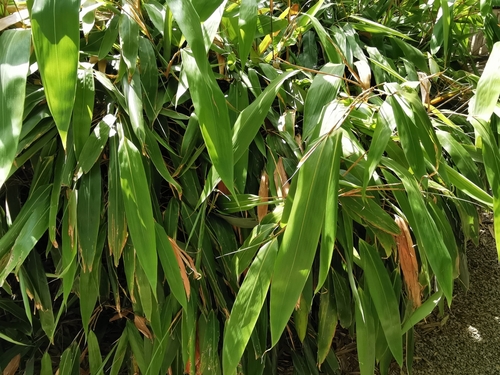
Fast-growing evergreen bamboo reaching 10m tall with a 5m spread. Produces dense foliage with large leaves and slightly weeping culms, creating a lush tropical appearance. Canes measure 5-6 metres long and 30-50mm diameter at the base with thin walls. Grows in light sandy, medium loamy, and heavy clay soils with good drainage. Tolerates mildly acid, neutral, and mildly alkaline pH. Adapts to semi-shade or full sun and prefers consistently moist soil. Hardy to UK zone 10.
Description
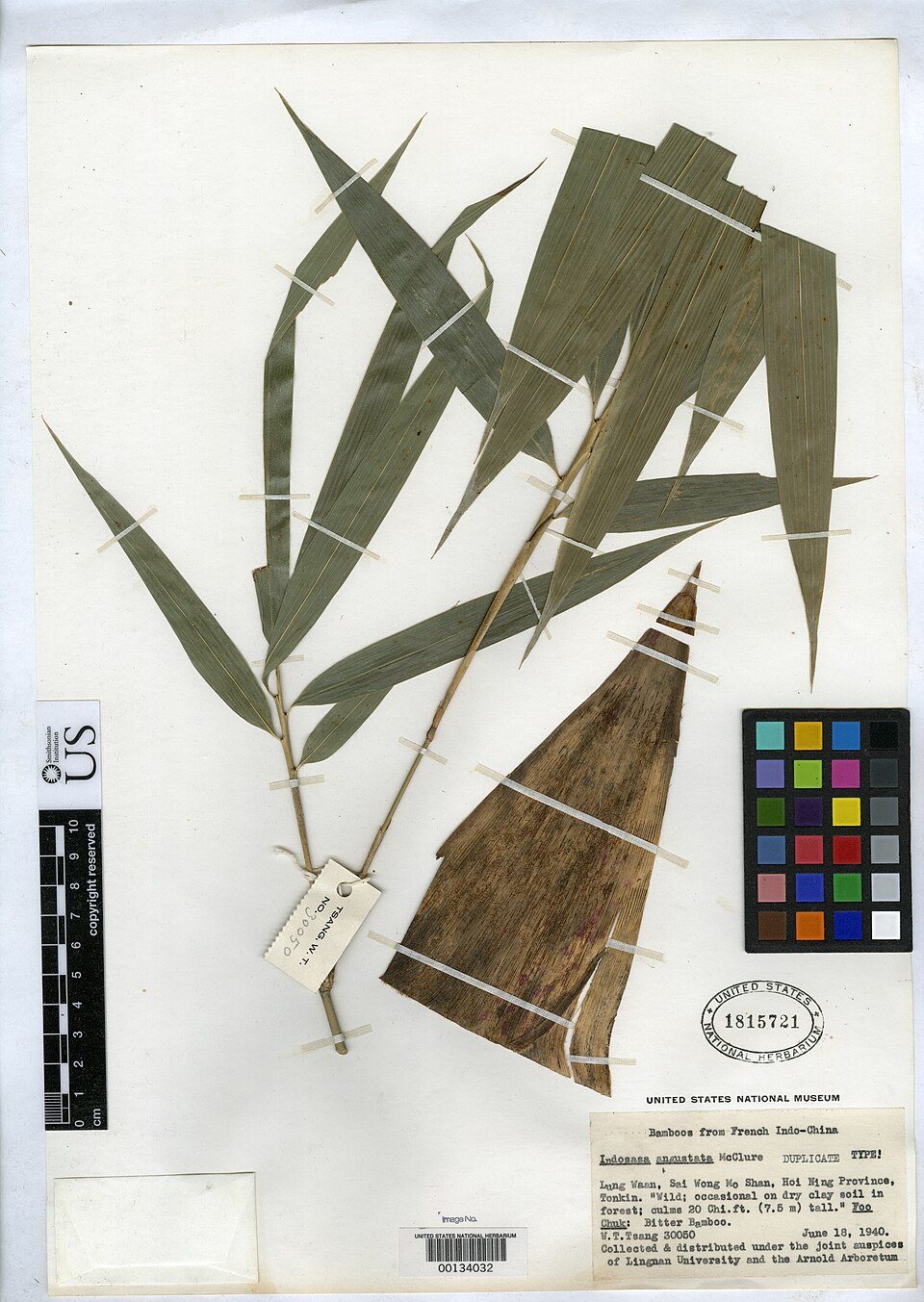
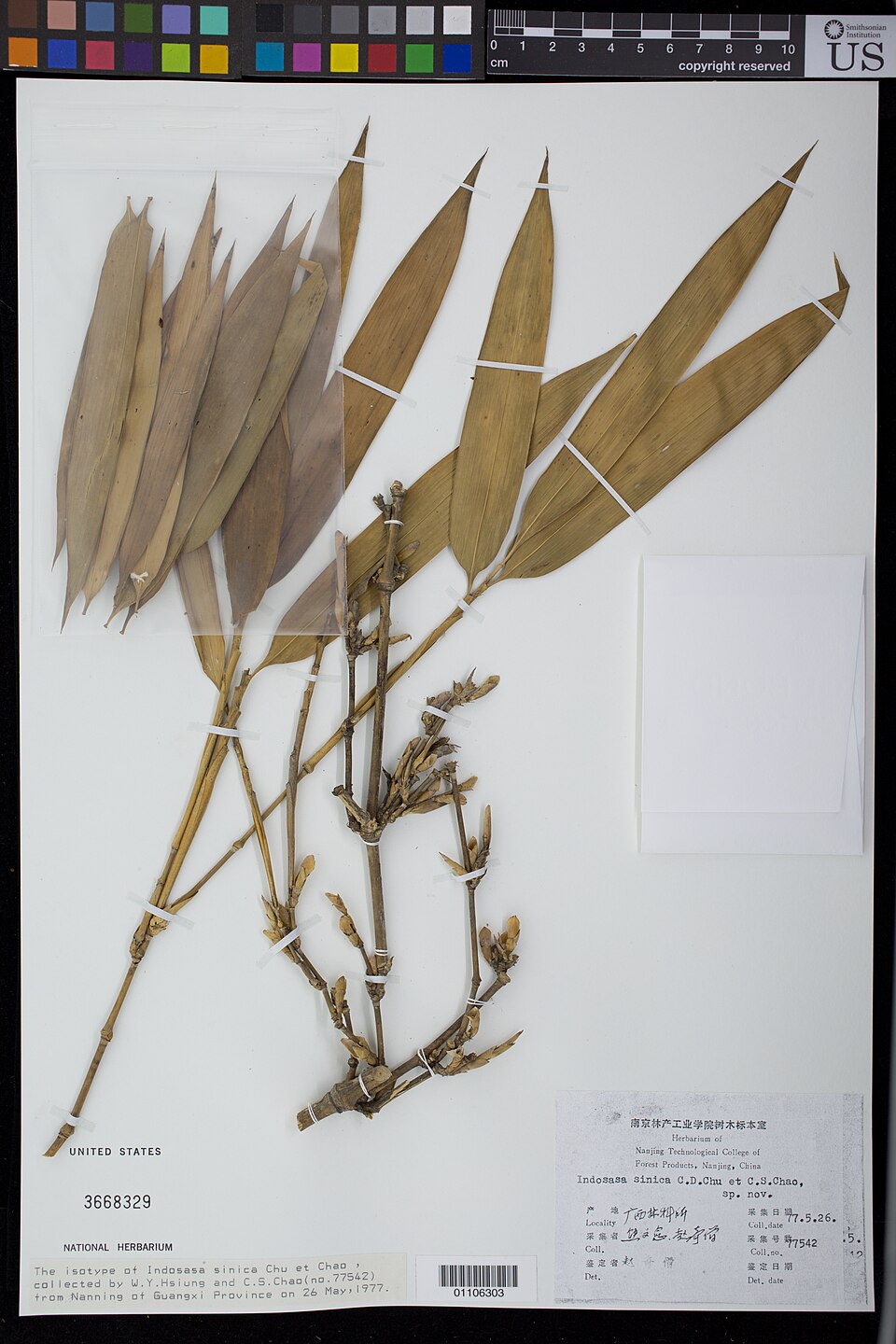
A slender bamboo. It has many tillers. It grows 6-10 m tall. The stems are thin and green. The tops are drooping. The nodes are swollen and have a ring of hairs around them. The joints are 35-50 cm long. The stems are 3-5 cm across. The leaves are narrowly sword shaped and have short stalks. The base is wedge shaped and they tape to the tip. They are 15-45 cm long by 2-6 cm wide. The flowers are on top of leafy stalks.
Edible Uses
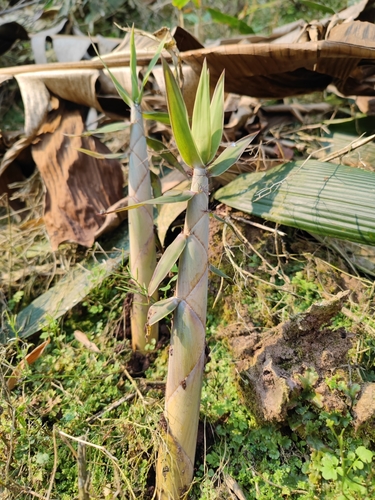
The young stem is cooked and eaten as a side dish with rice or in soups and stews. It is highly esteemed in Indonesia for its sweet, flavourful qualities.
Traditional Uses
The young shoots are cooked and eaten. They are eaten as a side dish with rice or used in soups and stews.
This uses section is brief — help expand it
Medicinal Uses
None known
Distribution
A tropical plant. In Java it grows in the lower mountain forests. It is usually in slightly shady places. It grows up to 200 m above sea level.
Where It Grows
Asia, India, Indochina, Indonesia, Laos, Malaysia, Myanmar, SE Asia, Thailand,
Cultivation
A plant of the lowland tropics, though it can be found at elevations up to 1,500 metres. It prefers humid conditions. Bamboos have an interesting method of growth. Each plant produces a number of new stems annually - these stems grow to their maximum height in their first year of growth, subsequent growth in the stem being limited to the production of new side branches and leaves. In the case of some mature tropical species the new stem could be as much as 30 metres tall, with daily increases in height of 30cm or more during their peak growth time. This makes them some of the fastest-growing species in the world. Bamboos in general are usually monocarpic, living for many years before flowering, then flowering and seeding profusely for a period of 1 - 3 years before usually dying.
Propagation
Culm cuttings are the primary propagation method and are most commonly used for establishing hedges and erosion control plantings. Division is also possible.
Other Uses
The canes are used to make basketry. They grow 5–6 metres long, are 30–50mm in diameter at the base, and have a thin wall. The plant is very dense with large leaves and slightly weeping culms, making it a good two-storey screen. Its lush foliage provides a strong tropical feel even in small gardens. The species is also planted extensively to prevent soil erosion on steep hills and is often grown as a hedge.
Other Information
A popular bamboo in Indonesia.
Synonyms
Also Known As
Awi tela, Bambu pingit, Phai pak man, Tela
References (11)
- Ambasta S.P. (Ed.), 2000, The Useful Plants of India. CSIR India. p 557 (As Schizostachyum hasskarlianum)
- Facciola, S., 1998, Cornucopia 2: a Source Book of Edible Plants. Kampong Publications, p 46
- http://www.plantnames.unimelb.edu.au/sorting/Bamboos_Edible.html
- Hedrick, U.P., 1919, (Ed.), Sturtevant's edible plants of the world. p 597 (As Schizostachyum hasskarlianum)
- Indian Forester 1:352. 1876 (As Schizostachyum hasskarlianum)
Show all 11 references Hide references
- MacKinnon, K., The Ecology of kalimantan. p 711
- Mulyoutami, E., et al, 2009, Local knowledge and management os simpikng (forest gardens) among the Dayak people in East Kalimatan, Indonesia. Forest Ecology and Management. 257:2054-2061
- Nutt. pl. Ned.-Ind., ed. 2, 1:299. 1927
- Ochse, J.J. et al, 1931, Vegetables of the Dutch East Indies. Asher reprint. p 320
- Sukarya, D. G., (Ed.) 2013, 3,500 Plant Species of the Botanic Gardens of Indonesia. LIPI p 844
- World Checklist of Useful Plant Species 2020. Royal Botanic Gardens, Kew