Avicennia germinans
(L.) L.
Black mangrove
iNaturalist· cc-by-nc
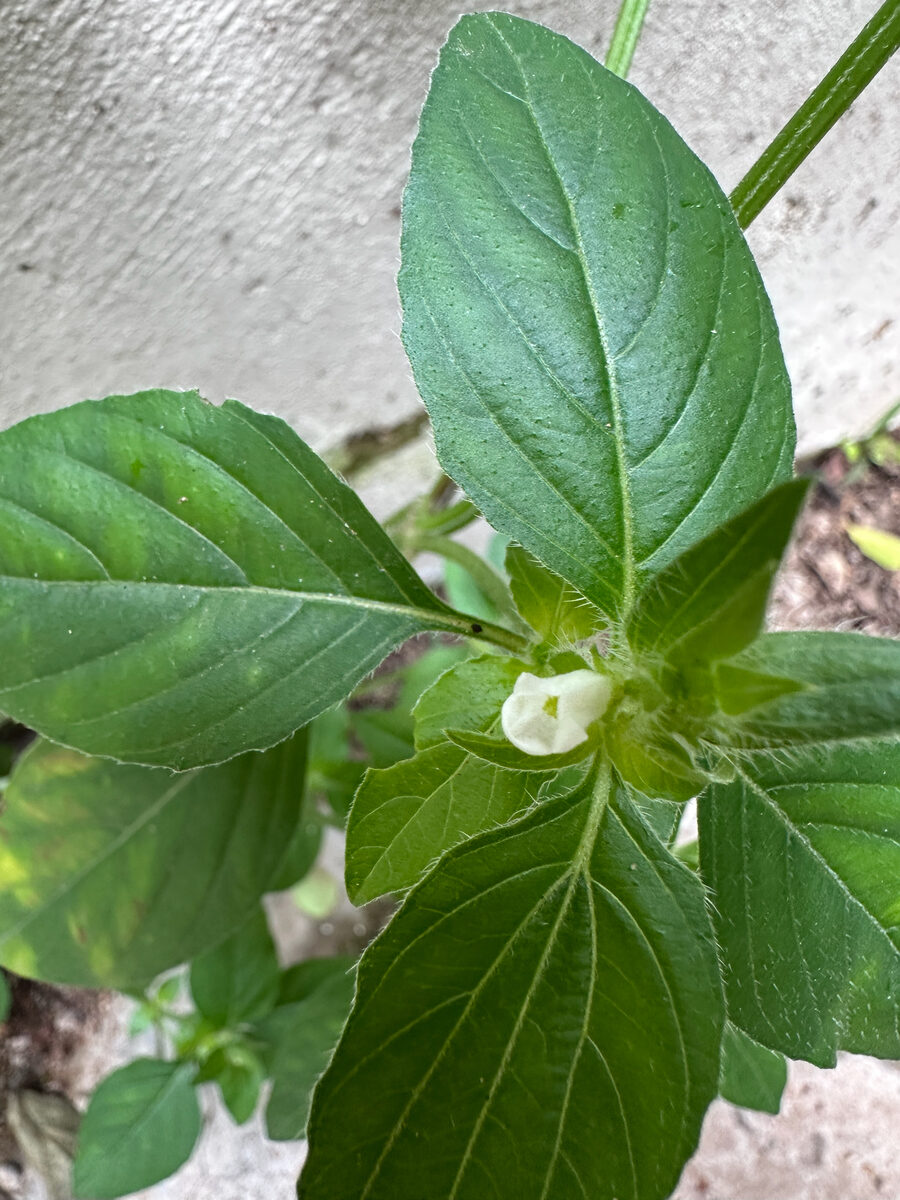
(c) scott.zona, some rights reserved (CC BY-NC)
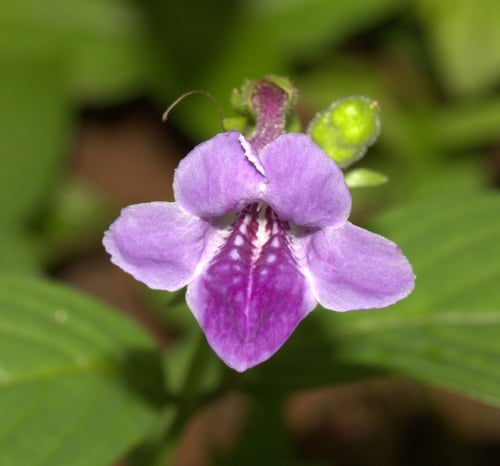
iNaturalist· cc-by-sa
(c) Douglas Goldman, some rights reserved (CC BY-SA), uploaded by Douglas Goldman
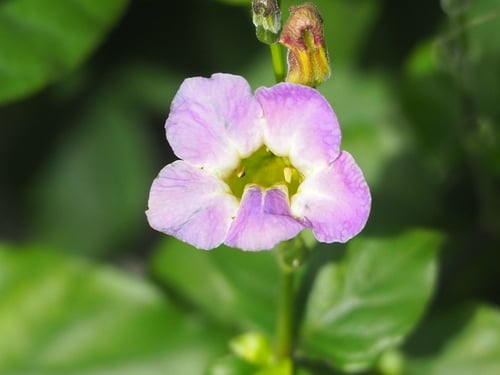
iNaturalist· cc-by-sa
(c) Douglas Goldman, some rights reserved (CC BY-SA), uploaded by Douglas Goldman
Summary
Source: WikipediaAvicennia germinans, the black mangrove, is a shrub or small tree growing up to 12 meters (39 feet) in the acanthus family, Acanthaceae.
Description
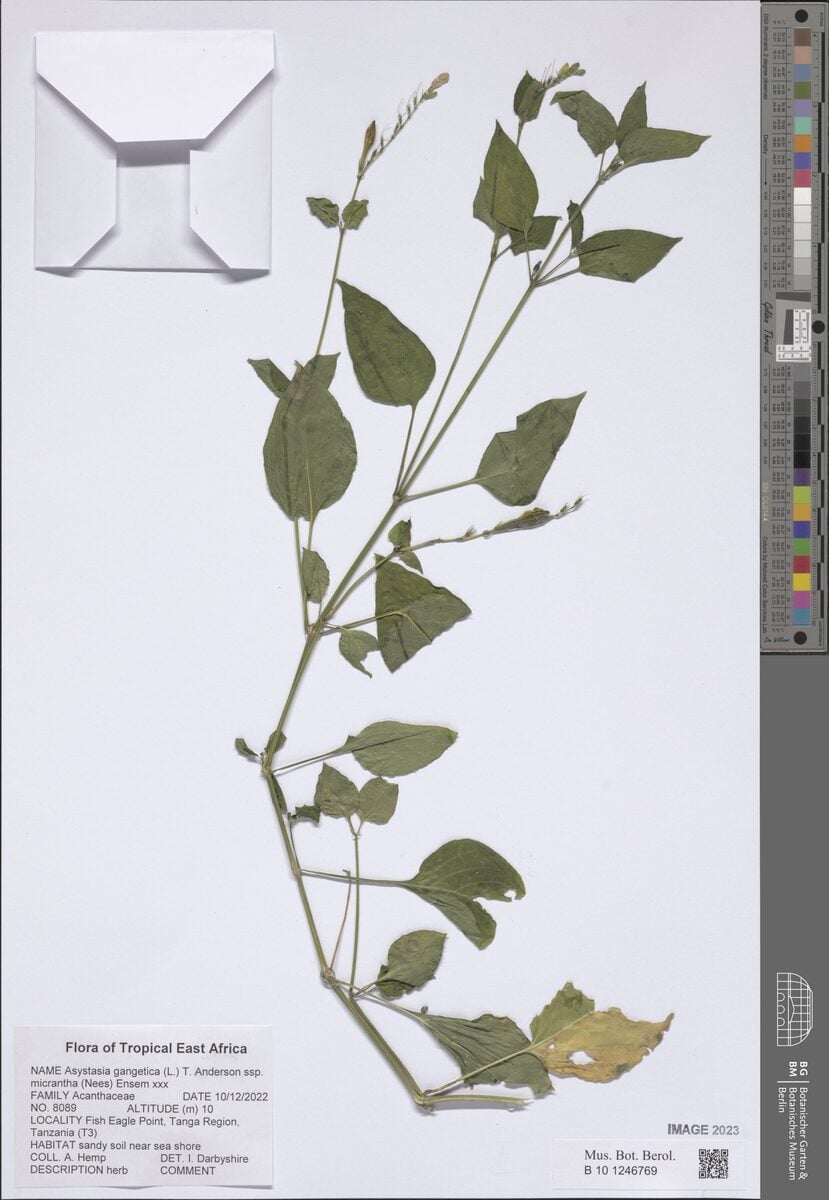
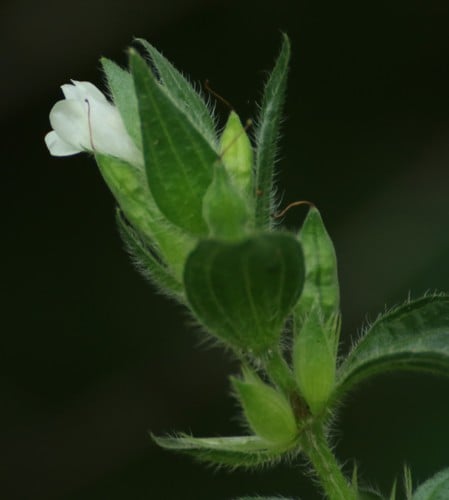
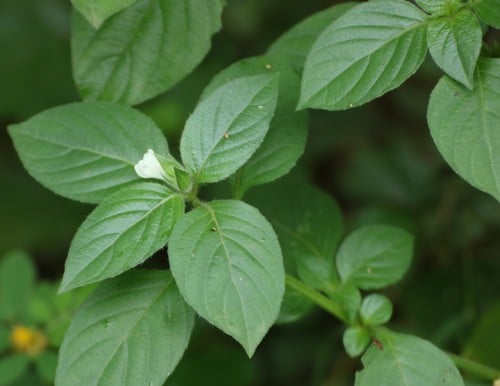
A shrub or tree. It grows 20 m tall. The trunk is grey and the bark can be cracked. It has thin pneumatophores or breathing roots. They can be 30 cm long. The leaves are simple, opposite and narrow. They are 10 cm long and 3 cm wide. They are a lighter colour underneath. Salt crystals form underneath the leaf. The flowers are small and have 4 lobes. They are tube shaped and 1 cm across. They have a fragrant honey smell. The fruit is flat and green. It has one unequal sides seed. It is 2 cm wide and has a pointed end.
Edible Uses
A salt is collected from the leaves and roots. The flowers produce an attractive honey. The sprouted fruit is eaten after cooking.
Traditional Uses
A salt is collected from the leaves and roots. The flowers produce an attractive honey. The sprouted fruit is eaten after cooking. Caution: The fruit sprouts need special treatment to remove the poison.
Medicinal Uses
It is used as a famine food.
Known Hazards
The fruit sprouts require special treatment to remove poison.
Distribution
A tropical plant. It can tolerate high levels of salt. It grows in mangrove swamps. It can grow in arid places.
Where It Grows
Africa, Angola, Anguilla, Aruba, Bahamas, Belize, Benin, Bermuda, Brazil, Cameroon, Caribbean, Central Africa, Central America, Colombia, Congo DR, Congo R, Costa Rica, Côte d'Ivoire, Cuba, Dominican Republic, Ecuador, El Salvador, Gabon, Galapagos, Gambia, Ghana, Guatemala, Guiana, Guianas, Guinea, Guinée, Guinea-Bissau, Guyana, Haiti, Honduras, Ivory Coast, Jamaica, Leeward Is., Liberia, Mauritania, Mexico, Nicaragua, Nigeria, North America, Panama, Peru, Puerto Rico, Sao Tome and Principe, Senegal, Sierra Leone, South America, St. Kitts and Nevis, Suriname, Togo, Trinidad-Tobago, USA, Venezuela, West Africa, West Indies,
Cultivation
The seedlings need to be settled on mud before they can form roots.
Propagation
Seed - very subject to desiccation, the seed is best sown fresh, though they have been known to float in salt water for one year without rooting yet still be viable. Young seedlings grow best when they are in contact with fresh water, though older seedlings need contact with sea water. Natural regeneration is often abundant, and wildlings can be collected to serve as planting stock.
Other Uses
The bark has been used for tanning and for dyeing reddish colours. The bark contains about 12.5% tannin. A gum is obtained from the bark. Ash is added to water as a soap substitute. Smoke from the wood is reported to dispel mosquitoes effectively. Ethanol solutions of smoke from the burning wood inhibited the growth of pathogenic bacteria and fungi, such as Escherichia coli, Staphylococcus aureus and Saccharomyces cerevisiae. Moreover, the smoke significantly deterred Acraea acerata, a pest of sweet potato, from depositing eggs. The heartwood is pale brown to pinkish brown, darkening upon exposure, and rather indistinctly demarcated from the whitish sapwood. The wood is very durable, even under water; heavy; with a fine texture; and a grain that is often interlocked. It is difficult to air dry, being liable to twisting and checking. The rates of shrinkage are high, from green to oven dry about 7.1% radial and 10.2% tangential. Once dry, it is stable in service. The wood is difficult to split radially, but not tangentially. It saws satisfactorily, but is difficult to work by hand tools. It has some tendency to split upon nailing and screwing. It has been reported that the wood is suitable for particle board and pulp production, but for the latter purpose it should be mixed with wood of other species that have longer fibres. The wood is used for marine construction, boat construction (especially ribs), wharves, piles, house building, furniture and implements. It is also suitable for heavy flooring, mine props, railway sleepers, joinery, vehicle bodies, handles, ladders, toys, novelties and carving. The wood is also used as firewood and for charcoal production. The flowers are a good source of nectar for honey bees, producing a quality honey.
Other Information
It is a famine food.
Notes
Also put in the family Avicenniaceae. Also put in the family Verbenaceae.
Synonyms
Also Known As
Behelm, Bu bej, Bufende, Bule, Cabeco, Camangacu, Cobaca, Cudjuno, Djibicum, Honey mangrove, Iguanero, Io, Iofo, M'pende, Mangle iguanero, Mangle negro, Mang nwa, Mangle salado, Paletuvier, Palo de sal, Pebadje, Peta, Pule, Tarafo, Tarrafe, Ule
References (20)
- Bircher, A. G. & Bircher, W. H., 2000, Encyclopedia of Fruit Trees and Edible Flowering Plants in Egypt and the Subtropics. AUC Press. p 49
- Burkill, H. M., 1985, The useful plants of west tropical Africa, Vol. 1. Kew.
- Condit, R., et al, 2011, Trees of Panama and Costa Rica. PrincetonField Guides. p 28
- Djihounouck, Y., et al, 2018, Diversité Et Importance Socio-Economique Des Espèces Fruitières Sauvages Comestibles En Zone Kasa (Sud-Ouest Du Sénégal). European Scientific Journal December 2018 edition Vol.14, No.36 ISSN: 1857 – 7881
- Djihounouck, Y., et al, 2021, Ethnobotanical Uses of Non-cultivated Edible Fruit Species in the Department of Oussouye (South Senegal). Journal of Food Research; Vol. 10, No. 4 p 20
Show all 20 references Hide references
- Duke,
- Facciola, S., 1998, Cornucopia 2: a Source Book of Edible Plants. Kampong Publications, p 45
- Grandtner, M. M. & Chevrette, J., 2013, Dictionary of Trees, Volume 2: South America: Nomenclature, Taxonomy and Ecology. Academic Press p 52
- Kew Plants of the World Online
- Le Houerou, H. N., (Ed.), 1980, Browse in Africa. The current state of knowledge. International Livestock Centre for Africa, Ethiopia. p 161
- Little, E. L. & Wadsworth, F. H., 1964, Common Trees of Puerto Rico and the Virgin Islands. USDA Agriculture Handbook No. 249 (As Avicennia nitida)
- McLaughlin, J., Woody and Herbaceus Plants Native to Haiti. University of Florida.
- Morton, 1978,
- Plants of Haiti Smithsonian Institute http://botany.si.edu
- Roa, J. A. G. & Boada, D. S. G., 2018, Fundación para el Fortalecimiento de la Fruticultura y Plantas Alimenticias no Convencionales en Colombia.
- Royal Botanic Gardens, Kew (1999). Survey of Economic Plants for Arid and Semi-Arid Lands (SEPASAL) database. Published on the Internet; http://www.rbgkew.org.uk/ceb/sepasal/internet [Accessed 4th April 2011]
- Sp. pl. ed. 3, 2:891. 1764
- Torre, de la L., et al, 2008, Enciclopedia de las Plantas Útiles del Ecuador. Herbario QCA. Pontificia Universidad Católica del Ecuador. p 238
- World Checklist of Useful Plant Species 2020. Royal Botanic Gardens, Kew
- Zuchowski W., 2007, Tropical Plants of Costa Rica. A Zona Tropical Publication, Comstock Publishing. p 341