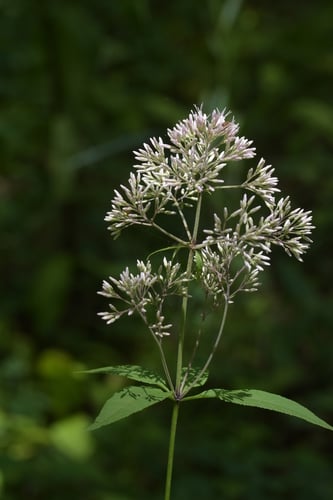
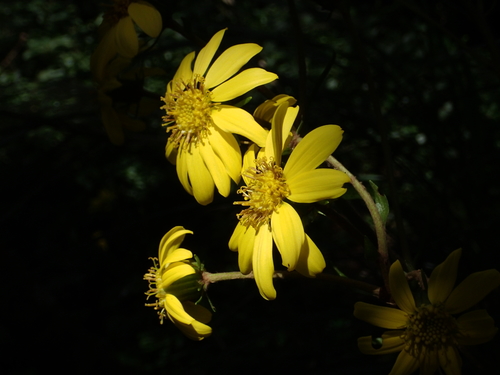
Tanacetum parthenium
(L.) Sch. Bip.
Feverfew, Wild camomile
iNaturalist· cc-by-nc-nd
(c) Steve Chilton, some rights reserved (CC BY-NC-ND)
iNaturalist· cc-by-nc-sa
(c) Don Loarie, some rights reserved (CC BY-NC-SA)
iNaturalist· cc-by-nc
(c) AnneTanne, some rights reserved (CC BY-NC)
Summary
Source: WikipediaTanacetum parthenium, known as feverfew, is a flowering plant in the daisy family, Asteraceae. It may be grown as an ornament, and may be identified by its synonyms, Chrysanthemum parthenium and Pyrethrum parthenium. Having its origin in the Balkans region, it is now distributed worldwide. Although long used in traditional medicine, there is no clinical evidence that it has any therapeutic effects.
Description
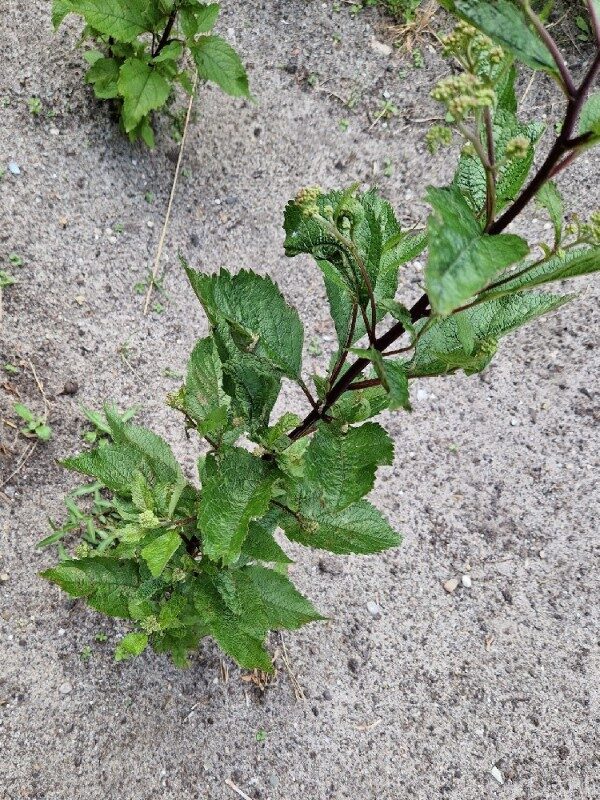
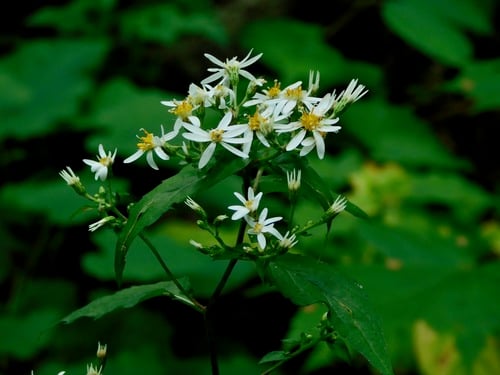
A short lived perennial herb. It has a strong smell. It grows 45-60 cm high and spreads 30-45 cm wide. The leaves are yellow-green and oval. The leaves can be 8 cm long and divided into lobes along the stalk. The flowers are daisy-like and in clusters. The flowers are 2.5 cm across.
Edible Uses
Dried flowers can be used as a flavouring in certain pastries, and the plant generally imparts a deliciously aromatic, bitter taste to food. A tea can also be made from the dried flowers.
Traditional Uses
The dried flowers are used as tea or in wine and in some pastries. CAUTION: Handling the leaves can cause skin rashes and eating them can cause mouth ulcers.
Medicinal Uses
Feverfew has a strong medicinal reputation, and extensive research since 1970 has confirmed it to be of particular benefit in treating certain types of migraine headaches and rheumatism. It is also regarded as useful for arthritis and rheumatism. The leaves and flowering heads are anti-inflammatory, antispasmodic, aperient, bitter, carminative, emmenagogue, sedative, stimulant, stomachic, vasodilator, and vermifuge, and have been used for treating stings. The plant is gathered as it comes into flower and can be dried for later use. Use with caution — fresh leaves can cause dermatitis and mouth ulcers if consumed, and this remedy should not be used during pregnancy. A tea made from the whole plant treats arthritis, colds, and fevers, and is said to be sedative and to regulate menses. An infusion can be used to bathe swollen feet. Applied externally as a tincture, the plant treats bruises. Chewing 1–4 leaves per day has proven effective for some migraine sufferers.
Known Hazards
Long-term use of feverfew followed by abrupt discontinuation may induce a withdrawal syndrome featuring rebound headaches and muscle and joint pains. Feverfew may cause allergic reactions in those allergic to the daisy family, including contact dermatitis or swelling and numbness of the mouth. Other side effects have included gastrointestinal upset such as mild nausea, vomiting, abdominal pain, diarrhea, and flatulence, which are, fortunately mild and transient. When the herb is chewed or taken orally it may cause mouth ulcers. Feverfew should not be taken by pregnant women. It may interact with blood thinners and increase the risk of bleeding, and also may interact with a variety of medications metabolized by the liver.
Distribution
It is a temperate plant. It is hardy to frost. In Argentina it grows from sea level to 2,000 m above sea level. It suits hardiness zones 6-10.
Where It Grows
Afghanistan, Albania, Andorra, Argentina, Asia, Australia, Belarus, Belgium, Bolivia, Brazil, Britain, Bulgaria, Canada, Canary Is., Caucasus*, Central America, Central Asia, Chile, China, Colombia, Costa Rica, Crete, Cuba, Cyprus, Czech Republic, Ecuador, El Salvador, Denmark, Dominican Republic, Ethiopia, Europe*, Falklands, France, Germany, Greece, Guatemala, Himalayas, Honduras, Hungary, India, Indonesia, Iran, Iraq, Ireland, Italy, Kazakhstan, Lebanon, Luxembourg, Malaysia, Manchuria, Mauritius, Mexico, Mongolia, Morocco, Netherlands, New Zealand, North America, Norway, Pakistan, Panama, Paraguay, Peru, Philippines, Poland, Portugal, Romania, Russia, Sicily, Slovenia, South America, Spain, Sweden, Switzerland, Syria, Tajikistan, Tasmania, Turkey, Türkiye, Turkmenistan, Ukraine, Uruguay, Uzbekistan, Venezuela, West Indies, Yugoslavia,
Cultivation
Plants can be grown by seed.
Propagation
Sow seed in spring in a greenhouse, barely covering it and keeping the pot moist. Prick seedlings into individual pots when large enough and plant out in early summer after the last expected frosts. If sufficient seed is available, it can be sown outdoors in situ in spring. Plants usually self-sow freely, so further sowing is rarely necessary once established. Division in spring is possible, though since plants are quite short-lived this method is not particularly practical.
Other Uses
Dried flower buds yield an insecticide said to have the same properties as pyrethrum (obtained mainly from T. cinerariifolia). To prepare, steep 1 cupful of dried flowers in one litre of hot soapy water for an hour, strain, and allow to cool slightly before use. An essential oil from the plant is also used in perfumery.
Other Information
It is cultivated.
Notes
It is used in medicine.
Synonyms
References (13)
- Bonet, M. A. & Valles, J., 2002, Use of non-crop food vascular plants in Montseny biosphere reserve (Catalonia, Iberian Peninsula). International Journal of Food Sciences and Nutrition (2002) 53, 225–248
- Facciola, S., 1998, Cornucopia 2: a Source Book of Edible Plants. Kampong Publications, p 43
- http://www.botanic-gardens-ljubljana.com/en/plants
- Kew Plants of the World On line
- Lim, T. K., Edible Medicinal and Non-Medicinal Plants Volume 7 Flowers
Show all 13 references Hide references
- MacKinnon, A., et al, 2009, Edible & Medicinal Plants of Canada. Lone Pine. p 360
- Rop, O., et al, 2012, Edible Flowers - A New Promising Source of Mineral Elements in Human Nutrition. Molecules 2012, 17, 6672-6683 (As Chrysanthemum parthenium)
- Tanaceteen 55. 1844
- Tasmanian Herbarium Vascular Plants list p 14
- Uphof,
- Upson, R., & Lewis R., 2014, Updated Vascular Plant Checklist and Atlas for the Falkland Islands. Falklands Conservation and Kew.
- World Checklist of Useful Plant Species 2020. Royal Botanic Gardens, Kew
- Zeven, A. C. & de West, J. M. J., 1982, Dictionary of cultivated plants and their regions of diversity. Wageningen. p 105