Blumea balsamifera
(L.) DC.
Ngai camphor plant, Buffalo ear
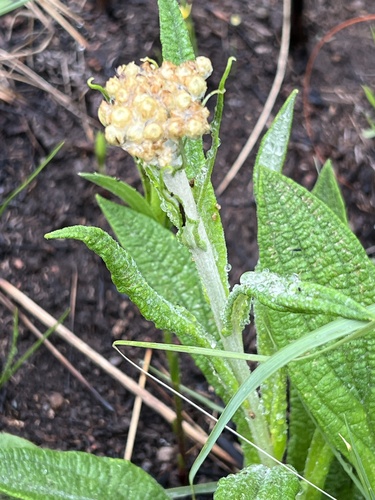
iNaturalist· cc0
no rights reserved, uploaded by 葉子
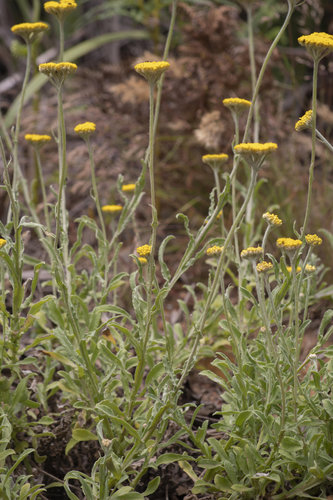
iNaturalist· cc-by-nc-sa
(c) 蔣孟, some rights reserved (CC BY-NC-SA), uploaded by 蔣孟
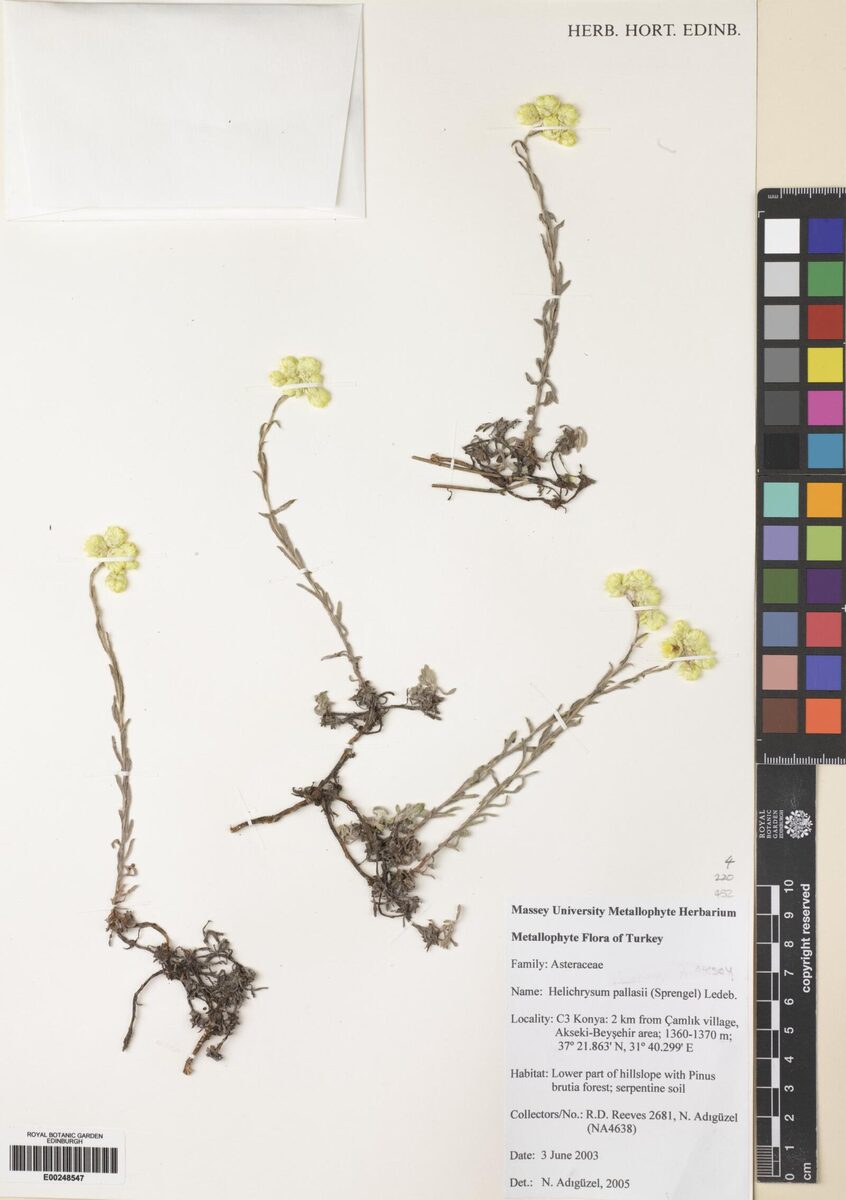
iNaturalist· cc-by-nc
(c) Shin-Ming Ku, some rights reserved (CC BY-NC), uploaded by Shin-Ming Ku
Summary
Source: WikipediaBlumea balsamifera is a flowering plant belonging to the genus Blumea of the family Asteraceae. It is also known as Ngai camphor and sambong (also sembung).
Description
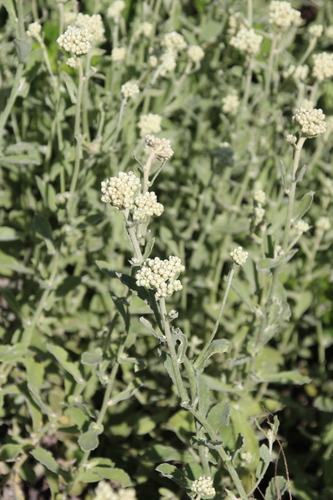
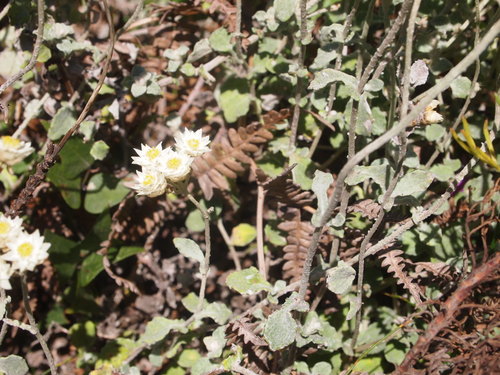
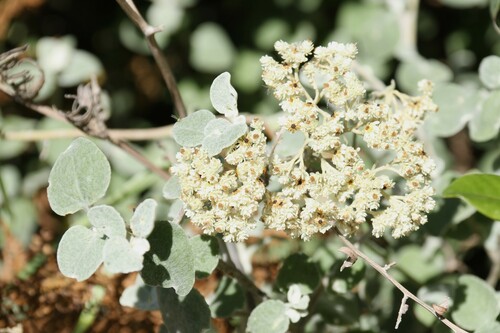
A small herb. It grows to 3 m tall. It is short lived. The bark is yellow-brown. The branches and leaves have a silky covering. The leaves are about 7-25 cm long by 3-10 cm wide. The flowers are in small heads. The flowers are yellow. The fruit are ribbed.
Edible Uses
The leaves are cooked into food as a flavoring and culinary ingredient, imparting a camphor scent to dishes.
Traditional Uses
The leaves are cooked in food to add flavour as well as for medicinal purposes. The leaves have a camphor scent. CAUTION: The leaves cause a drop in blood pressure.
Medicinal Uses
The leaves are traditionally used for medicinal purposes.
Known Hazards
The leaves cause a drop in blood pressure.
Distribution
A tropical plant. It grows in forest. It can also grow in desert soils. It can grow in arid places. At MARDI. In XTBG Yunnan.
Where It Grows
Asia, Bhutan, Cambodia, China, Himalayas, India, Indochina, Indonesia, Laos, Malaysia, Myanmar, Nepal, Northeastern India, Pacific, Pakistan, Philippines, SE Asia, Taiwan, Thailand, Vietnam, West Timor,
Cultivation
Plants can be grown from seeds, cuttings or layering. It can be cut back and allowed to regrow.
Propagation
Seed - surface sow and do not allow the compost to become dry. Germination is usually good. Root cuttings. Stem cuttings. Cuttings are placed in containers under shade. Watering should be carried out with care, as too much water is harmful. Seedlings and rooted cuttings can be transplanted after about 2 weeks to a place receiving full sunlight.
Other Uses
In China ngai camphor oil, an essential oil obtained by steam distillation of the young leaves, is widely used in medicine and in rituals. The refined camphor 'ngai p'ien' is considered of higher quality than camphor from Cinnamomum camphora, but is not rated as highly as that from Dryobalanops spp. The leaves contain about 0.5% of an essential oil whose main component is borneol (about 25%), a compound closely related to camphor and easily converted into it by oxidation. Other components are 1,8-cineole, limonene, and camphor; other sources also mention 'BETA'-eudesmol, 'BETA'-camphene and myrcene. Camphor is an important component of the oil, but its content may vary strongly. This variation may be due to environmental conditions, with some samples from China being free of it, while other samples may contain as much as 75%. The roots and leaves are used as natural pesticides e.g. Against storage pests and leaf hoppers in rice. The white wood is soft.
Other Information
It is cultivated.
Notes
It is used in medicine.
Synonyms
Also Known As
Bunga sapa, Chapa, Chapor, Galunggung, Hhaoqsaqlagma Yaoheeqjaiq, Kakaronda, Kakrondra, Kam pawng, Kaphur goch, Na dyai, Na luang, Phak naad, Phon-ma-thien, Sembang, Sembing, Semboh, Sembong
References (18)
- Ambasta S.P. (Ed.), 2000, The Useful Plants of India. CSIR India. p 75
- Arora, R. K., 2014, Diversity in Underutilized Plant Species - An Asia-Pacific Perspective. Bioversity International. p 101
- Baro, D., Baruah, S. and Borthukar, S. K. 2015, Documentation on wild vegetables of Baksa district, BTAD (Assam). Scholars Research Library. Archives of Applied Science Research, 2015, 7 (9):19-27
- Bircher, A. G. & Bircher, W. H., 2000, Encyclopedia of Fruit Trees and Edible Flowering Plants in Egypt and the Subtropics. AUC Press. p 60
- Burkill, I.H., 1966, A Dictionary of the Economic Products of the Malay Peninsula. Ministry of Agriculture and Cooperatives, Kuala Lumpur, Malaysia. Vol 1 (A-H) p 339
Show all 18 references Hide references
- Cruz-Garcia, G. S., & Price, L. L., 2011, Ethnobotanical investigation of 'wild' food plants used by rice farmers in Kalasin, Northeast Thailand. Journal of Ethnobiology and Ethnomedicine 7:33
- Dobriyal, M. J. R. & Dobriyal, R., 2014, Non Wood Forest Produce an Option for Ethnic Food and Nutritional Security in India. Int. J. of Usuf. Mngt. 15(1):17-37
- Dutta, U., 2012, Wild Vegetables collected by the local communities from the Churang reserve of BTD, Assam. International Journal of Science and Advanced Technology. Vol. 2(4) p 119
- Facciola, S., 1998, Cornucopia 2: a Source Book of Edible Plants. Kampong Publications, p 35
- Hani Medicine of Xishuangbanna, 1999, p 303
- Martin, F.W. & Ruberte, R.M., 1979, Edible Leaves of the Tropics. Antillian College Press, Mayaguez, Puerto Rico. p 184
- Patiri, B. & Borah, A., 2007, Wild Edible Plants of Assam. Geethaki Publishers. p 70
- Prodr. 5:447. 1836 (type species)
- Sarma, H., et al, 2010, Updated Estimates of Wild Edible and Threatened Plants of Assam: A Meta-analysis. International Journal of Botany 6(4): 414-423
- Terra, G.J.A., 1973, Tropical Vegetables. Communication 54e Royal Tropical Institute, Amsterdam, p 29
- Wiersema, J. H. & Leon, B., 2013, World Economic Plants. A Standard Reference CRC Press. 2nd Ed. p 105
- World Checklist of Useful Plant Species 2020. Royal Botanic Gardens, Kew
- Zeven, A. C. & de West, J. M. J., 1982, Dictionary of cultivated plants and their regions of diversity. Wageningen. p 51