Panax notoginseng
(Burkill) F. H. Chen ex C. Y. Wu & K. M. Feng
Tienchi ginseng
wikimedia· cc0
Wikimedia Commons - Fumikas Sagisavas
wikimedia· cc-by-sa
Wikimedia Commons - Ping an Chang
Summary
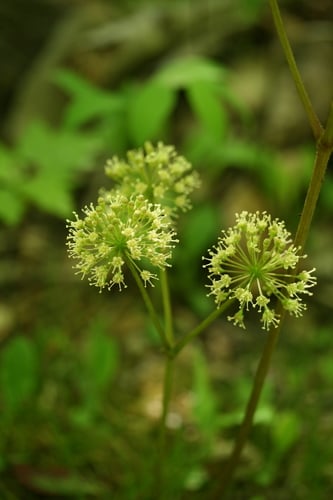
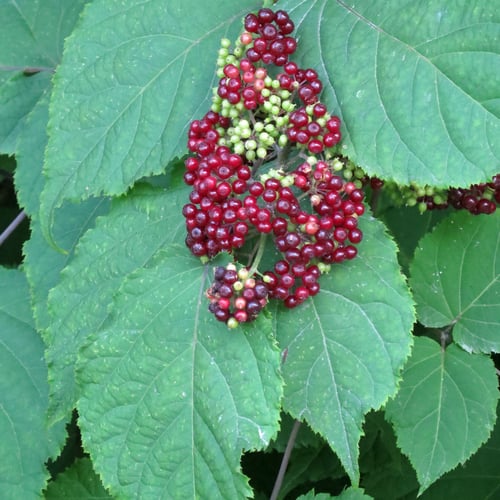
Source: WikipediaPanax notoginseng is a species of the genus Panax, and it is commonly referred to in English as Chinese ginseng or notoginseng. In Chinese it is called tiánqī (田七), tienchi ginseng, sānqī (三七) or sanchi, three-seven root, and mountain plant. P. notoginseng belongs to the same scientific genus as Panax ginseng. In Latin, the word panax means "cure-all", and the family of ginseng plants is one of the best-known herbs. P. notoginseng grows naturally in China. The herb is a perennial with dark green leaves branching from a stem with a red cluster of berries in the middle. It is both cultivated and gathered from wild forests, with wild plants being the most valuable. The Chinese refer to it as three-seven root because the plant has three petioles with seven leaflets each. It is also said that the root should be harvested between three and seven years after planting it.
Description
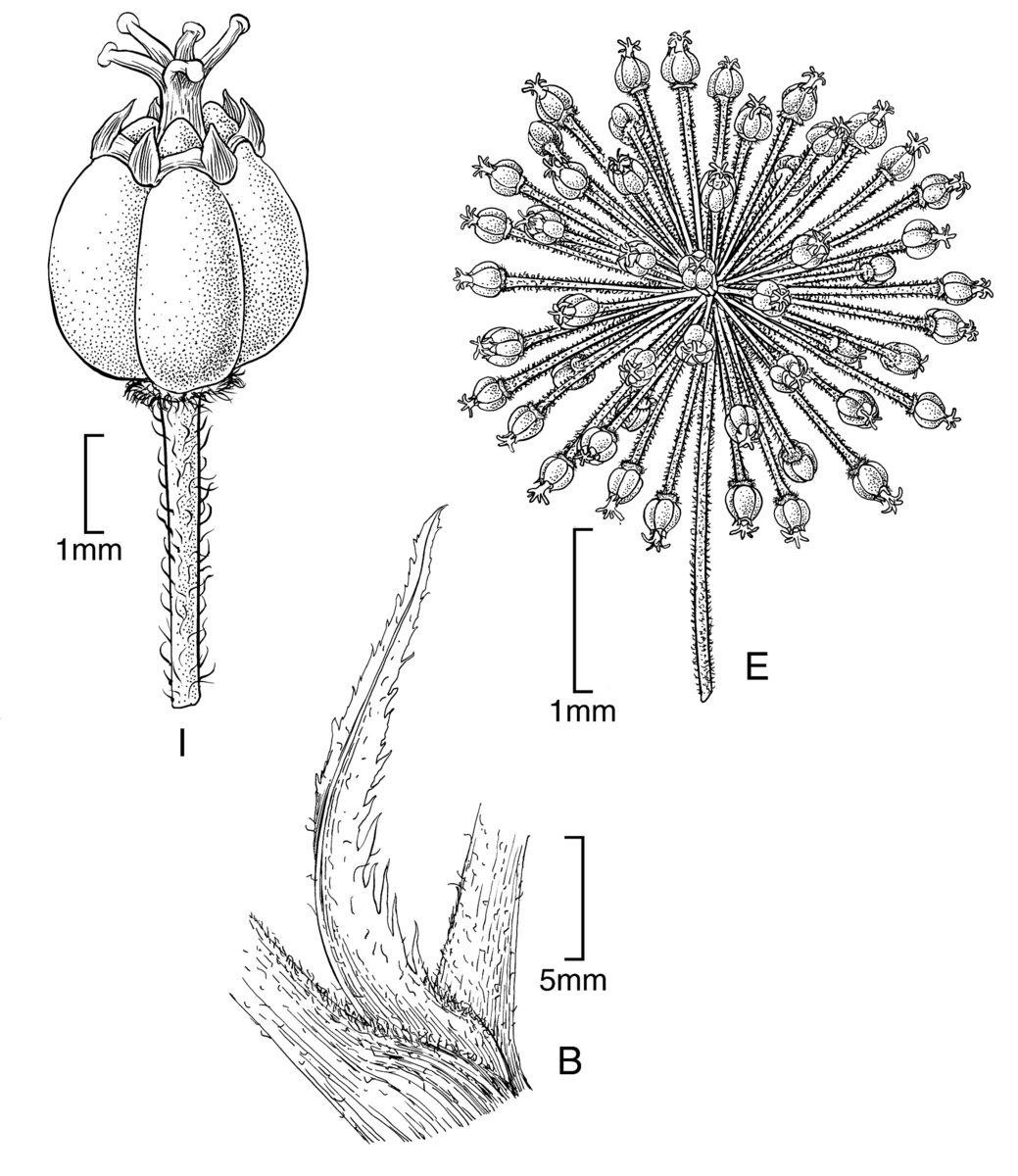
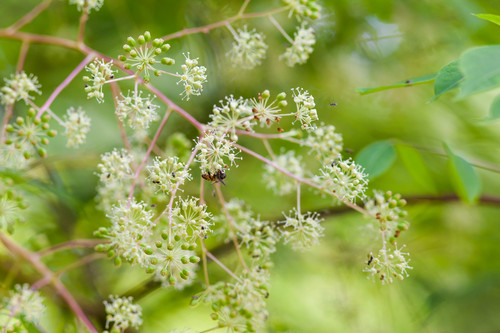
A herb. It keeps growing from year to year. It grows 20-60 cm tall. The rootstock is fleshy and there can be several spindle shaped roots. There are 3-6 leaves. They are in a ring at the top of the stem. They are compound and divided like fingers on a hand. The leaflets are broadly oval and 4-13 cm long by 2-7 cm wide. There are teeth along the edge. The flowers are on stalks from a common point forming a group of 80-100 flowers. The stalk is 7-25 cm long. The fruit are red and flattened. They are 1 cm across.
Edible Uses
The dried roots are eaten in soups, and the flowers are edible.
Traditional Uses
The dried roots are eaten in soups.
This uses section is brief — help expand it
Medicinal Uses
It has anticancer properties.
Distribution
It is a subtropical plant. It grows in forests between 1,200-1,800 m above sea level. In Yunnan.
Where It Grows
Asia, China, SE Asia, Vietnam,
Notes
It has anticancer properties.
Also Known As
Sanchi ginseng, Thin chat
References (6)
- Facciola, S., 1998, Cornucopia 2: a Source Book of Edible Plants. Kampong Publications, p 26
- Liu, Yi-tao, & Long, Chun-Lin, 2002, Studies on Edible Flowers Consumed by Ethnic Groups in Yunnan. Acta Botanica Yunnanica. 24(1):41-56
- Sun, S., et al, 2010, Effects of steaming the root of Panax notoginseng on chemical composition and anticancer activities. Food Chemistry 118: 307-314
- Yasukawa, K., Medicinal and Edible Plants as Cancer Preventive Agents. Drug Discovery Research in Pharmacognosy. p185 www.intechopen.com
- Zeng, Y., et al, 2014, Evaluation of antioxidant activities of extracts from 19 Chinese edible flowers. SpringerPlus 2014, 3:315
Show all 6 references Hide references
- J. Zhou et al., Acta Phytotax. Sin. 13(2):41. 1975