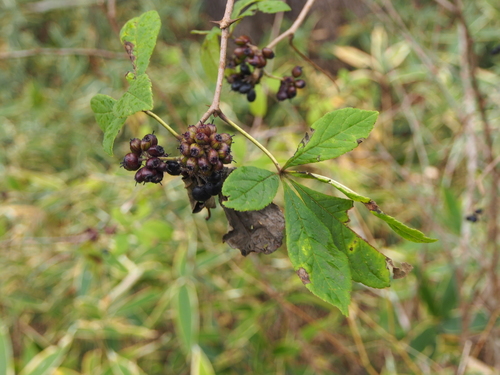
Cussonia arborea
A. Rich.
Octopus cabbage tree, Deadman's fingers
iNaturalist· cc-by-nc
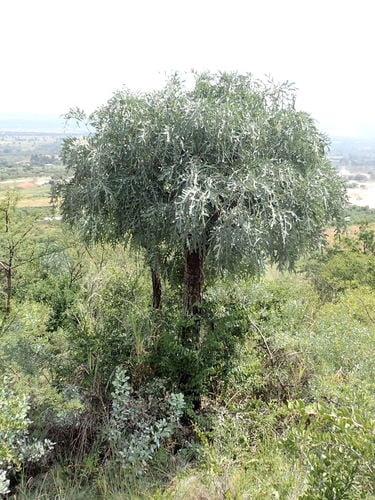
(c) Bart Wursten, some rights reserved (CC BY-NC), uploaded by Bart Wursten
iNaturalist· cc-by-nc
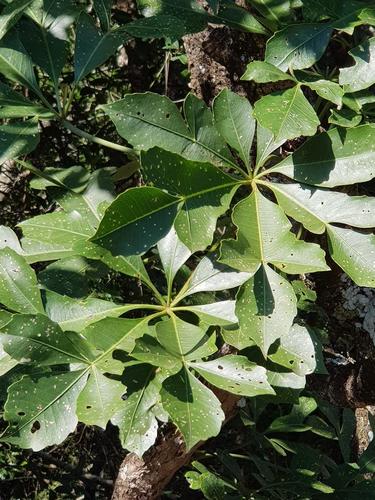
(c) Simon Attwood, some rights reserved (CC BY-NC)
iNaturalist· cc-by-nc
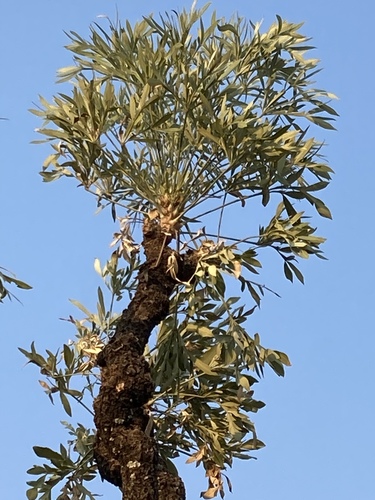
(c) Simon Attwood, some rights reserved (CC BY-NC)
Summary
Source: WikipediaCussonia arborea is a deciduous small to medium sized tree within the family Araliaceae. Extracts of the species are widely used in traditional medicine to treat a variety of ailments.
Description
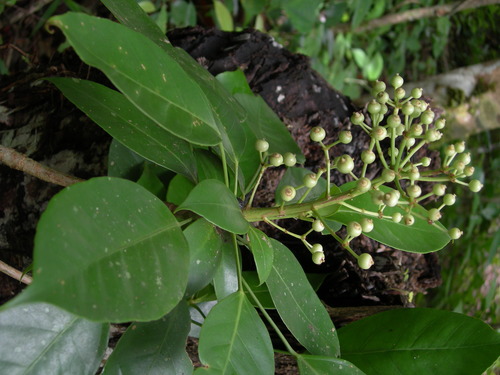
A small tree. It grows up to 9 m high. It loses its leaves. The stem produces gum when cut. The leaves are like fingers on a hand and there are 7-9 lobes. The leaf stalk is 12-16 cm long. The flower spikes are 20-40 cm long. They are densely covered with small flowers. The fruit are very small. They are round and black when ripe.
Edible Uses
The ripe black fruit are eaten, especially by children.
Traditional Uses
The ripe fruit are eaten.
This uses section is brief — help expand it
Medicinal Uses
Bark decoction is used to treat malaria in Nigeria. In Ghana, Malawi and Zimbabwe, extracts are used to treat mental health related issues. Its leaves are used in a decoction to treat rheumatism and oedema. A water decoction of bark extracts is used as a topical treatment of gonorrhea and a root decoction is drunk for the treatment of diarrhea.
Distribution
A tropical plant. It needs a warm, frost-free climate. In Malawi it grows above 1,000 m altitude. It can resist fire. In Zimbabwe it grows between 850-1,750 m above sea level.
Where It Grows
Africa, Benin, Burkina Faso, Côte d'Ivoire, East Africa, Ghana, Guinea, Guinée, Guinea-Bissau, Ivory Coast, Malawi, Mali, Mozambique, Nigeria, Senegal, Sierra Leone, Tanzania, Togo, West Africa, Zambia, Zimbabwe,
Cultivation
Plants can be grown from seed. It can also be grown from large cuttings of from root cuttings.
Propagation
Seed - best sown as soon as possible because it loses much of its viability within 3 months. However, seed sown in summer months will germinate faster (in about 4 weeks) than seed sown in winter (7 weeks to germination). Sow the seed in seed trays in a semi-shaded position, ensuring at least 15cm depth of soil to allow the small tubers to form. Do not allow seed to become waterlogged or dry out. Seedlings can be transplanted at about 4 months, but be very careful not to damage the fleshy roots when transplanting.
Other Uses
A black ink is prepared from a decoction of the wood. The wood-ash is rich in potash and is used as a mordant with indigo dyes. The ash is used to make soap with the oil of Carapa procera. The bark, when slashed, exudes a gum which appears to be somewhat variable: from some trees it is said to form into 'pencils', whilst from others it is a sticky ropy juice. The gum has a slightly irritant property. The wood is dirty white, soft, brittle and rots easily. As timber it is of little value. Some tribes hollow it out to make quivers and trumpets. The wood of this or another species is used to make cases in which to keep gunpowder and cartridges dry.
Production
In Malawi the season is February to March.
Other Information
The fruit are eaten especially by children.
Notes
There are 25 Cussonia species. They occur in South Africa.
Synonyms
Also Known As
Chandimbo, Copo-copo, Cundudzi, Cut hand, Kapwapwe, Kitompo, Mbwabwa, Mufenje, Mupombwe, Mushondya, Mutovi, Papaia-do-moto, Stump of limb, Umelemele
References (13)
- Burkill, H. M., 1985, The useful plants of west tropical Africa, Vol. 1. Kew.
- Drummond, R. B., 1981, Common Trees of the Central Watershed Woodlands of Zimbabwe, National Herbarium Salisbury. p 174
- Fowler, D. G., 2007, Zambian Plants: Their Vernacular Names and Uses. Kew. p 11
- Fox, F. W. & Young, M. E. N., 1982, Food from the Veld. Delta Books. p 99
- Grivetti, L. E., 1980, Agricultural development: present and potential role of edible wild plants. Part 2: Sub-Saharan Africa, Report to the Department of State Agency for International Development. p 66
Show all 13 references Hide references
- Heywood, V.H., Brummitt, R.K., Culham, A., and Seberg, O. 2007, Flowering Plant Families of the World. Royal Botanical Gardens, Kew. p 43 (As Cussonia kirkii)
- Jardin, C., 1970, List of Foods Used In Africa, FAO Nutrition Information Document Series No 2.p 131 (As Cussonia kirkii)
- Le Houerou, H. N., (Ed.), 1980, Browse in Africa. The current state of knowledge. International Livestock Centre for Africa, Ethiopia. p 161
- Mbuya, L.P., Msanga, H.P., Ruffo, C.K., Birnie, A & Tengnas, B., 1994, Useful Trees and Shrubs for Tanzania. Regional Soil Conservation Unit. Technical Handbook No 6. p 220 (As Cussonia kirkii)
- Peters, C. R., O'Brien, E. M., and Drummond, R.B., 1992, Edible Wild plants of Sub-saharan Africa. Kew. p 61
- Williamson, J., 2005, Useful Plants of Malawi. 3rd. Edition. Mdadzi Book Trust. p 91 (As Cussonia kirkii)
- World Checklist of Useful Plant Species 2020. Royal Botanic Gardens, Kew
- www.zimbabweflora.co.zw 2011