Blighia unijugata
Baker
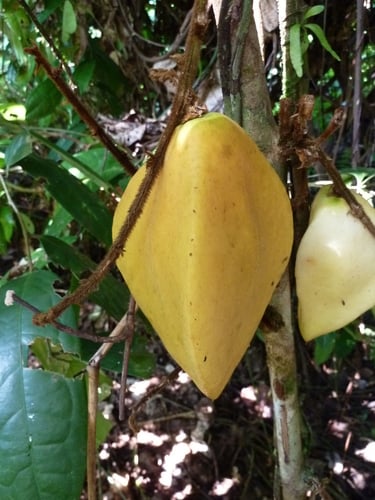
Blighia, Triangle tops
iNaturalist· cc-by-nc
(c) Graeme White, some rights reserved (CC BY-NC), uploaded by Graeme White
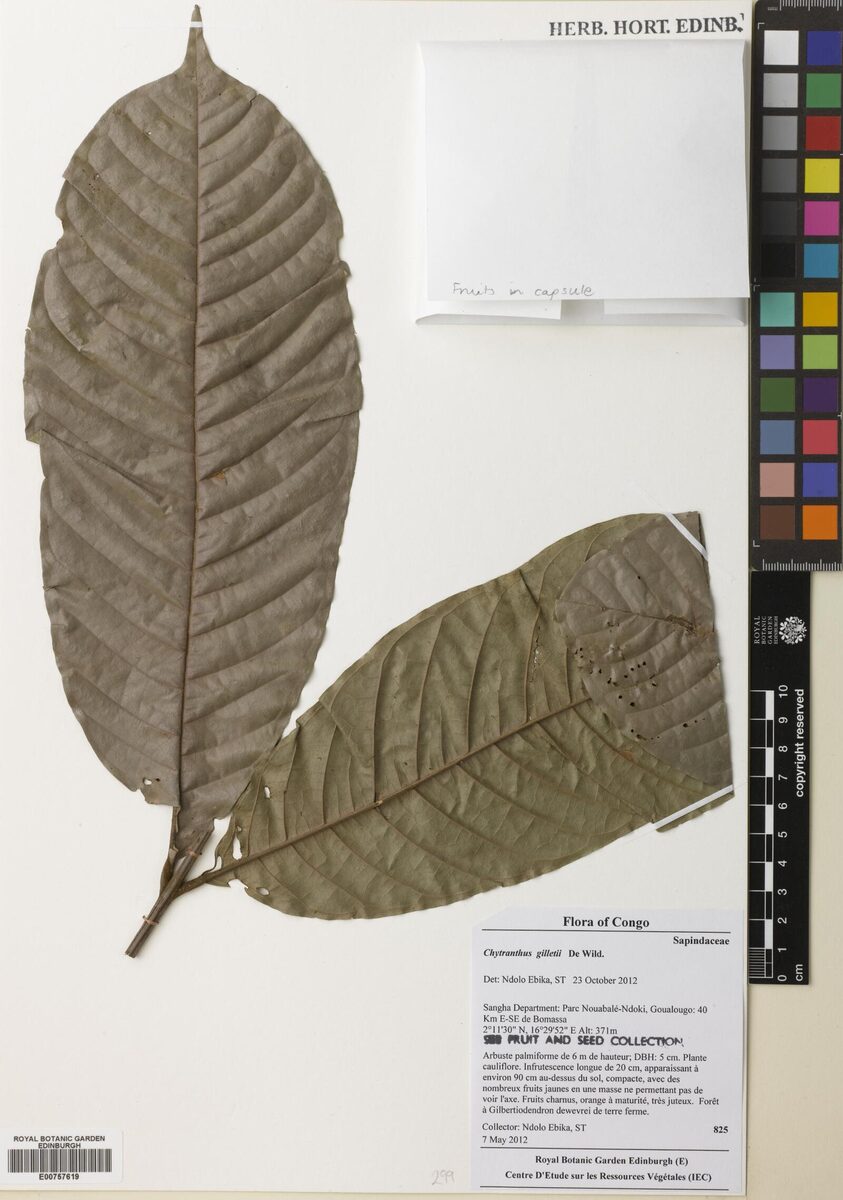
iNaturalist· cc-by-nc
(c) ONG OeBenin, some rights reserved (CC BY-NC)
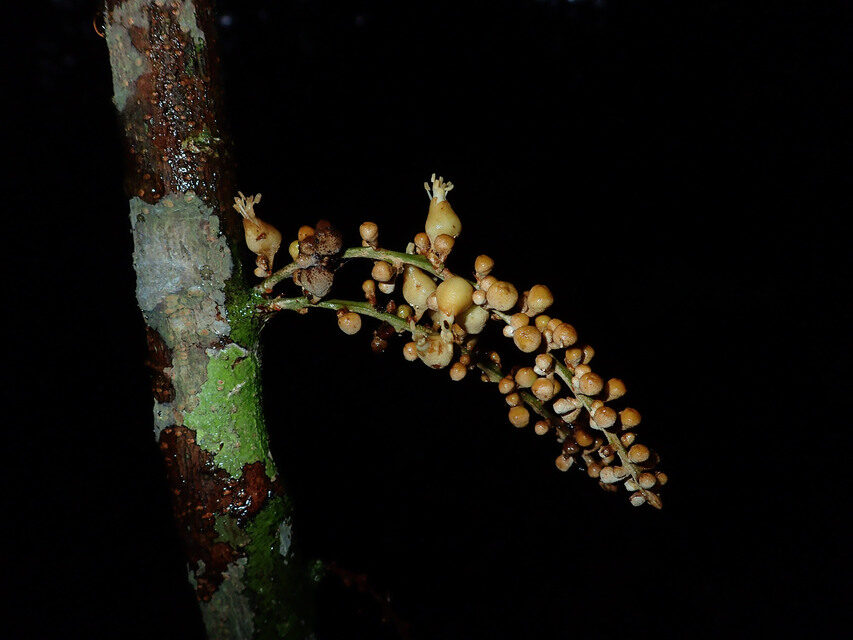
iNaturalist· cc-by-nc
(c) Ngumbau Veronicah, some rights reserved (CC BY-NC)
Description
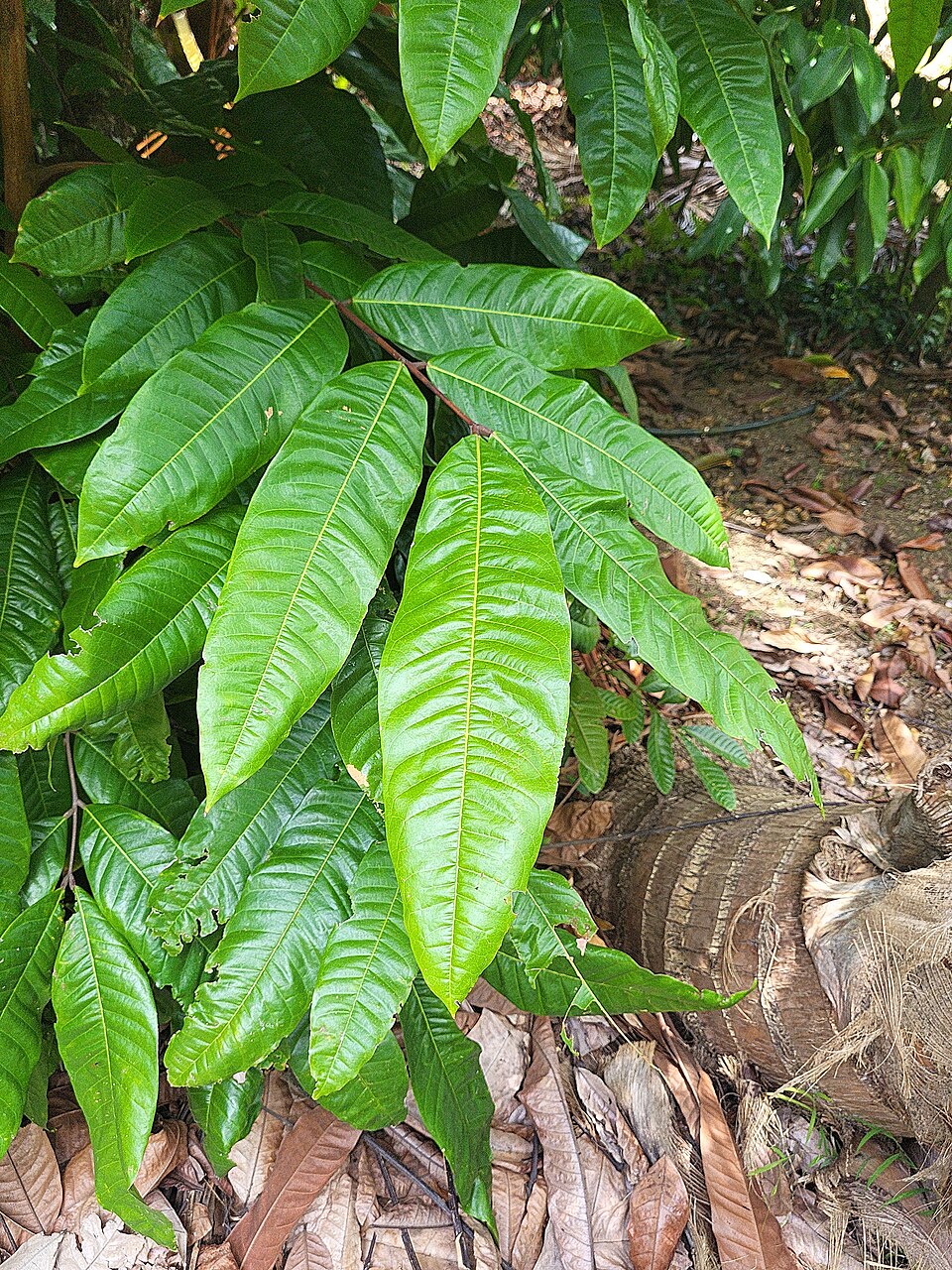
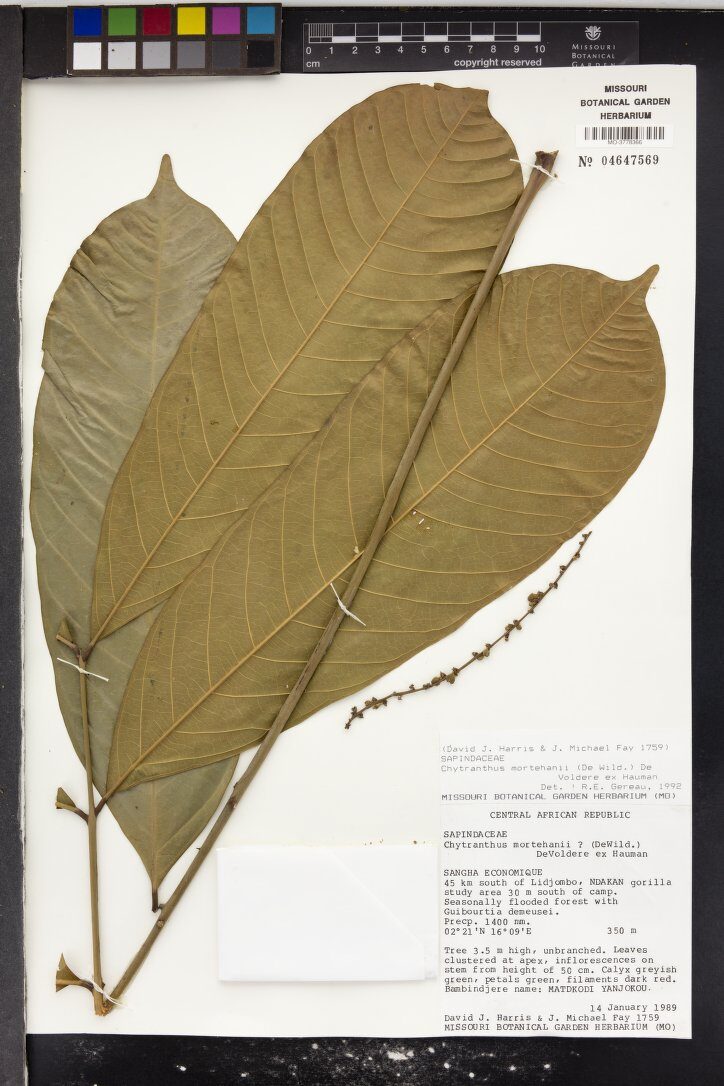
A tree. It can be 17-30 m tall. It grows taller in tropical places. The trunk is grey often with a red tinge. The branches are grooved and hairy and droop. The leaves are dark green. The leaves have 1-5 pairs of leaflets. These are almost opposite. They are oblong with a drawn out point. They are 4-15 cm long. The young leaflets are pink. The flowers are white and in the axils of leaves. They are in clusters 8 cm long. The fruit is a capsule are triangular in shape. These are 2.5 cm wide. They are pink and leathery. They become hard with age and split open. They are bright crimson inside with shiny black seeds. These are 1.3 cm long. The seeds are edible.
Edible Uses
The leaves are cooked and eaten as a vegetable. The seeds and fruit are edible.
Traditional Uses
The leaves are cooked and eaten as a vegetable.
This uses section is brief — help expand it
Medicinal Uses
Various parts of the tree are considered to have sedative and analgesic properties. They are used in traditional medicine for the treatment of rheumatism, kidney pain and stiffness, and they are reputed to have oxytocic action in childbirth. Bark pulp is applied as an enema or a bark decoction is taken to treat fever, and as purgative. A leaf decoction is used to treat vertigo. Leaf pulp is administered as an embrocation to serve as rejuvenator and relaxant. The leaves are used in vapour baths for the treatment of fever in children, and as tonic. Fruits have been used for the treatment of nausea and vomiting. The seed oil is used in medicinal ointments. Ethanol extracts of the roots, bark and leaves have shown antibacterial activity, with pronounced activity against Staphylococcus aureus. In all the extracts the presence of steroids, saponins and tannins has been demonstrated.
Known Hazards
Macerated twigs, leaves, flowers and fruits are used as fish poison.
Distribution
A tropical plant. It is native to tropical West Africa. It grows in swamp forests and along streams. In Zimbabwe it grows up to 1,200 m above sea level. It is often on termite mounds. In Nigeria recorded at 1,440 m above sea level.
Where It Grows
Africa, Angola, Cameroon, Central Africa, Central African Republic, CAR, East Africa, Ethiopia, Guinea, Guinée, Guinea-Bissau, Kenya, Malawi, Mozambique, Nigeria, Sierra Leone, South Africa, Southern Africa, Tanzania, West Africa, Zambia, Zimbabwe,
Cultivation
The seed germinate easily.
Propagation
Seed - germinates readily. It is recommended to sow in individual pots before transplanting. Pre-treatment of seeds before sowing is not necessary. Dried seeds can be stored for considerable time in sealed containers in a cool and dry place. Thin stem cuttings may root in sand and can also be used for propagation.
Other Uses
The pleasantly scented flowers are sometimes soaked in water to make a fragrant cosmetic lotion. The heartwood is pale reddish brown; it is indistinctly demarcated from the yellowish white sapwood. The grain is fairly straight; texture medium to fine. The wood is medium-weight, very hard, tough, the heartwood is moderately durable, but the sapwood is susceptible to Lyctus attack. The wood works well with machine tools, but blunting of tools is rather rapid. It is difficult to work by hand, but takes a good finish and polishes well. Splitting is common during nailing and pre-boring is recommended. It is also recommended to give good support at the exit face on mortising and boring. The wood is somewhat difficult to glue. The wood is commonly used for light construction, light flooring, interior trim, joinery, furniture, mine props, toys, novelties, agricultural implements, musical instruments, boxes, crates, turnery and carving. It is suitable for ship building, veneer, plywood and pulpwood. The wood is used for fuel and for charcoal production. In Kenya and Ethiopia, the trees are often left after land clearance, or sometimes planted, to provide shade in coffee plantations.
Production
Young trees are fast growing.
Notes
There are 4 Blighia species.
Nutrition
| Part | Moisture | kJ | kcal | Protein | Vit A | Vit C | Iron | Zinc |
|---|---|---|---|---|---|---|---|---|
| Fruit | 0 | 680 | 163 | 6 | — | — | — | — |
| Seeds | — | — | — | — | — | — | — | — |
Synonyms
Also Known As
Bebi, Beleque-sule, Bissabe, Democori, Firifora, Ishin oko, M'but-bale, Mkivule, Murintima, Mutepe, N'timlake, Nhamarupovo, Osso-de-dari, Sataga-preto, Ukpe nehwi
References (16)
- Barwick, M., 2004, Tropical and Subtropical Trees. A Worldwide Encyclopedic Guide. Thames and Hudson p 53
- Bekele-Tesemma A., Birnie, A., & Tengnas, B., 1993, Useful Trees and Shrubs for Ethiopia. Regional Soil Conservation Unit. Technical Handbook No 5. p 110
- Burkill, H. M., 1985, The useful plants of west tropical Africa, Vol. 5. Kew.
- Catarino, L., et al, 2016, Ecological data in support of an analysis of Guinea-Bissau's medicinal flora. Data in Brief 7 (2016):1078-1097
- Chapman, J. D. & Chapman, H. M., 2001, The Forest Flora of Taraba and Andamawa States, Nigeria. WWF & University of Canterbury. p 201
Show all 16 references Hide references
- FAO Corporate Document Repository. The Major Significance of 'Minor' Forest Products. Appendix 3
- Fowler, D. G., 2007, Zambian Plants: Their Vernacular Names and Uses. Kew. p 84
- Jardin, C., 1970, List of Foods Used In Africa, FAO Nutrition Information Document Series No 2.p 39
- Keay, R.W.J., 1989, Trees of Nigeria. Clarendon Press, Oxford. p 358
- Malaisse, F., 1997, Se nourrir en floret claire africaine. Approche ecologique et nutritionnelle. CTA., p 59, 91
- Malaisse, F., 2010, How to live and survive in Zambezian open forest (Miombo Ecoregion). Les Presses Agronomiques de Gembloux.
- Palmer, E and Pitman, N., 1972, Trees of Southern Africa. Vol. 2. A.A. Balkema, Cape Town p 1362
- Peters, C. R., O'Brien, E. M., and Drummond, R.B., 1992, Edible Wild plants of Sub-saharan Africa. Kew. p 180
- Vivien, J. & Faure, J.J., 1985, Abres des forets dense d'Afrique Centrale. Agence de Cooperation Culturelle et Technique. Paris. p 402
- White, F., Dowsett-Lemaire, F. and Chapman, J. D., 2001, Evergreen Forest Flora of Malawi. Kew. p 527
- World Checklist of Useful Plant Species 2020. Royal Botanic Gardens, Kew